- by Clea Skopeliti
L’Estartit, SPAIN — It was almost 20 years ago, but artisanal fisher Isaac Moya still vividly remembers the week he spent working on a bottom trawler. “They would lift the nets, and you’d be up to your knees in fish,” he recalls. Less than half the catch brought in by the trawler off Spain’s Costa Brava, a coastal area of the northeastern region of Catalonia, made it to market, he says. The rest was bycatch: non-commercial fish or fish too small to sell, heaved dead or dying into the waves below.
As the water gently laps the sides of his boat, Alegria Segona, on a brisk winter morning, Moya shakes his head at the memory. “It made me feel sick,” he says. “I'd always heard that trawlers caused a lot of damage — I saw it firsthand there.”
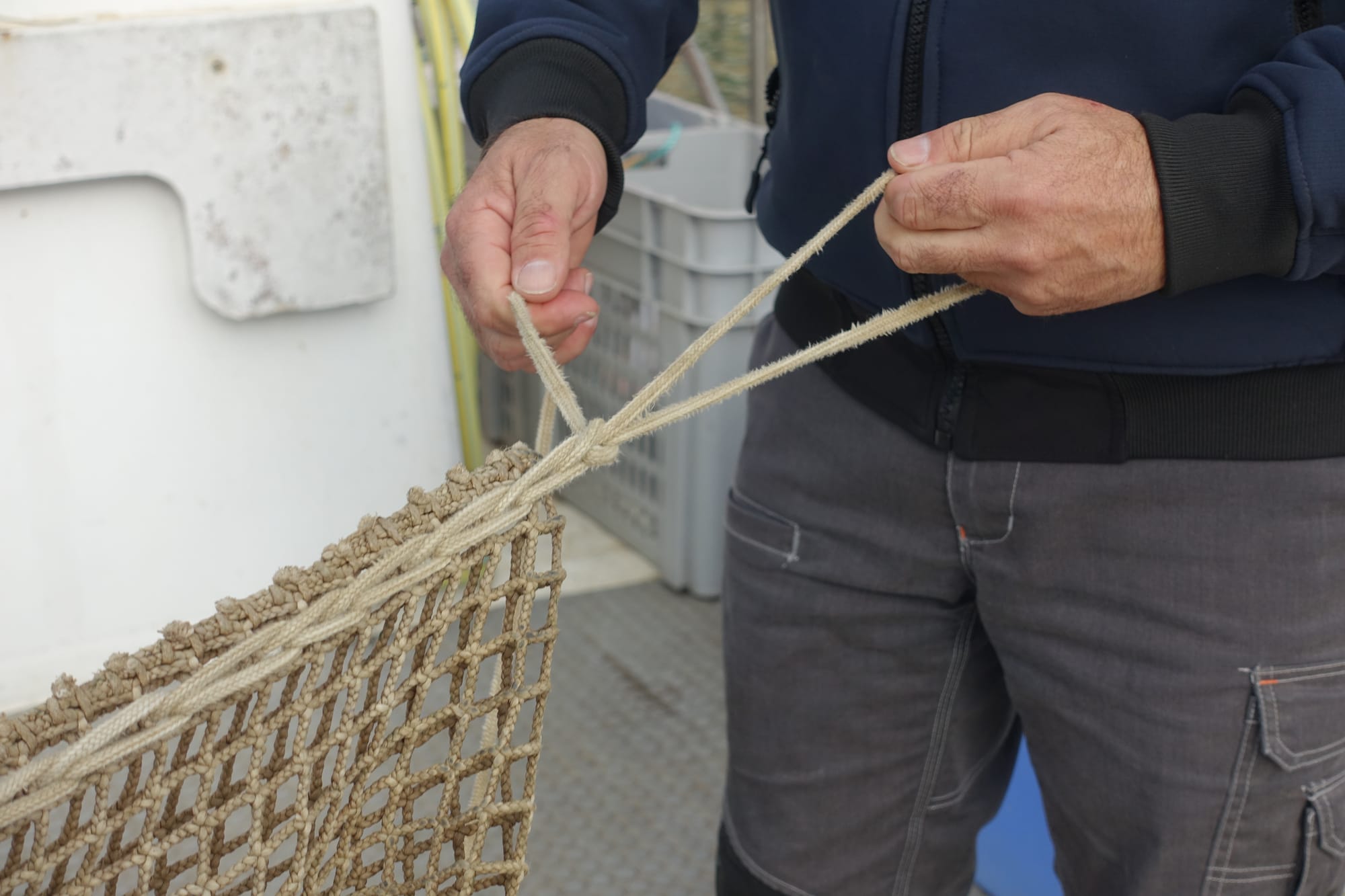
Moya is one of less than a dozen artisanal, small-scale fishers working in L’Estartit on the northern Costa Brava. Once a fishing town, its harbor is now dominated by pleasure craft, which vastly outnumber working boats. Moya, who chiefly catches octopus and cuttlefish, rotates through a variety of nets and traps that are tailored to catch specific species and exclude smaller fish.
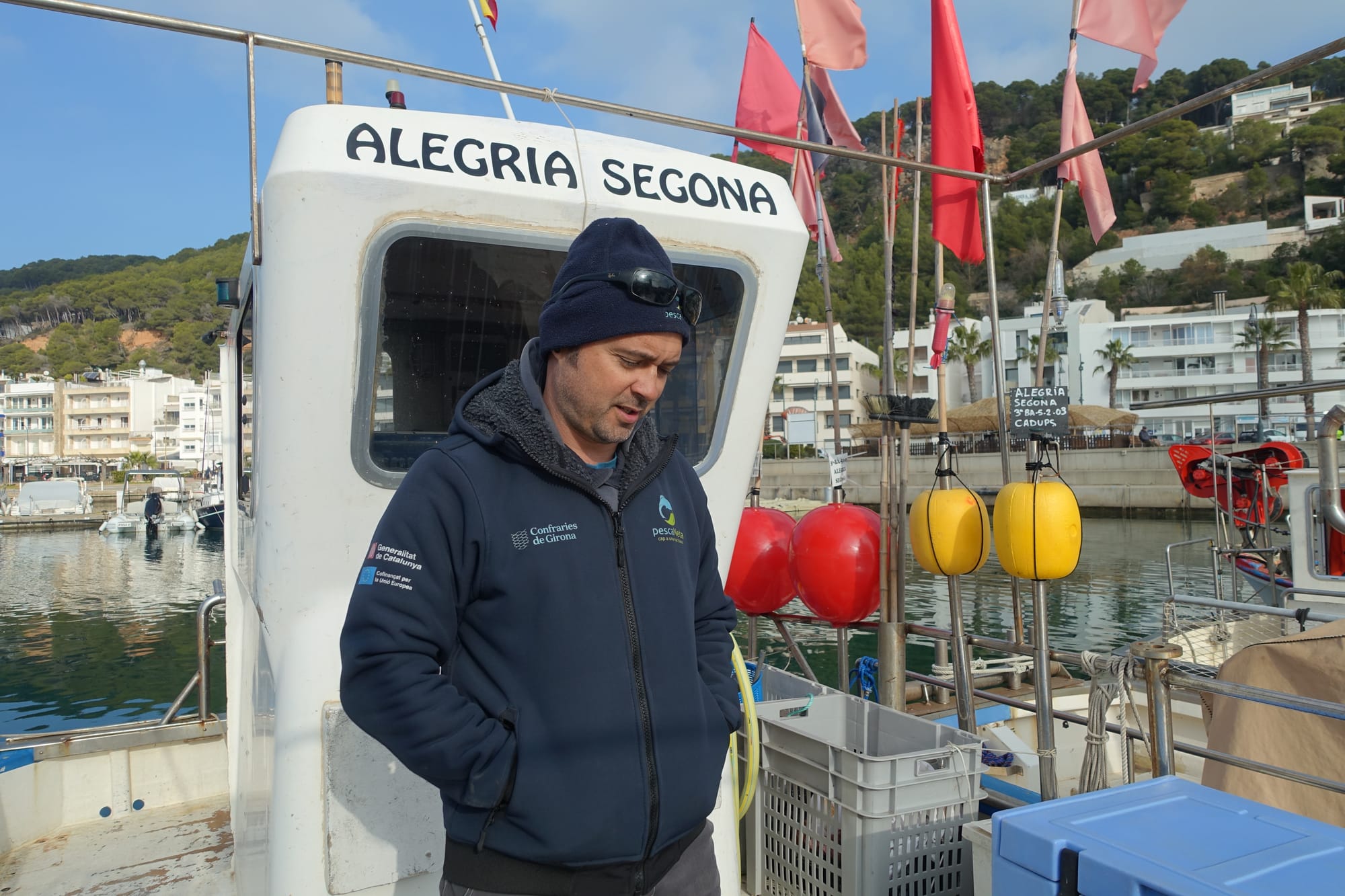
Artisanal fisher Isaac Moya on his boat in L’Estartit, Spain (Clea Skopeliti)
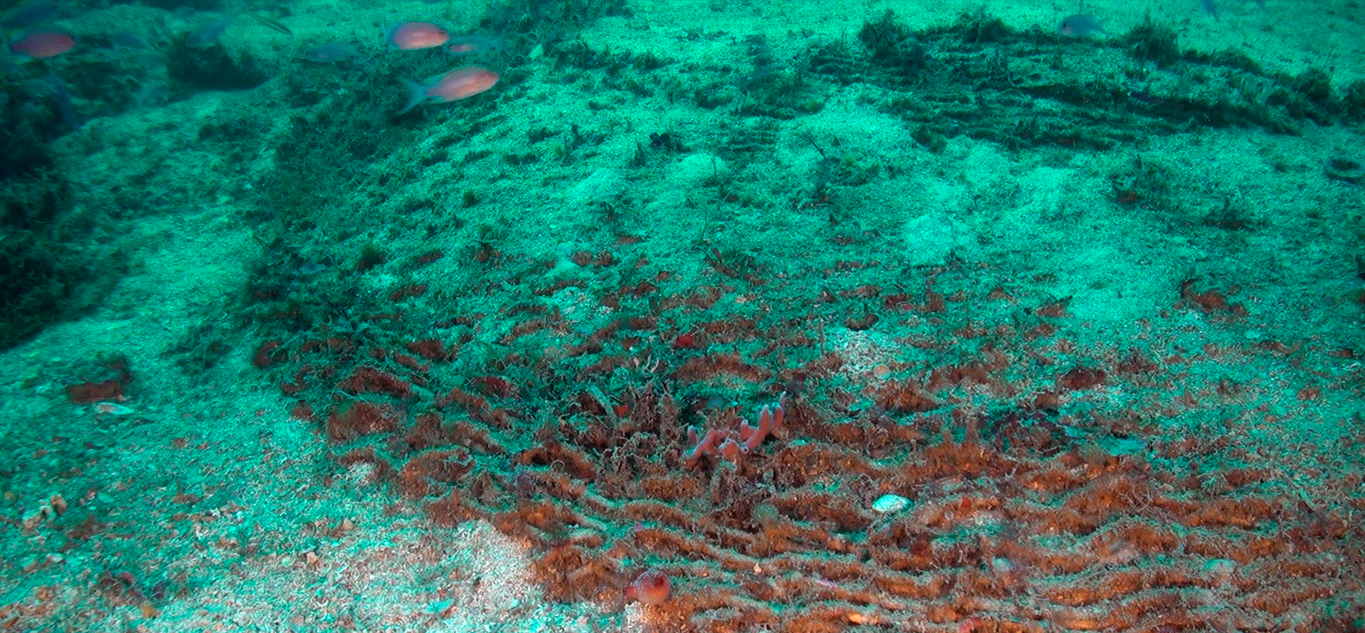
But although he fishes in a marine protected area (MPA), parts of these waters are shared with bottom trawlers from neighboring ports. These boats fish by dragging weighted nets across the seafloor, a process often compared to bulldozing the seabed. Bottom trawling can have profound ecological effects — research has found that chronically trawled areas of the northwestern Mediterranean have 50 percent lower biodiversity levels.
Trawling can also release significant emissions by disturbing carbon-rich seafloor sediments, with potentially vast economic costs. According to a study by National Geographic’s Pristine Seas researchers, the resulting climate damage costs taxpayers 90 times more than the industry generates in profits.
Moya, who is part of Protect Our Catch, a European campaign calling for a ban on bottom trawling in MPAs, says trawlers restrict where artisanal fishers can work. “We have a limited space — where they fish, we can't. Though they tell us that the sea is for everyone, trawlers get most of the catch,” he says. “If they have big boats and the capacity to fish far out, then let them go far out, and at least the local coastal areas should remain for artisanals.”
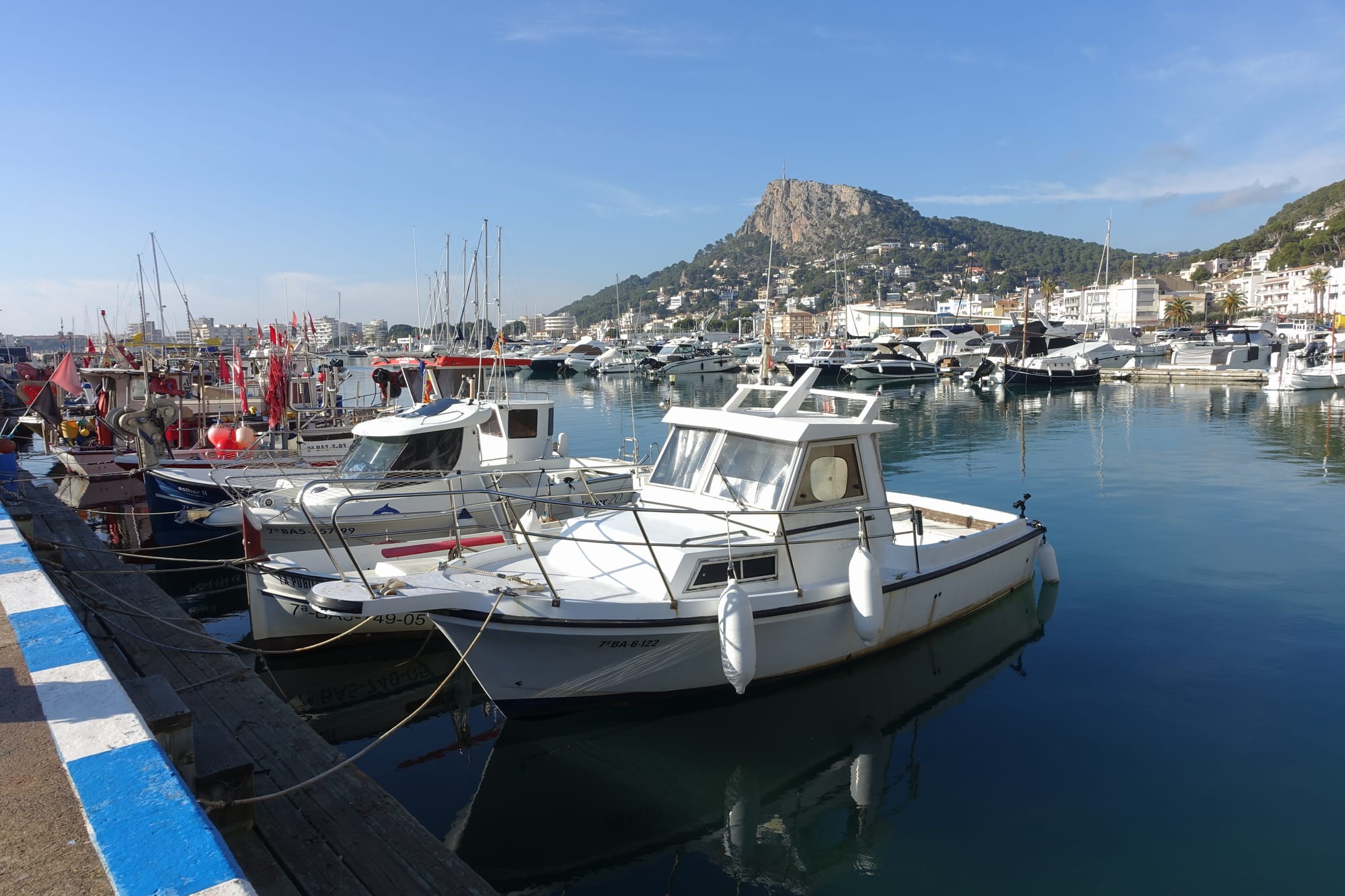
In the European Union’s Mediterranean waters, trawlers are banned from fishing within three nautical miles of the coast or in waters shallower than 50 meters (164 feet). Moya is among those who want to see trawlers pushed into deeper waters, arguing they would do less damage there, as trawlers operating in shallower waters are particularly prone to catching juvenile fish as bycatch. “It’s not that trawling is the devil and we're the angels — but I think trawling needs [stricter] regulations,” the fisher says.
MPAs: protected in name only?
Despite these impacts, bottom trawling remains widespread in many of the Mediterranean’s MPAs, with Spain’s network appearing particularly poorly protected. In 2021, the environmental non-governmental organization (NGO) Oceana found that Spain had the highest number of MPAs in Europe in which fishing was permitted. It estimated that 34 percent of Spanish marine Natura 2000 areas, which are designated to protect the seafloor under EU legislation, were exposed to high-risk fishing methods, including bottom trawling, dredging and longlining, while 21 percent of these sites were exposed to bottom trawling. In 2022, three in four Spanish trawlers fished in MPAs, which in Spain are mostly made up of marine Natura 2000 sites, according to a further Oceana analysis.
Alongside ClientEarth, an environmental law charity, Oceana is taking the Spanish government to court over bottom trawling in a number of marine Natura 2000 sites. (MPAs can be created under national or regional legislation as well as through the designation of Natura 2000 sites under the EU Habitats and Birds Directives.) They accuse the Ministry of Agriculture, Fisheries and Food of failing to carry out environmental impact assessments as obligated when issuing annual licences to trawlers and argue that swathes of Spain’s MPA network are protected in name only.
In a statement to Magma Magazine, a ministry spokesperson said that Spain applies “extensive fisheries regulations stemming from international, European and national standards,” and that the existence of an MPA, including marine Natura 2000 sites, does not “automatically and generally imply a prohibition on all fishing activity or a specific fishing method, such as bottom trawling.” Regulations take into account the habitats and species for which an area was designated, the statement continued, and consider “environmental, social and economic” sustainability.
From phasing out trawling to a ‘case-by-case’ approach
Even in recent years, the European Commission’s approach towards bottom trawling in marine protected areas has ranged from supporting a phased ban to a more ad hoc metric. In its 2023 Marine Action Plan, a policy communication setting out its strategy and political vision, the European Commission called for bottom trawling to be phased out in MPAs by 2030. But in 2025, environmental organizations criticized the Commission for adopting a "case-by-case" approach to trawling in MPAs in another policy communication, the European Ocean Pact.
A spokesperson for the European Commission said that the 2023 Marine Action Plan “does not entail a blanket ban on bottom trawling in MPAs and beyond.” While it was not binding, they said the communication “set the objective of a gradual transition to practices that are less damaging to the seabed, especially in the most sensitive marine areas,” which, they added, the European Ocean Pact also encouraged. Decisions to limit or ban specific fishing techniques must be taken in the context of the Common Fisheries Policy and on a “case-by-case basis,” they said.
Though the initial phaseout commitment was non-binding, it was meant to push member states into action, said Nicolas Fournier, Oceana Europe’s campaign director. But with little progress made so far, he said , “the logical next step would be for the Commission to consider addressing the problem directly themselves.” Oceana is campaigning for a ban on bottom trawling in the EU’s MPAs.
In a political climate where the pendulum has swung away from environmental action, litigation may offer a clearer path forward, said Fournier. “It’s definitely a bit harder now given the political context, but that's also why we are now relying a bit more on the litigation…,” he said. “The environmental obligations are still there.”
Yet restricting trawling in MPAs has become increasingly politically contentious. The European Bottom Fishing Alliance (EBFA), an industry lobby group, claims that banning the practice from the EU’s MPAs would increase reliance on imports from “unsustainable sources like Russia or China.” The group has endorsed the European Ocean Pact’s “vision of tailored management plans” for MPAs — site-specific rules rather than a blanket restriction.
The case for more protection
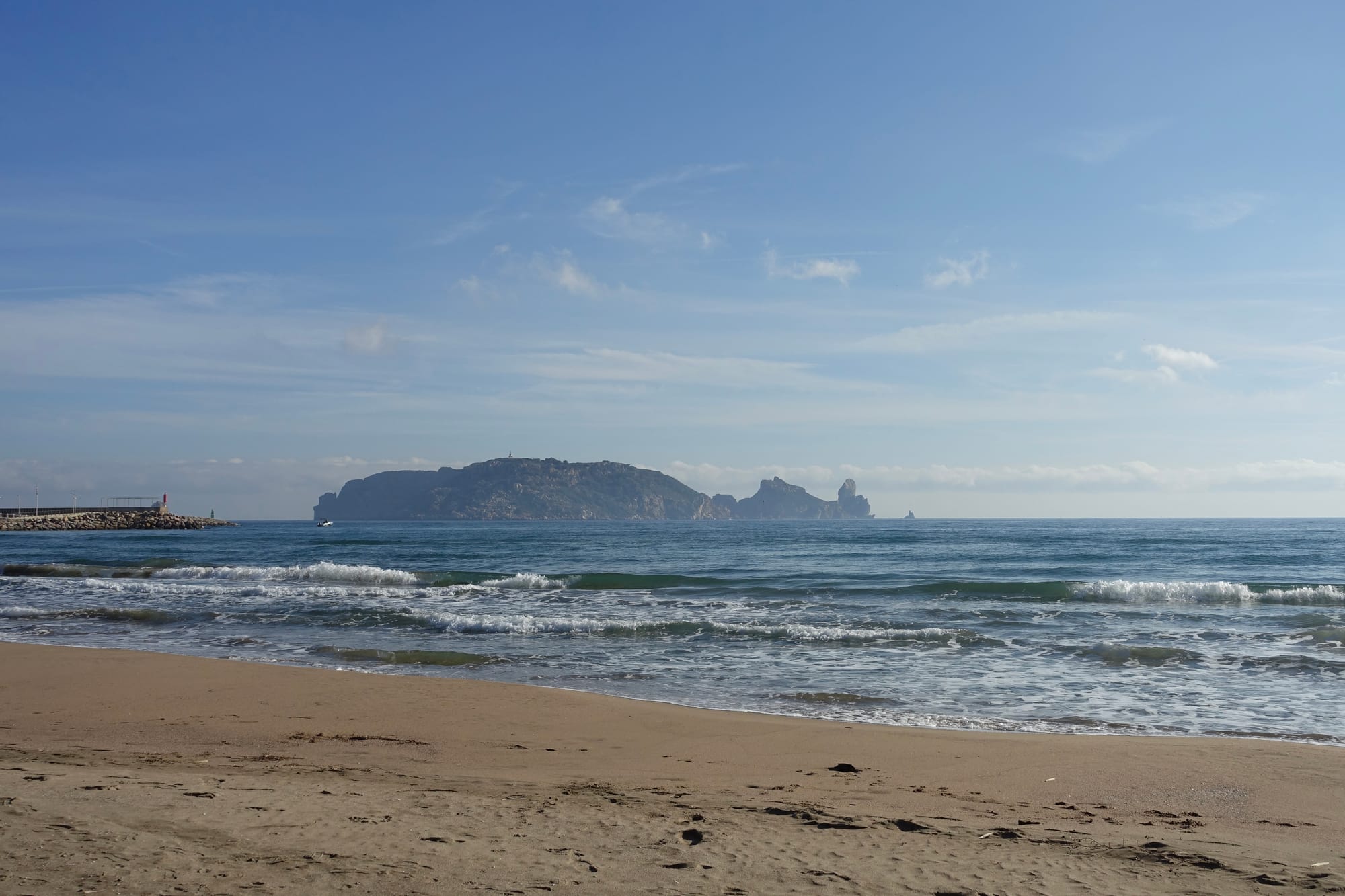
Spain’s artisanal fishing fleet has plummeted over the past 30 years. Near L’Estartit, however, the protected waters around El Montgrí, Les Medes and El Baix Ter have likely helped artisanal fishers survive.
Various areas of this marine Natura 2000 site have overlapping levels of protection under differing frameworks. Within this area lies the Medes Island marine reserve — a strict no-take zone — surrounded by a buffer zone in which trawlers are banned but restricted low-impact and recreational fishing is allowed. Moya grumbles at what he sees as a double standard: While even artisanals are barred from the no-take zone, diving operators can bring in boatloads of tourists. But owing to the spillover effect, whereby protections allow fish populations to recover and spread beyond the reserve’s invisible boundaries, Moya acknowledges that rockfish, groupers and scorpionfish are more plentiful in the buffer zone.
In the rest of the Natura 2000 site, trawlers can operate, provided they are far enough from the coast. Though the reserve is widely considered a conservation success story, some of the area’s artisanal fishers say their catches remain under pressure from trawlers operating from nearby ports.
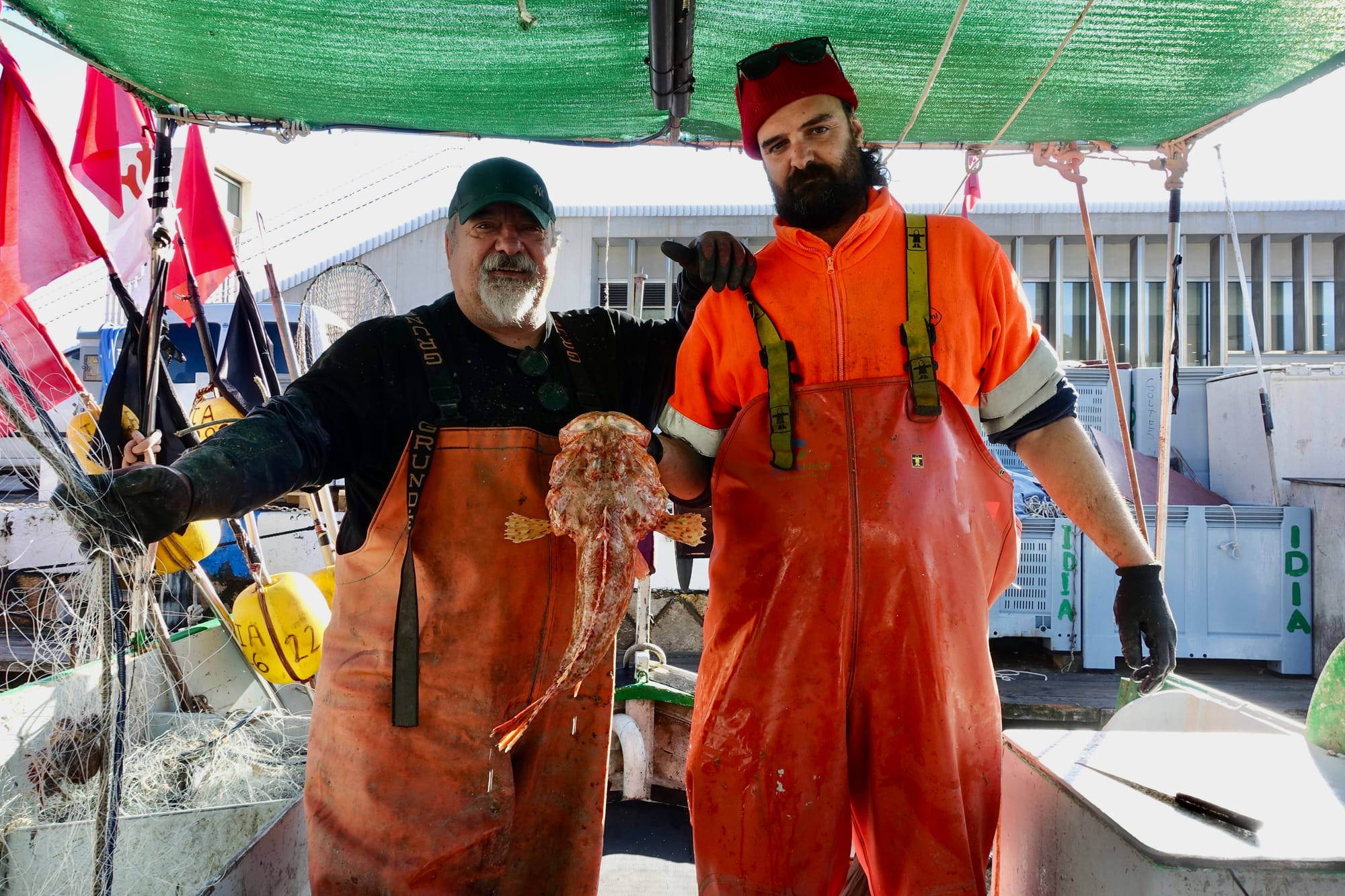
Jaume Pagés Yeves, a third-generation artisanal fisher, complains that trawlers use engines far more powerful than permitted and that his catches have dwindled over the years. “More nets, more kilometers covered and fewer captures,” he says as he cleans his nets in L’Estartit’s harbor. Pagés is skeptical that strong action on bottom trawling in MPAs will come anytime soon. “They’ll bring in a ban — once there are no fish left,” he says.
Less than an hour’s drive up the coast from L’Estartit, Roses is a key port for the region’s trawling fleet. Toni Abad, the head of the Roses fishers’ guild and president of the Catalan federation of fishers’ associations, says trawlers have significantly reduced their bycatch in recent years by using nets with wider mesh sizes. His association includes fishers who employ artisanal methods, trawling and longlining, and he argues that trawling has become increasingly selective. Yet research by the Catalan Research Institute for Marine Governance found that across sampled fishing trips in Roses in 2023, at least 23 percent of catches by trawlers were discarded.
Fishers in his guild are concerned about the possibility of trawling being phased out in MPAs, including those near Roses. “There is a lot of uncertainty and we don't know what the repercussions will be if it does happen,” Abad says.
But even among trawlers, there are some who hold a different view. According to Jan Noel, the owner of two trawlers in Roses, a ban on bottom trawling in MPAs is needed to combat overfishing. The industry will adapt, he argues: “We fishermen wouldn’t do it if we weren’t forced to. The sea needs to rest.”
All too often, Moya believes, the way we manage the sea is shortsighted. “Pan para hoy, hambre para mañana,” he says. Feast today — and famine tomorrow.
Top image: Trawl net lost on the coralligenous seabed of Fort d’en Moreu, Cabrera, Balearic Islands, Spain. The picture was taken during an Oceana expedition to the Balearic seamounts in August 2014 (Oceana).
This story is part of the series “Coasts and Seas Under Strain,” produced as part of the second edition of the Magma Environmental Reporting Fellowship.