- Text and photos by Neal Haddaway
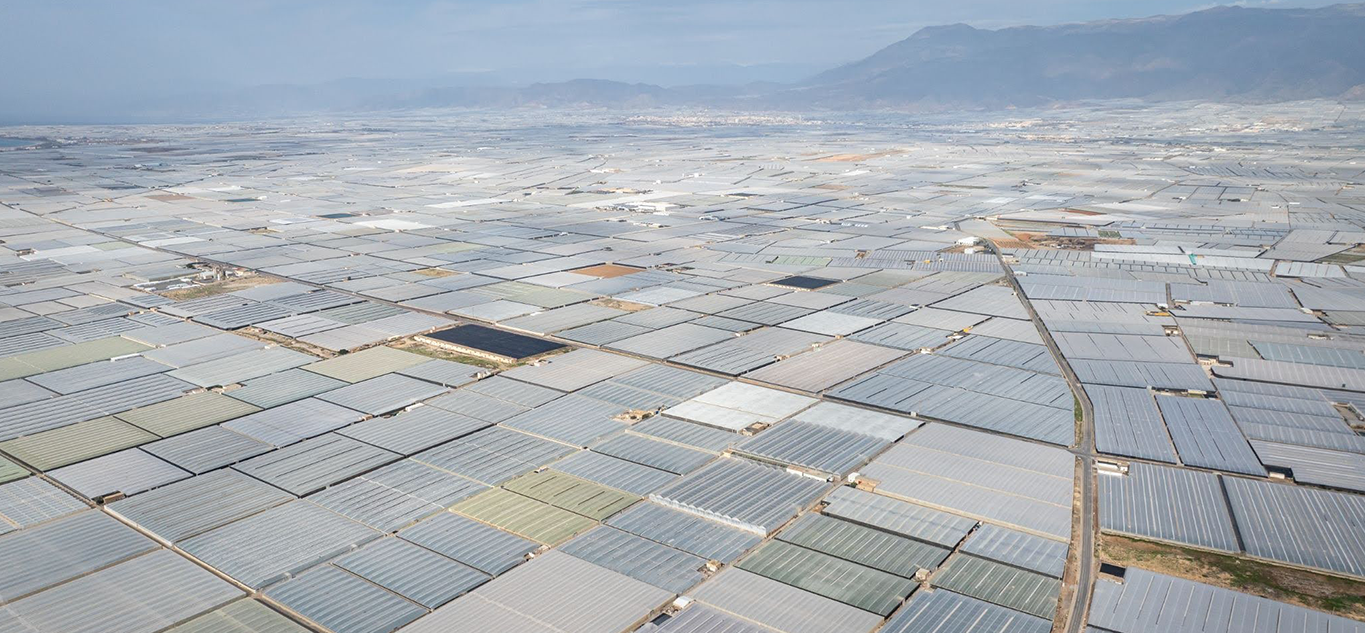
ALMERÍA, Spain — Looking out toward the Mediterranean Sea, the vast expanse of white plastic-covered greenhouses reflects the pink and orange of the setting sun. A large truck rumbles through the dust, navigating a tight corridor toward a warehouse connected to the back of one of the greenhouses — little more than thin plastic film stretched between wooden poles.
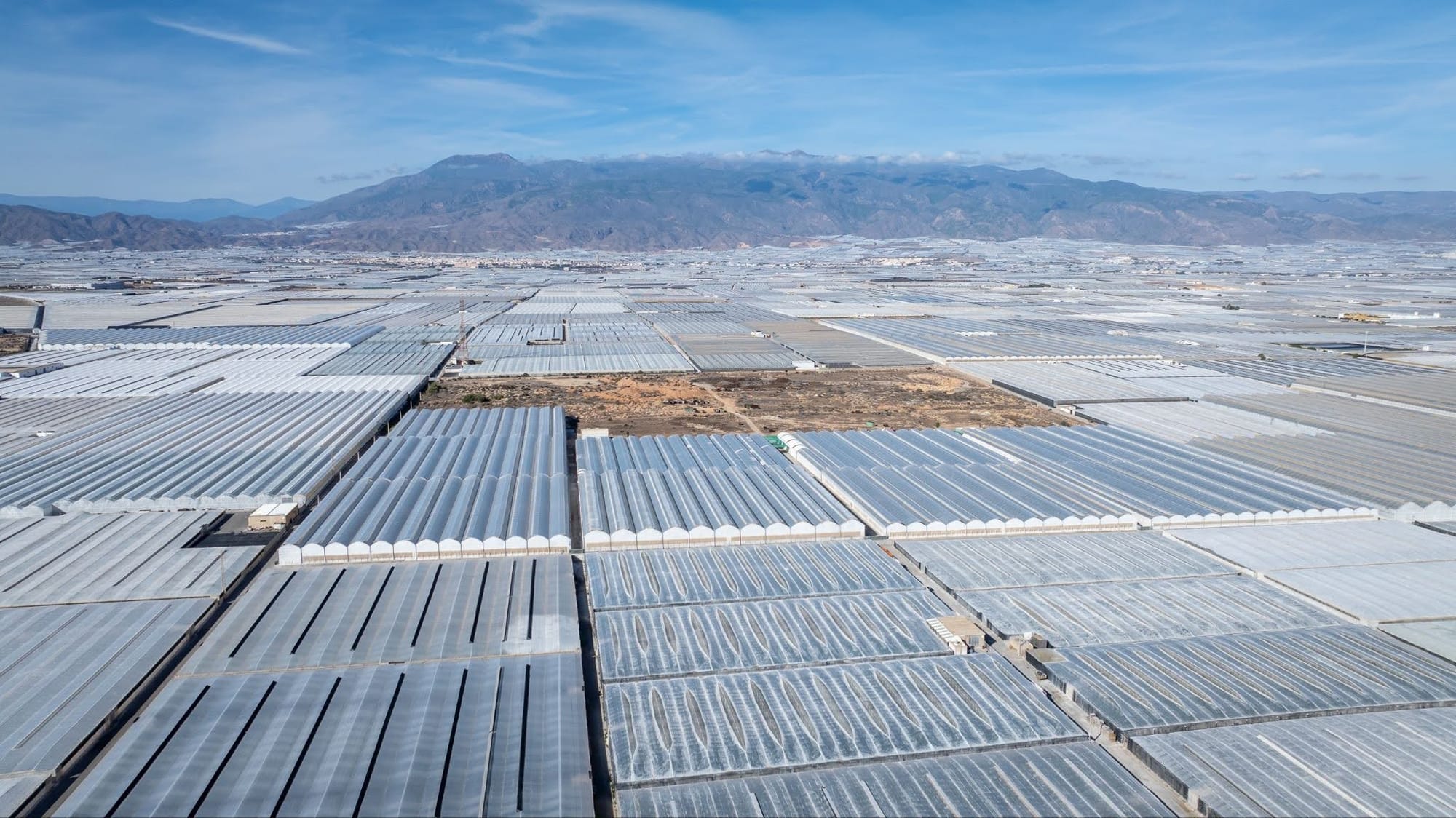
The truck is going through what is known as Almería’s “Sea of Plastic,” a 320-square-kilometer (about 124 square-mile) agricultural landscape in southeastern Spain so immense it is easily visible from space. I know the area well, having lived and worked in the province on and off for several years. In November 2025, I visited again to see how this vast food-producing hub is coping with newly enforced environmental regulations. What I found was an intensive agricultural region that continues to be littered with plastics of all types.
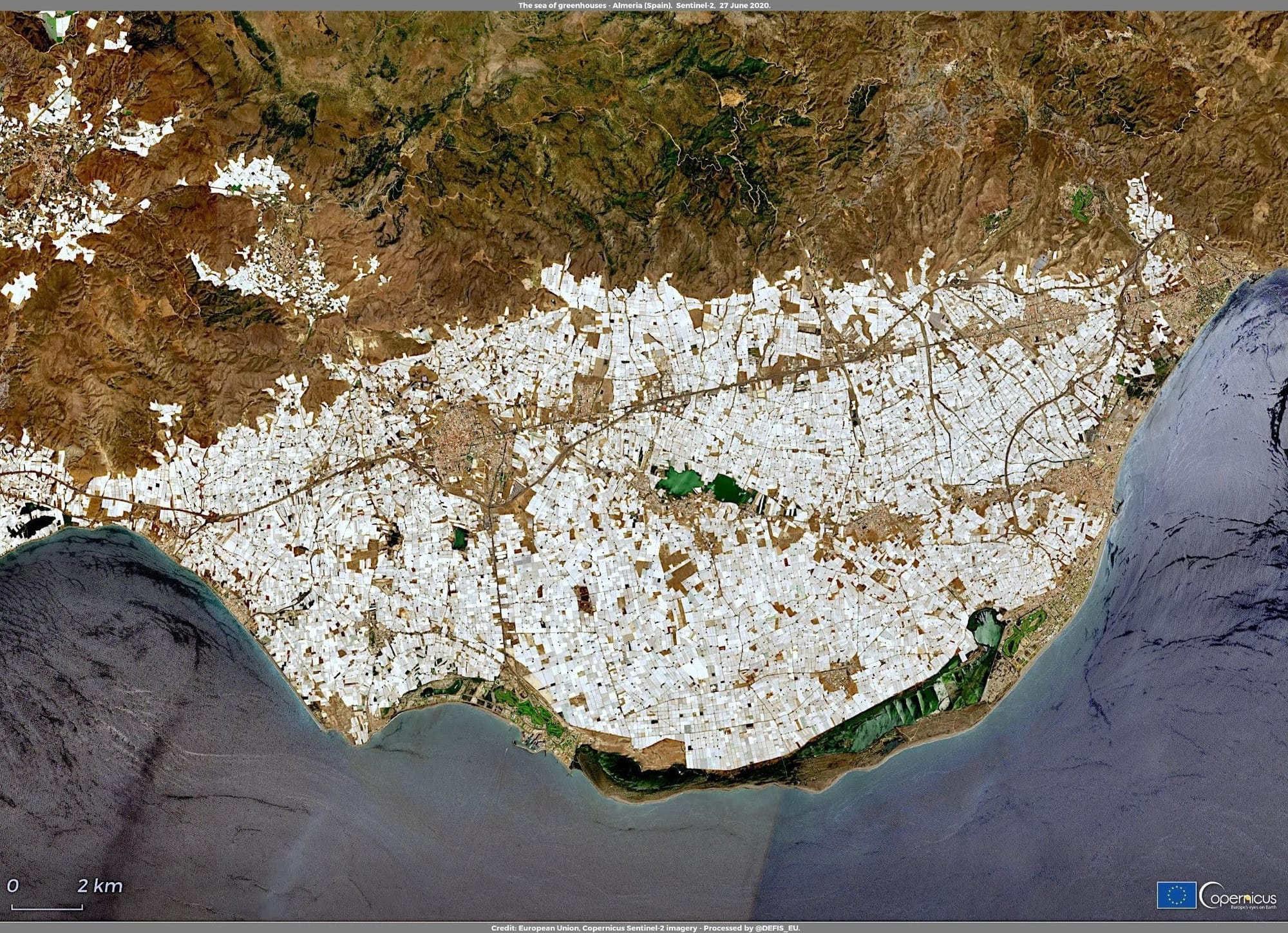
In many ways, the “Sea of Plastic” is an agricultural miracle — the mild winter climate and year-round sun mean that fruit and vegetables can be grown all year. These plastic greenhouses protect crops from the wind and help soil retain moisture. The system operates on a massive scale: It produces almost 4 million metric tons of cucumbers, tomatoes, squash, peppers, eggplants, melons and other produce — the majority are destined for supermarkets in Germany, France and the United Kingdom.
But this vast agricultural system is far from a success story. The environmental and social impacts of this intensive production are diverse and stark — the delicate scrubland ecosystems have been destroyed, the deep aquifer used for drinking and irrigation water has been overextracted and groundwaters polluted. Despite awareness of these issues for decades, these problems continue to exist.
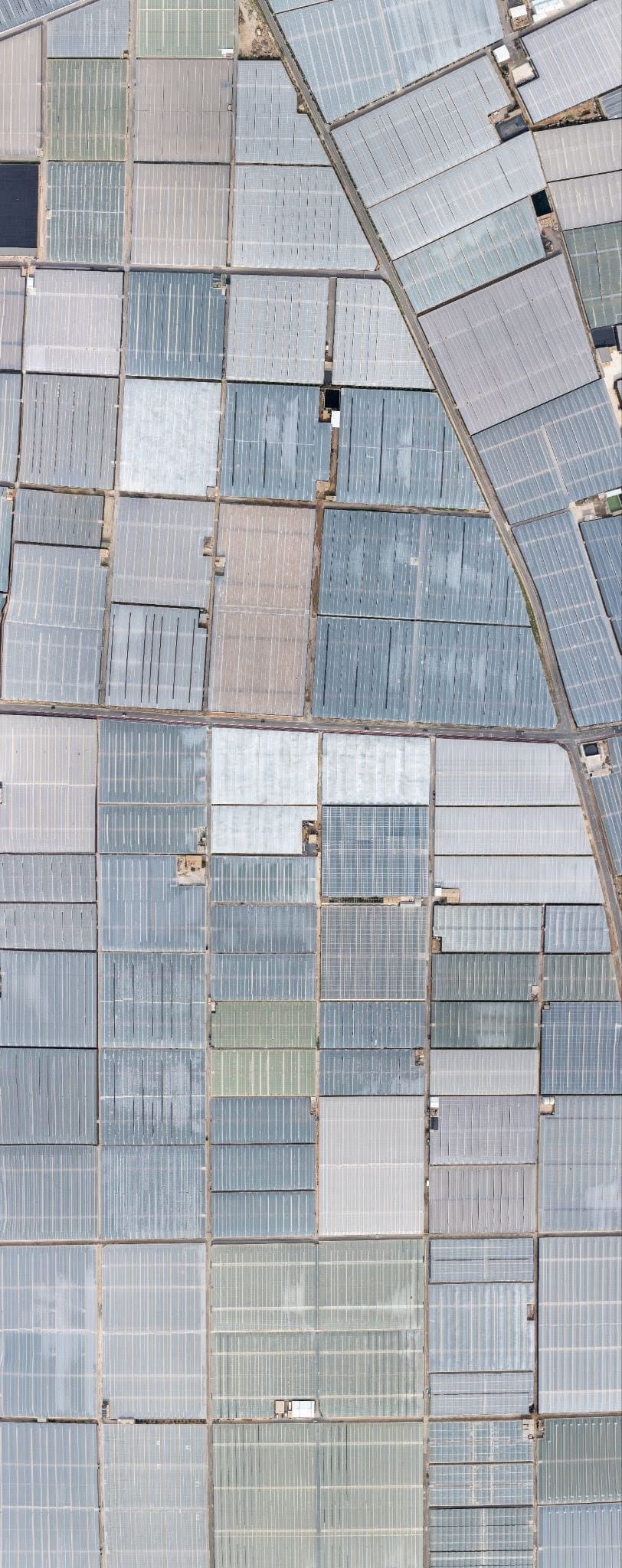
Yet one of the most pressing problems remains plastic pollution, which encompasses everything from plastic trays of seedlings to raffia, thin string used to train climbing plants, to yellow plastic fly traps. In addition, 32,000 hectares of plastic sheeting cover the tops of the greenhouses — an area that is estimated to produce over 34,000 metric tons of plastic waste each year as the sheeting becomes brittle in the harsh sunlight and needs replacing.
“The volume of plastic used in Almería is huge, and it appears to be everywhere you look and at every scale, from large rolls of plastic sheeting down to microscopic fragments in the soils,” said Gerardo Pulido-Reyes, a researcher and co-author of a study examining the prevalence of plastics in the greenhouse horticulture system in Almería. He and his co-authors found plastics everywhere they looked.
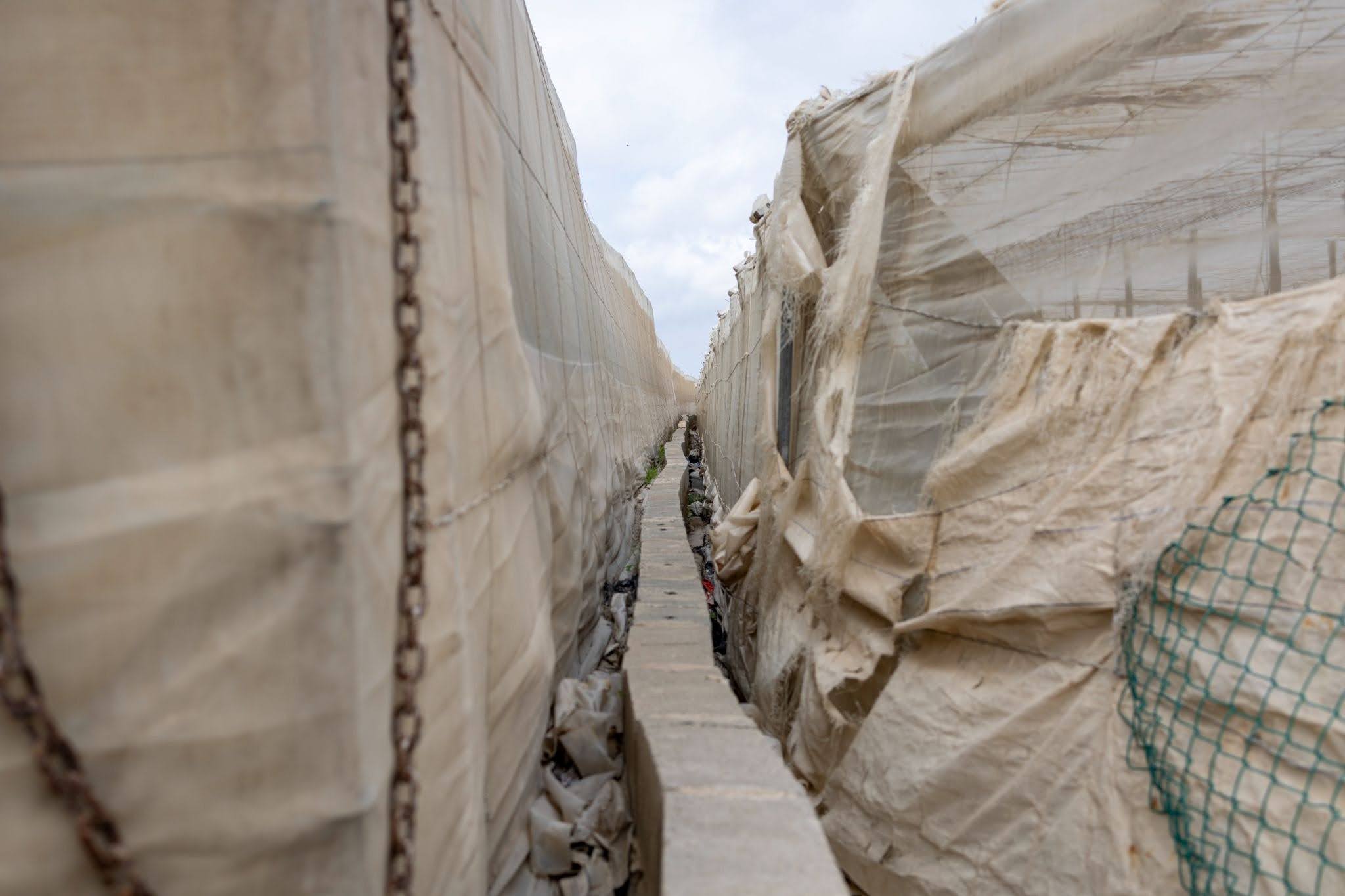
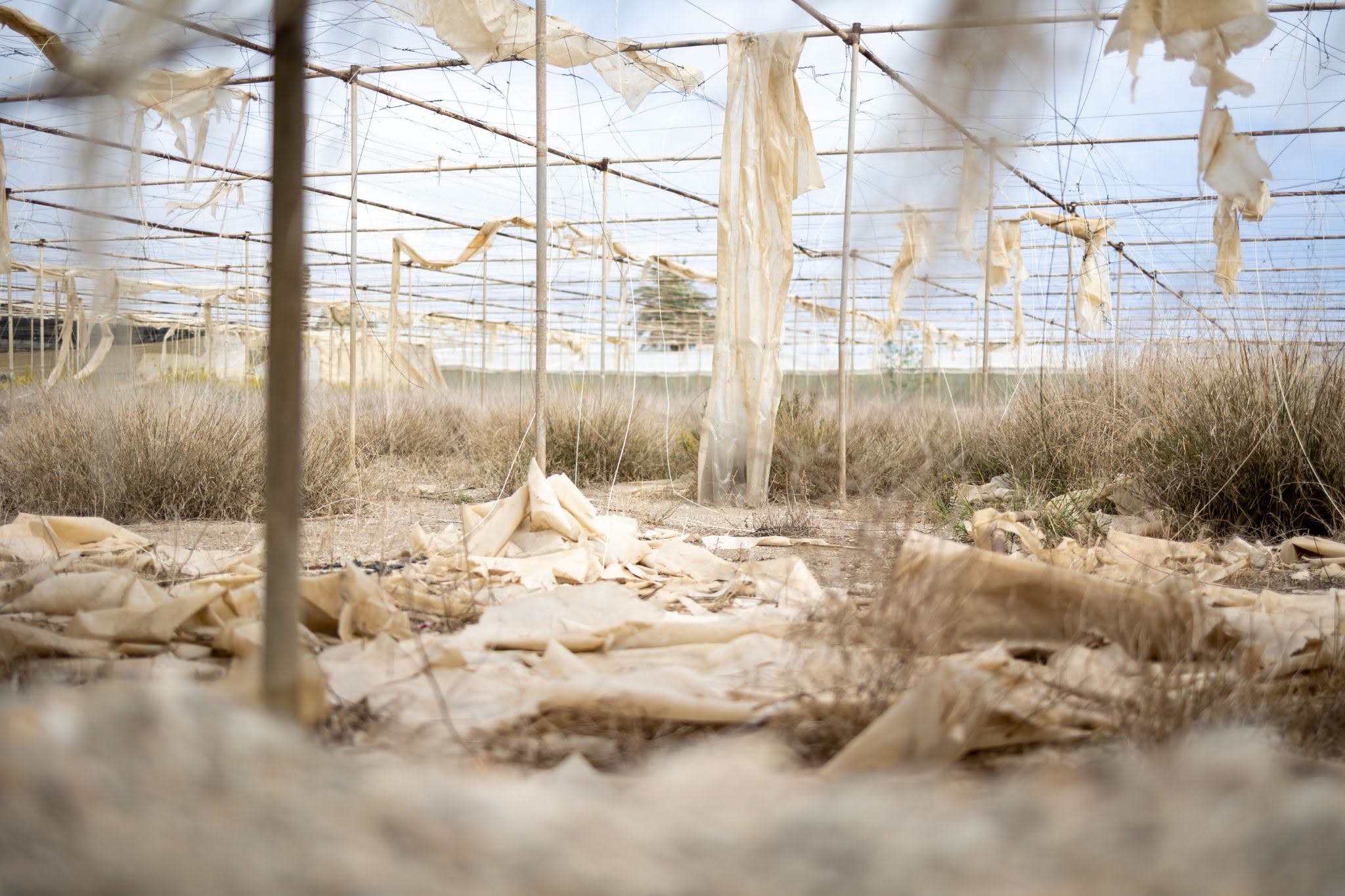
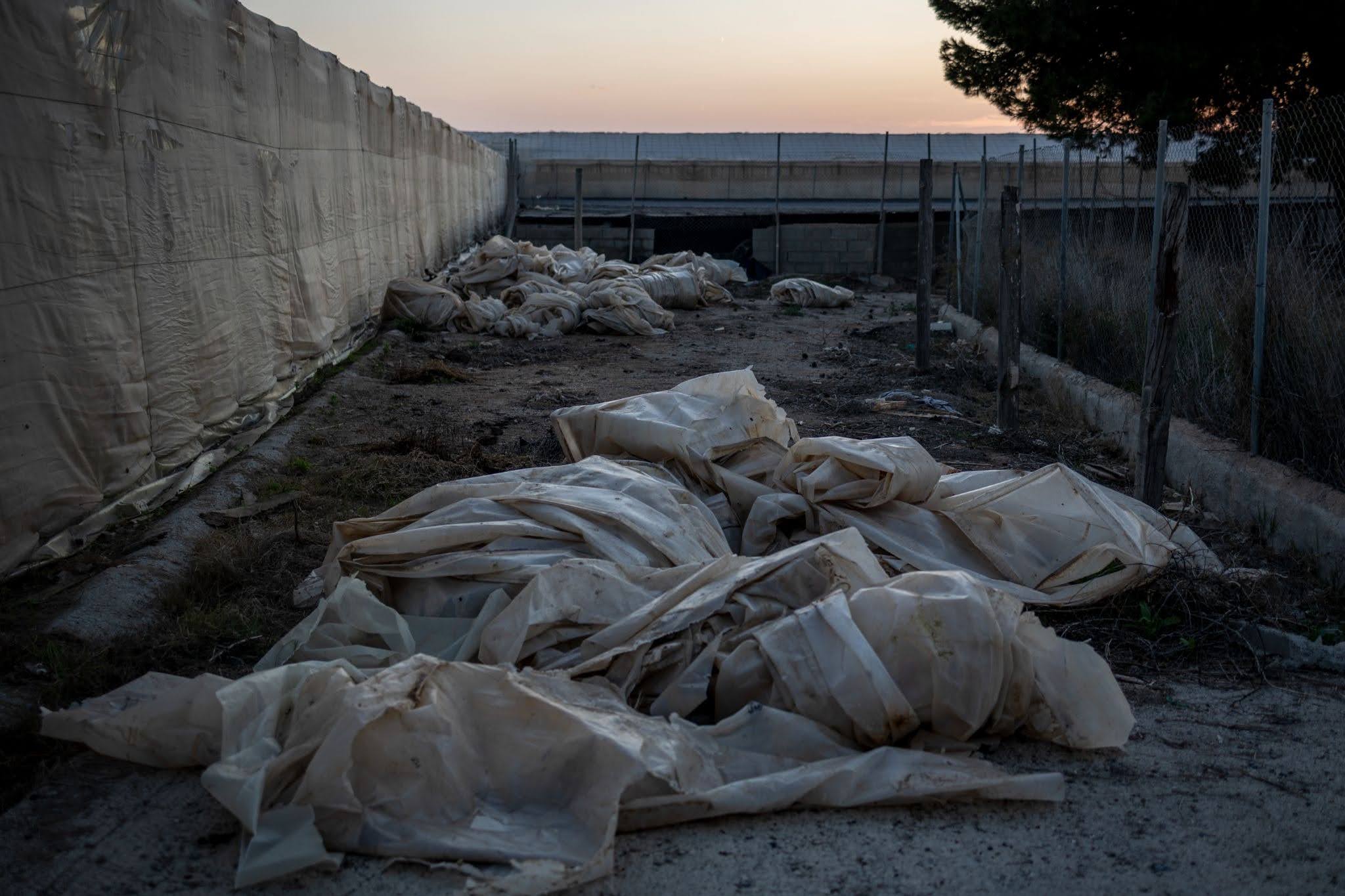
The plastic sheeting breaks down in the hot Mediterranean weather and requires regular replacement.
The problem is not limited to Almería, experts warned.
As Winnie Courtene-Jones, a researcher in plastic pollution at Bangor University in Wales, pointed out, the use of plastics in agriculture has increased over the last 70 years, with an estimated 12.5 million metric tons used globally every year, and plastic production is projected to triple by 2060.
Courtene-Jones added that there is still little scientific understanding about how much plastic ends up in vegetables and the long-term impacts of plastics and their associated chemicals on human health and our environment. “[Research] is needed to ensure that plastics are only used when essential,” she said.
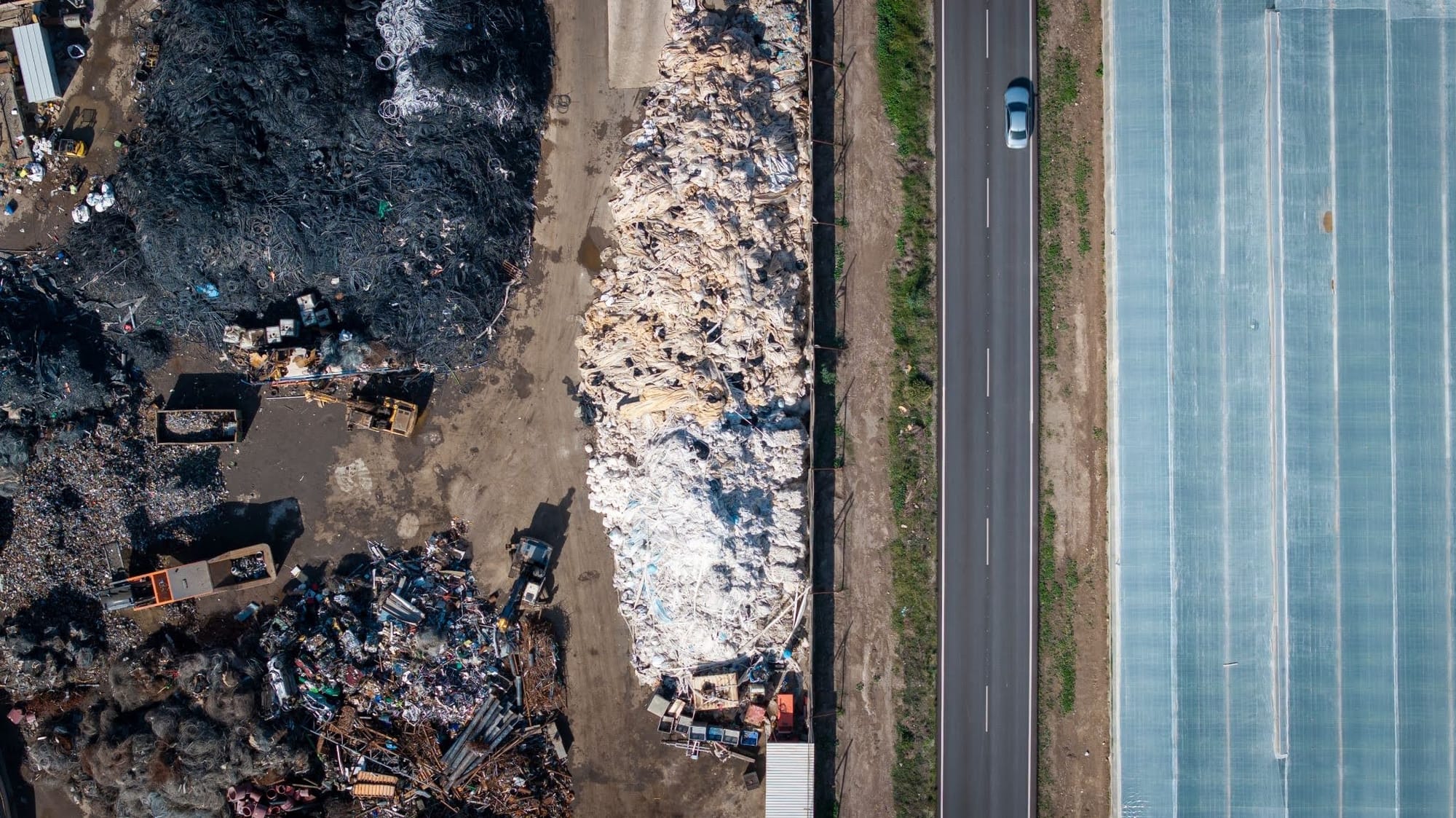
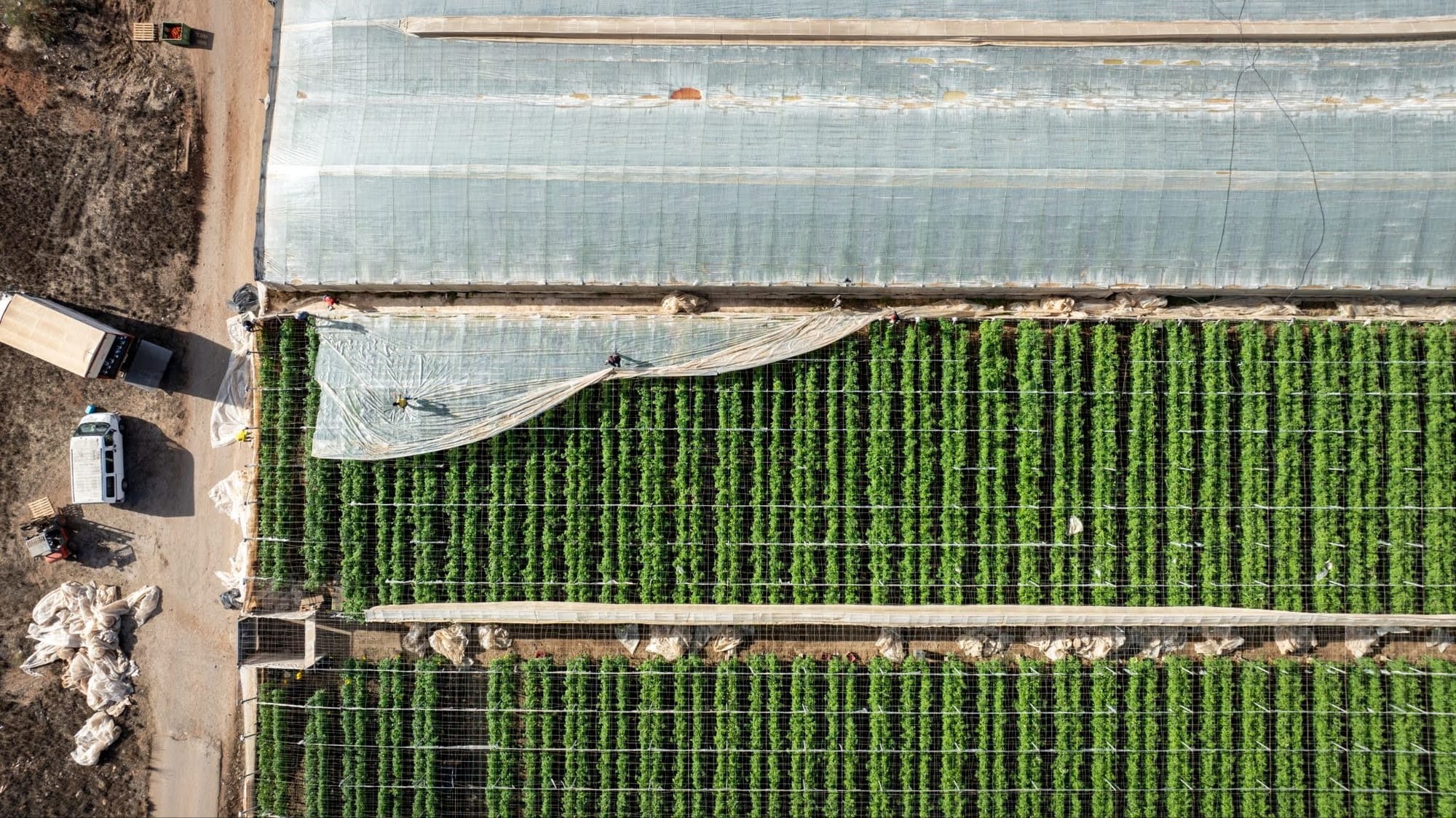
In Almería, the issue of plastic pollution can be traced back to the site’s history. The “Sea of Plastic” was first developed under the Spanish dictator Francisco Franco, driven by a desire to ensure the country produced enough food to support itself and lift the region out of poverty. In the 1970s, the agricultural hub grew in large part thanks to the advent of cheap plastic sheeting developed during World War II.
Such plastics are prized by farmers for their disposability and affordability. Alternatives — ones that are more sustainable and far less damaging, such as raffia or twine, made from plant fibers, like jute or cellulose, or compostable biopolymers like viscose — are available, but at a higher cost.
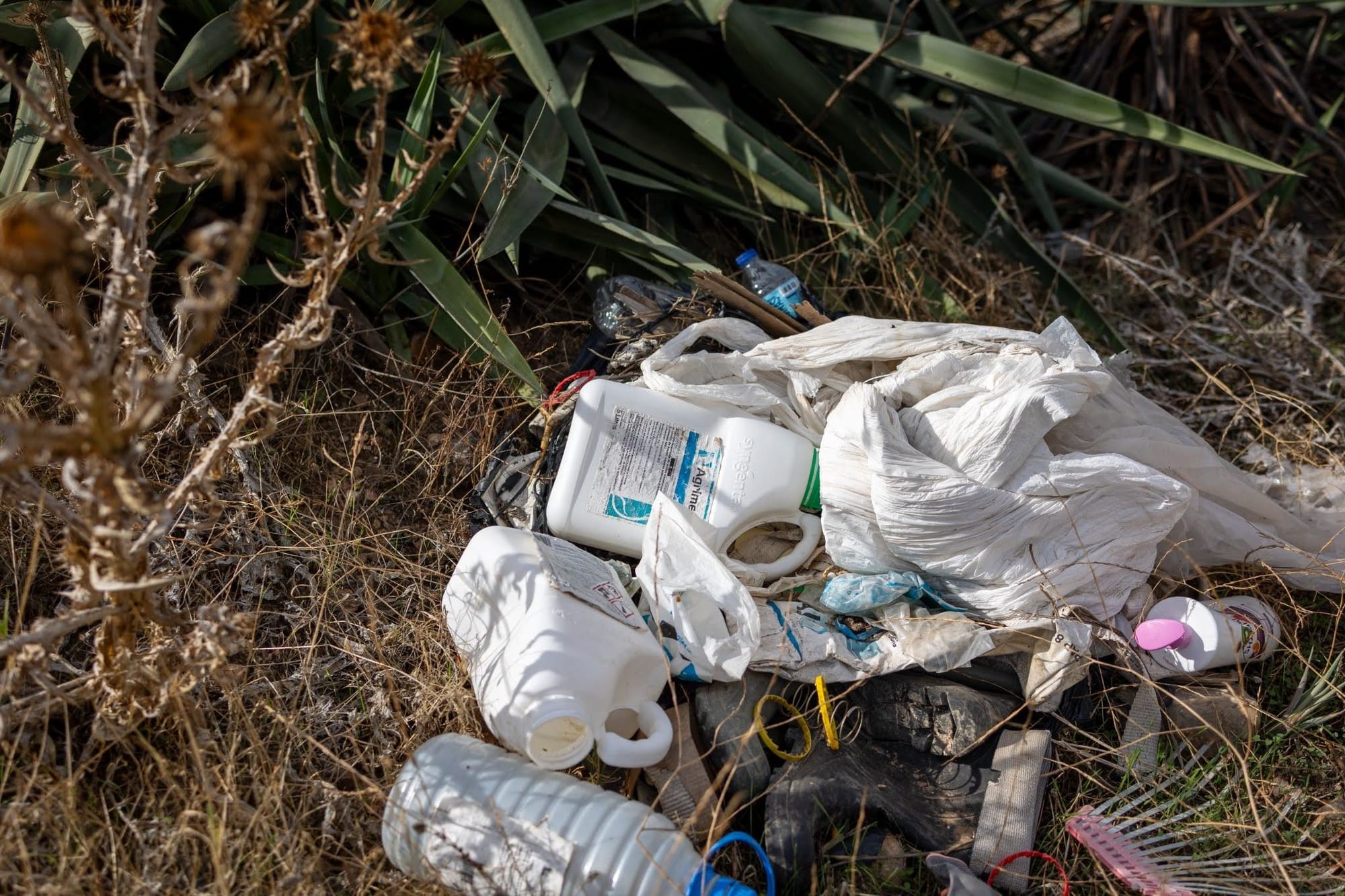
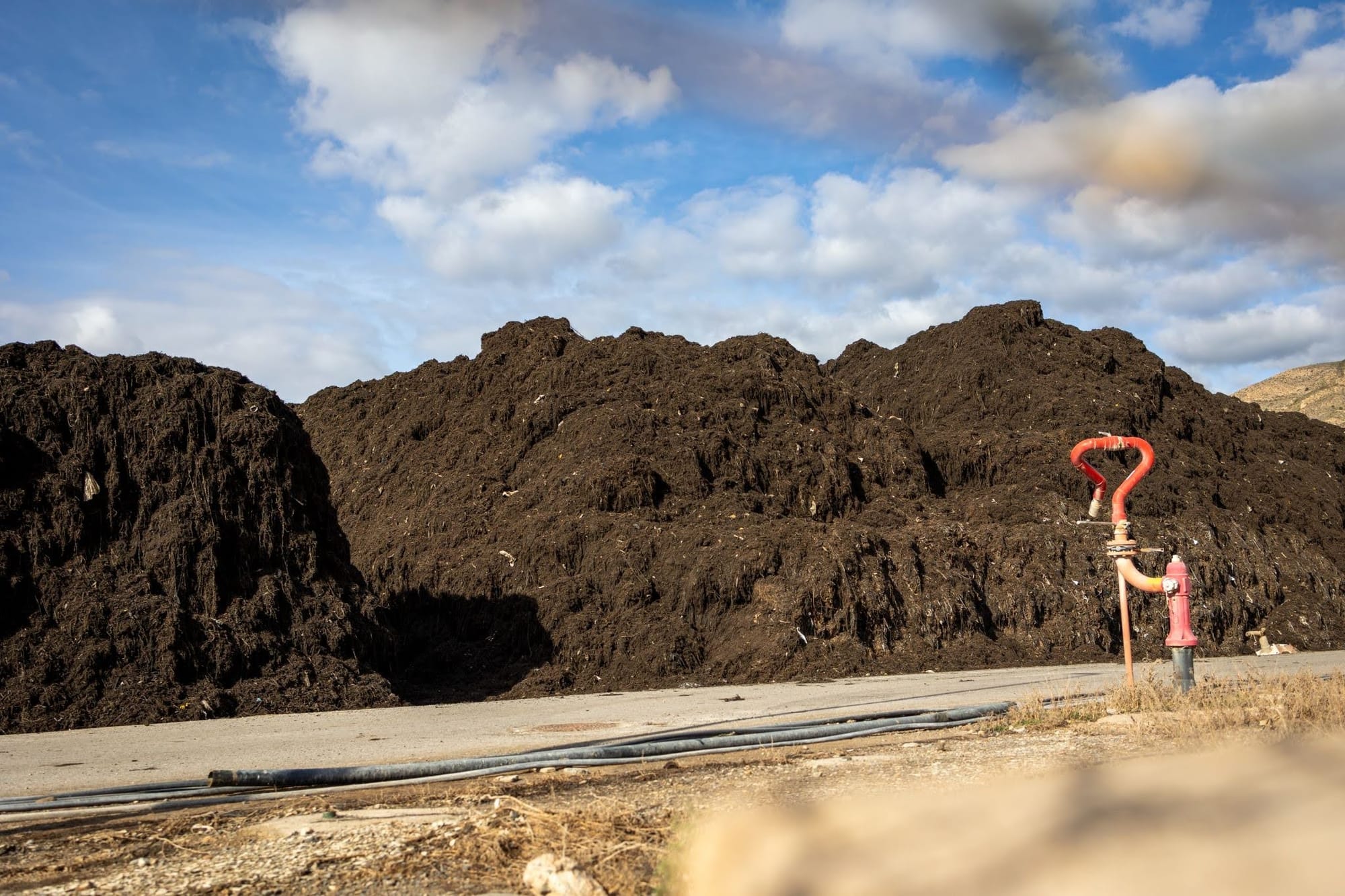
Plastic often ends up in the waste material from greenhouses, contaminating compost. Juan Bartolomé Escobar is a manager at Servicios Ambientales Las Chozas, one of the largest compost facilities in the region. These facilities handle the millions of metric tons of plant waste at the end of each harvest, turning it back into compost for farmers to enrich their soil in future campaigns.
Escobar told me that environmental controls on waste plant material require either stripping out plastic raffia or replacing it with biodegradable alternatives. “Both options entail higher operating costs that farmers must bear,” he said.
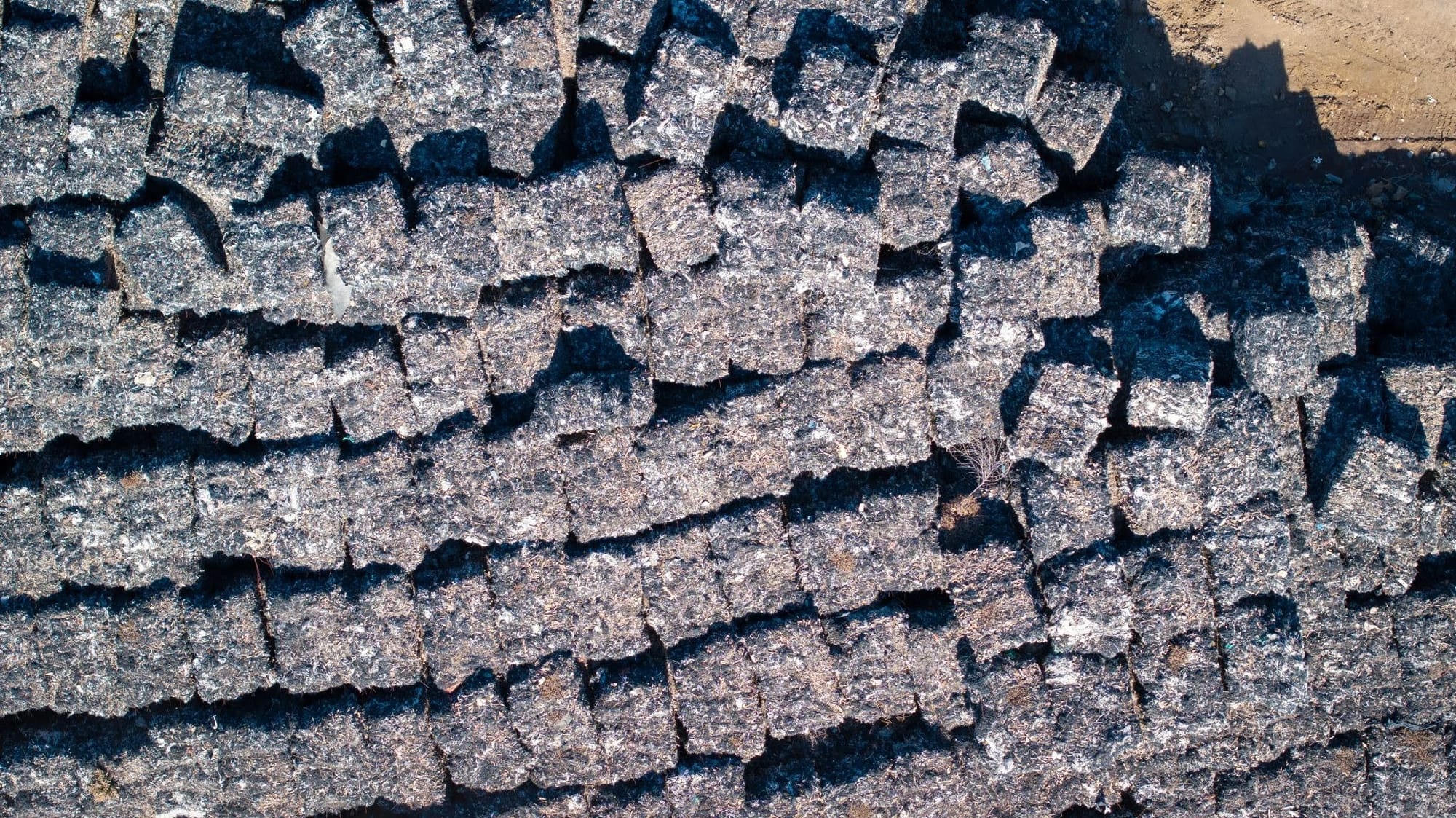
Recently, as plastic pollution has become an ever-growing problem in Almería, composting facilities in the region have begun implementing stricter controls on the plant material farmers send them. They are required to reject biomass that includes plastics, especially the raffia twine commonly used to tie vegetable plants to their supports. This isn’t a new law — it follows a 2022 national statute on waste and contaminated soil, which mandated that farmers remove non-organic materials before composting. It also required composting sites to reject material containing plastics.
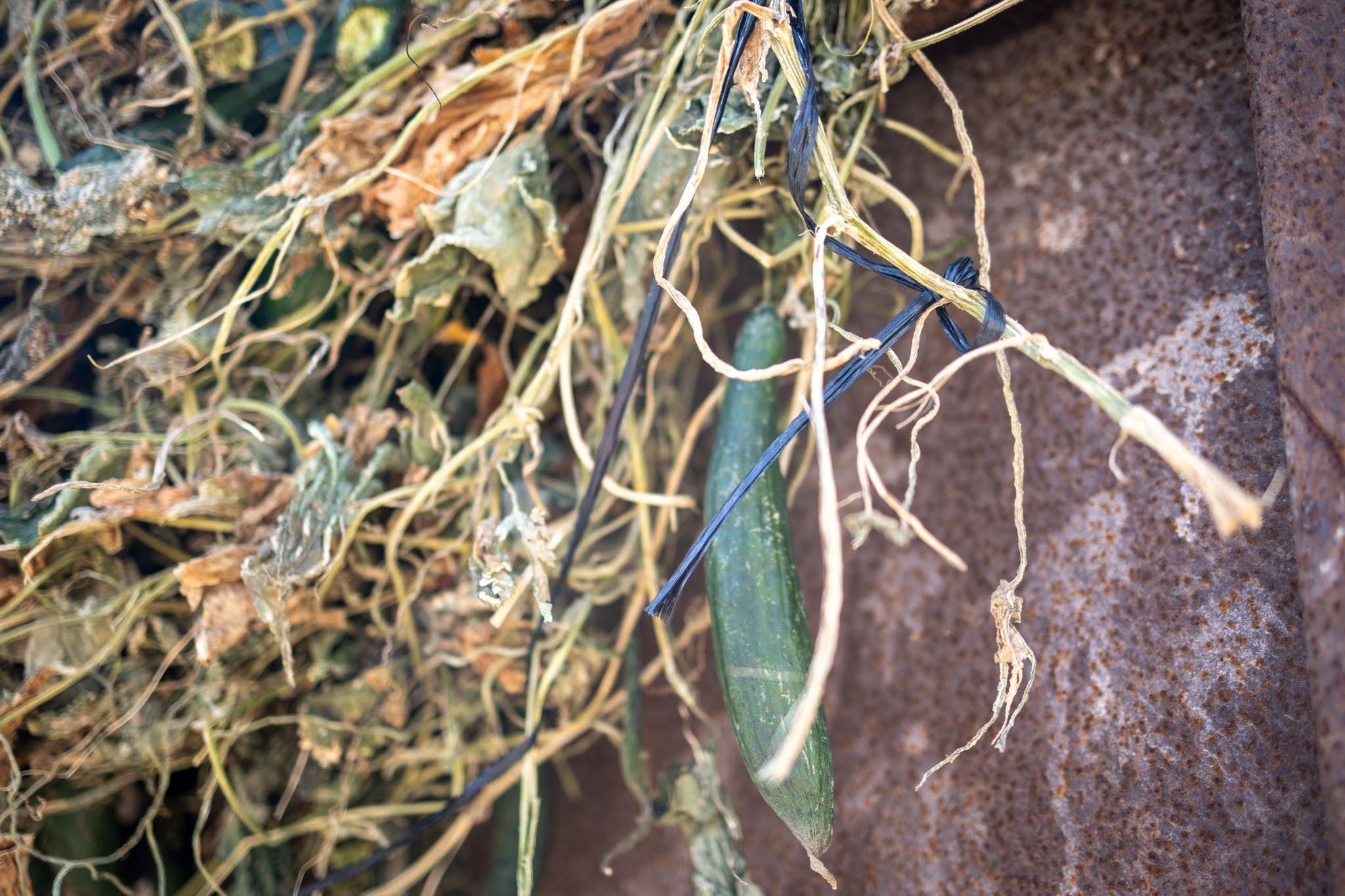
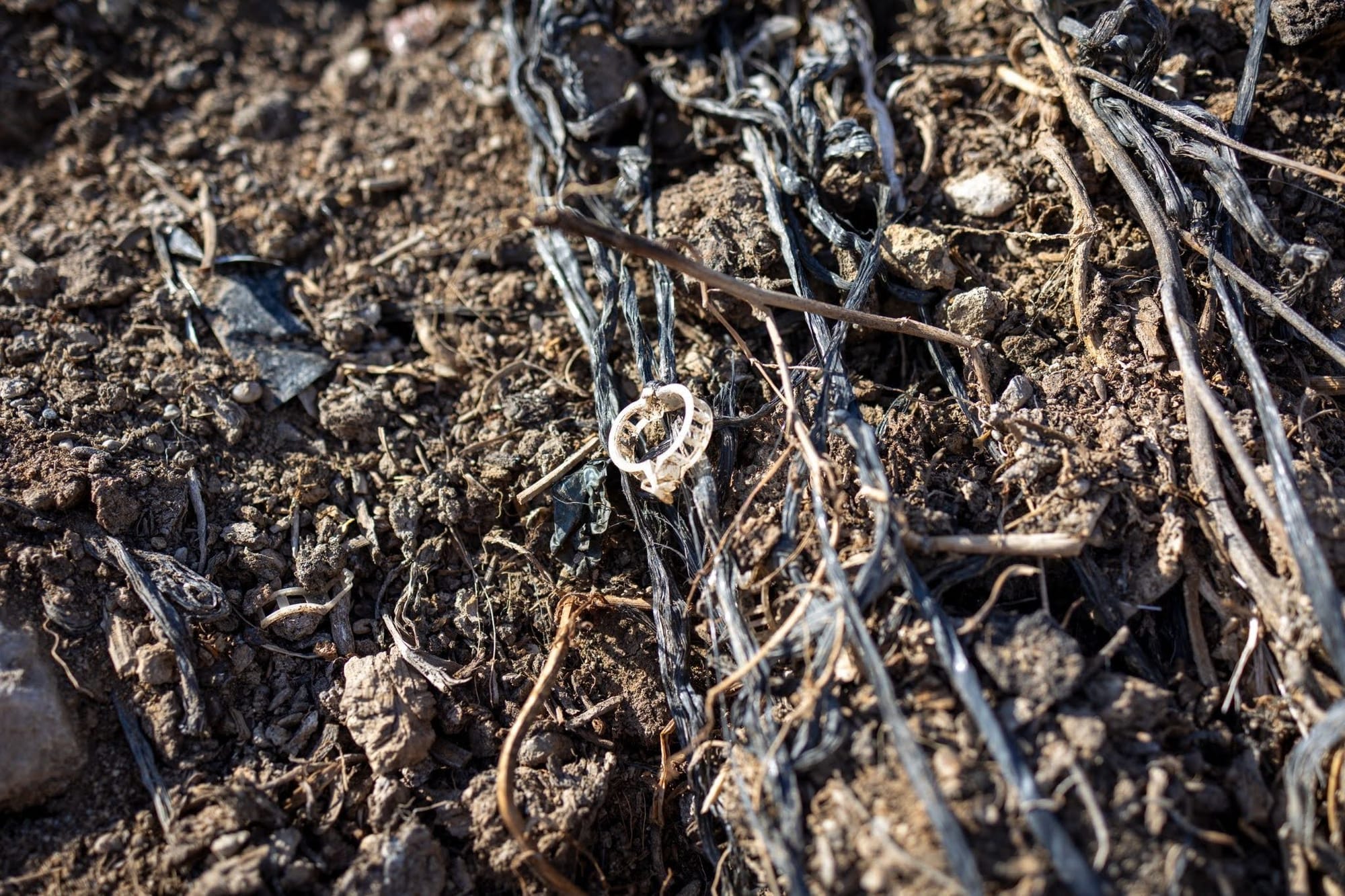
Although I did not see evidence of raffia entering composting facilities during my visit, I did see a large volume of plastics throughout the sites. Plastic raffia remained visible in fresh compost dumped in public spaces, as well as in plant material being fed to livestock in multiple smallholdings.
Even if raffia were to be totally cleared, it constitutes just 3.2 percent of all plastic consumption in Almería's greenhouses — the rest being made of sheeting, trays, traps and other plastic objects. One academic study identified 19 broad types of plastic used in greenhouse agriculture in the region, generating over a metric ton of waste across each hectare of greenhouse each year.
Plastic may also be seeping into the flora and fauna of the surrounding areas. Pulido-Reyes’ recent study detected plastics in all examined organisms across the region — including in invertebrates, rabbits, fish, hares and foxes.
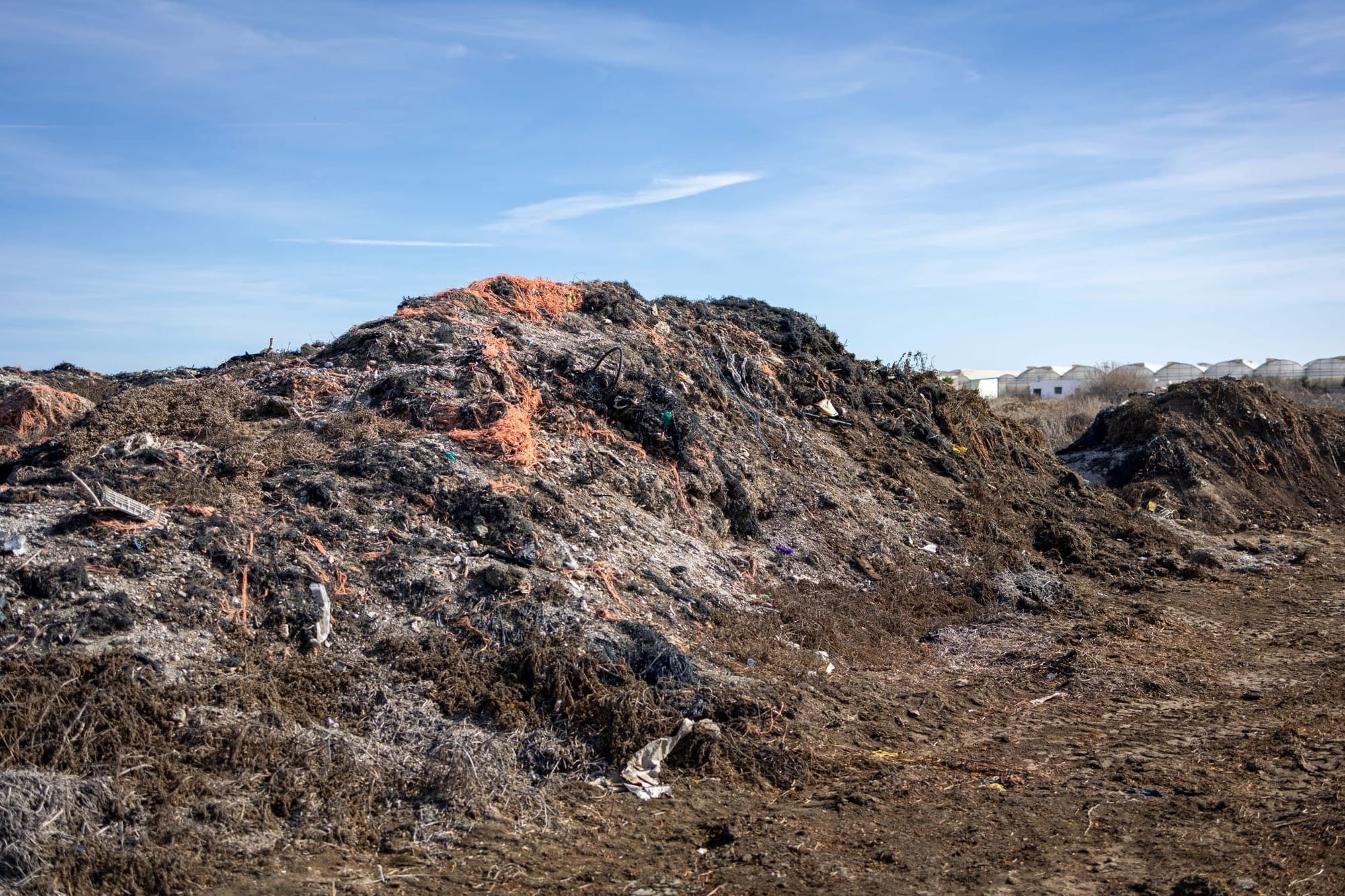
“People living and working in these areas are also likely exposed to high quantities of microplastics, which they could ingest or inhale,” said Courtene-Jones, who investigates the scale and impacts of the plastics crisis.
Of 16,000 chemicals used in plastic, she added, about a quarter are “chemicals of concern” that can accumulate in human bodies and spread in the environment.
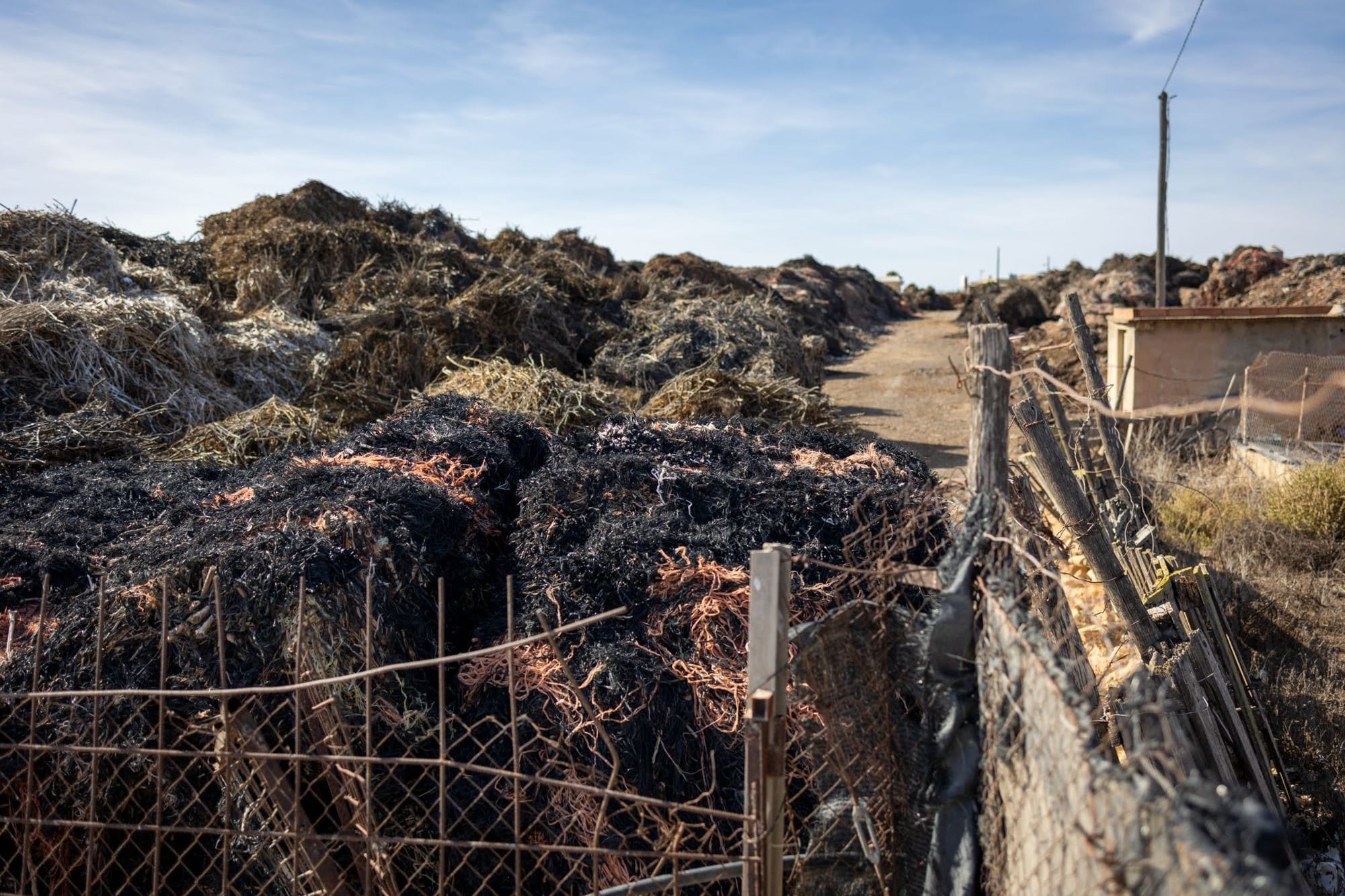
As plastics continue to litter the area, Almería’s greenhouses are still expanding.
Standing at a viewpoint overlooking the “Sea of Plastic,” surrounded by large piles of dumped waste, I could see new structures being built on the outskirts of the greenhouses — bare metal pushing out of the dry earth like the bones of a half-buried low-tech beast — and I wondered how long the system would continue to grow.
Looking at the greenhouses from far away, I found myself thinking that this productive miracle exists because of plastic, and I wonder whether Almería could ever exist without it.
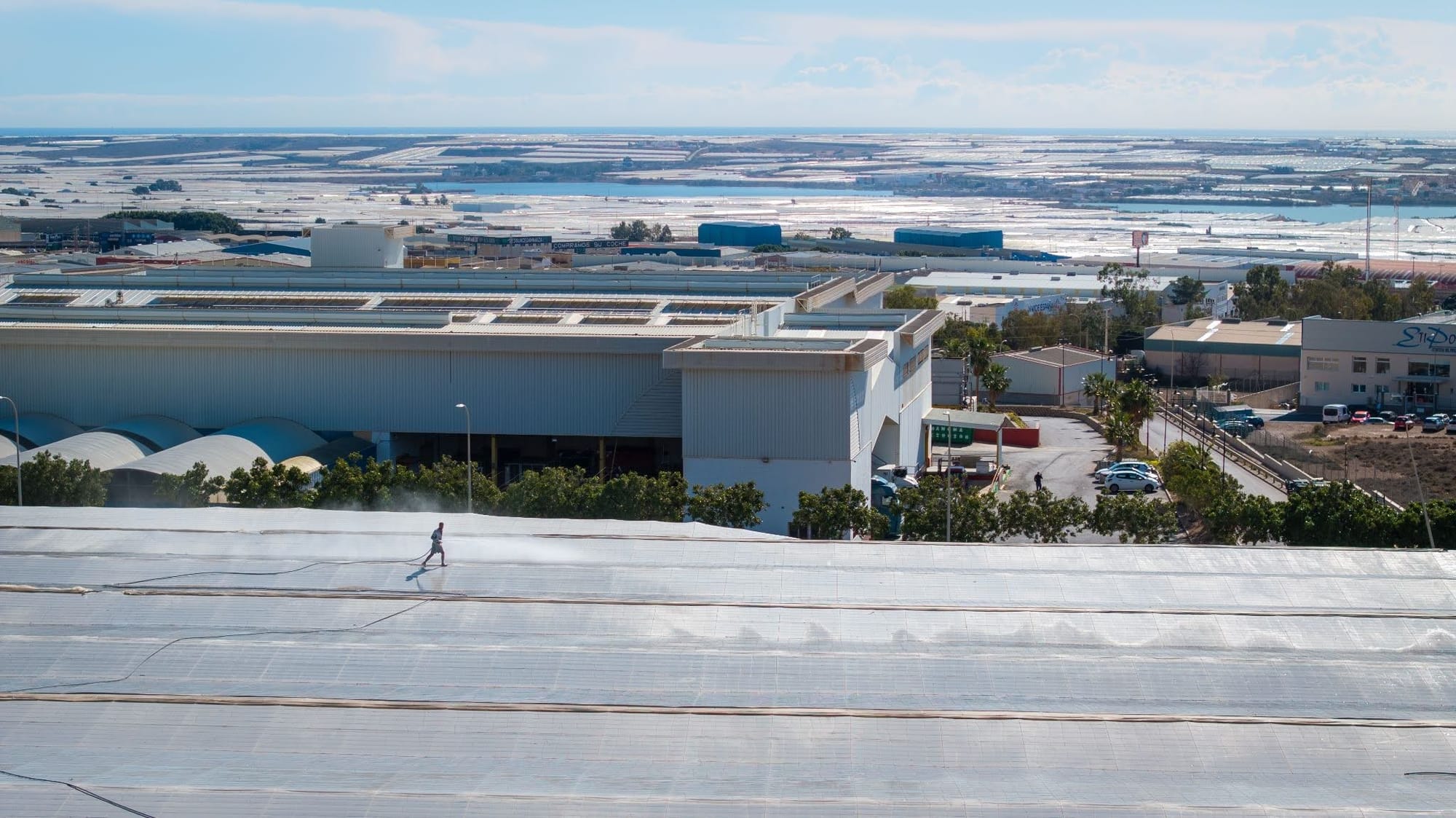
Top image: Almería’s “Sea of Plastic” is an area of 32,000 hectares of greenhouses that support the production of fruit and vegetables worth about 4 billion euros ($4.4 billion), mostly exported to countries such as Germany, France and the United Kingdom (Neal Haddaway).
This story is part of the series “Shifting Rural Communities,” produced as part of the second edition of the Magma Environmental Reporting Fellowship.