- by Ansley Evans
MURCIA, Spain — Strolling through his desert truffle plot in Murcia, southeastern Spain, his eyes trained on the ground, Tomás López stops. “Mira, mira,” he calls out. He squats and points to an easy-to-miss crack in the soil with the tip of his jackknife, then uses the blade to pry out a knobby black shape. It’s a Picoa, a desert truffle known as a chivato — or tattletale — in Murcia, because it’s said to signal the future emergence of the larger, more prized species, Terfezia claveryi.
López is among the few desert truffle growers in Spain and, so far, the world. Working with scientists, he’s learned to coax the truffles to fruit by mimicking their natural habitat: a healthy scrubland ecosystem. Wild desert truffles grow in arid and semi-arid zones on every continent except Antarctica. They’ve nourished desert dwellers for millennia. But habitat loss, conflict and climate change threaten their survival, fueling interest in cultivating them.
Farmed desert truffles show promise in increasingly dry regions like Mediterranean Spain, where they could help sequester carbon, improve soils and mitigate desertification. Ethnomycologist Elinoar Shavit said efforts to cultivate them “could turn a dwindling wild-harvested source of nutritious food into a cornerstone of climate-resilient food systems.” But producing a consistent supply — and building demand in Europe, where forest truffles reign supreme — has proven difficult.
A unique truffle
Desert truffles have inspired wonder for thousands of years. Their emergence from the sands long seemed mysterious, even miraculous. They’ve been identified with the biblical manna, Shavit said, and appear in Islamic Hadith literature and the Jewish Talmud. They are the earliest truffles recorded in human history, mentioned on cuneiform tablets inscribed by Bronze Age Sumerians and Amorites.
In ancient Rome, Pliny the Elder marveled at desert truffles in his Natural History, while the emperor Marcus Aurelius served them at lavish banquets. In al-Andalus, medieval Iberia, cooks roasted them in embers and simmered them in butter with black pepper and ginger.
Desert truffles remain prized throughout the Middle East and North Africa but are overshadowed elsewhere by so-called “European” forest truffles. They’re often described as less flavorful than the latter, dismissed as “the poor man's truffle” and even treated as frauds. But, Shavit said, such comparisons miss the point: “European tree-truffles are a condiment grated over food; desert truffles are the food.”
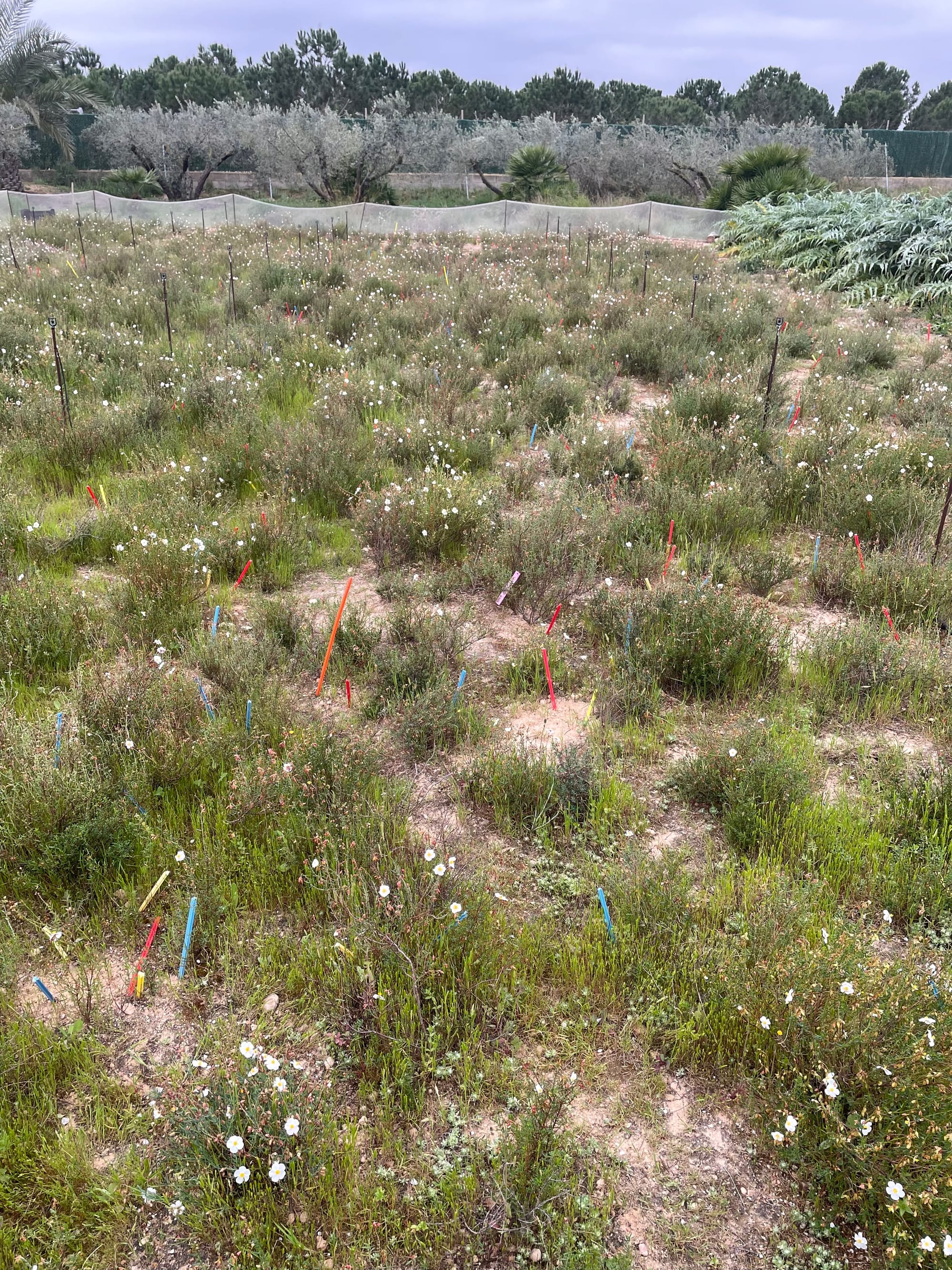
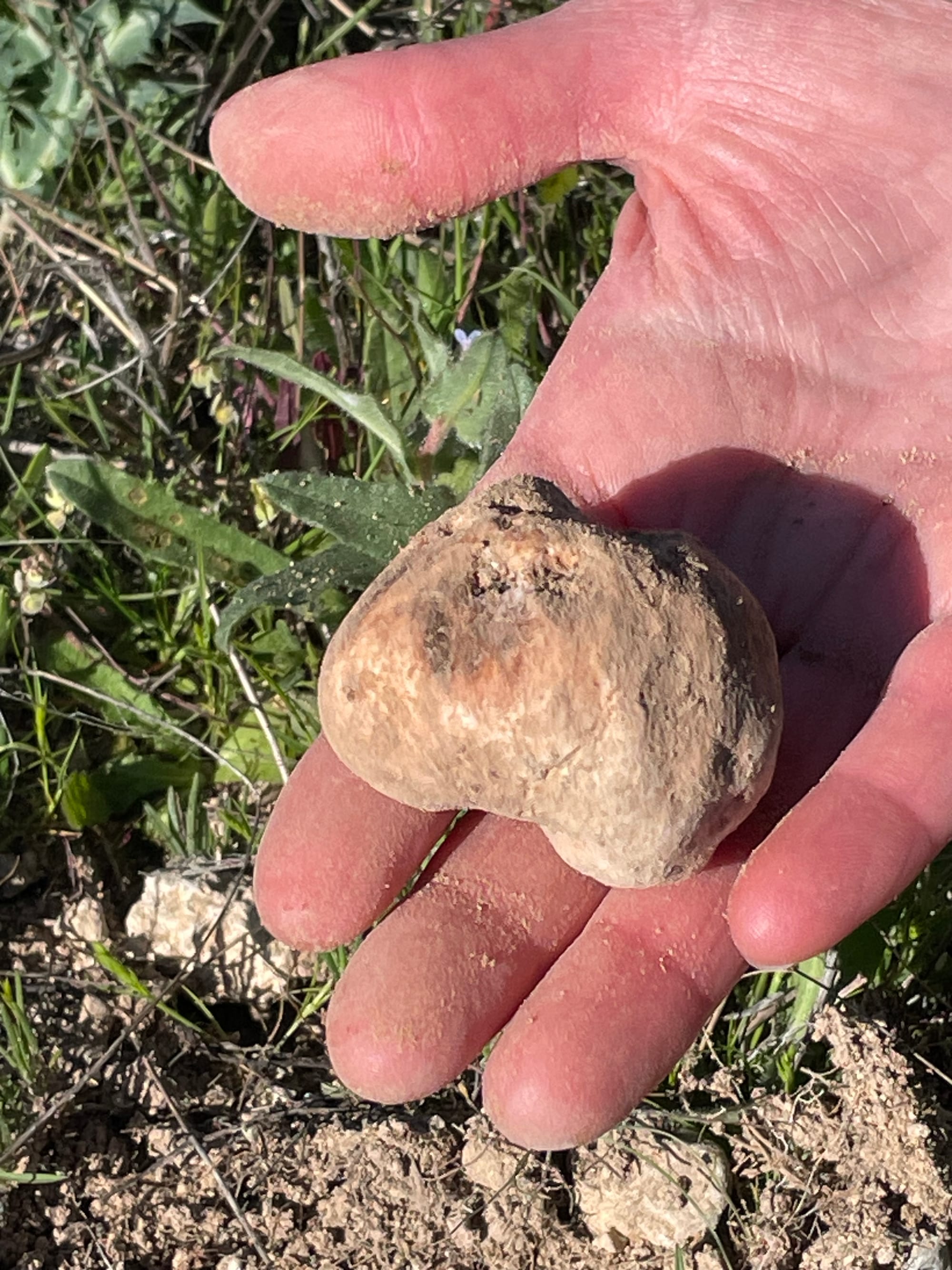
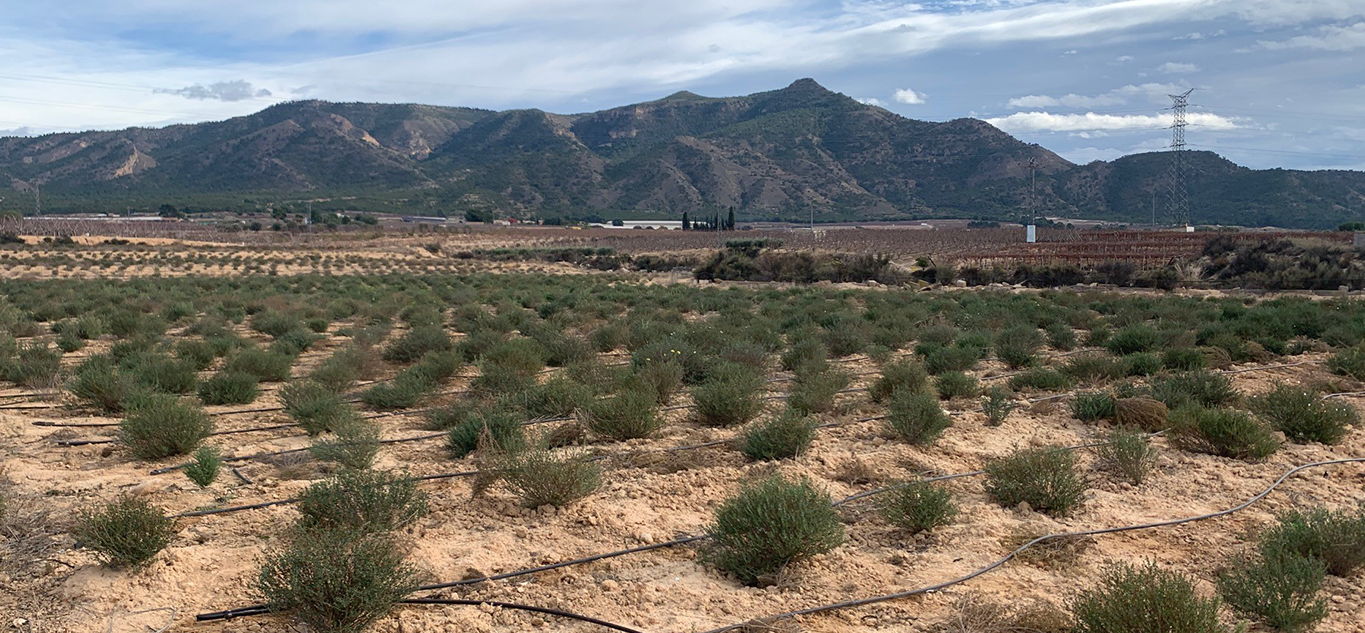
Left: Tomás Lopez's desert truffle plot in Torre Pachecho (Murcia), Spain. Right: A wild-harvested desert truffle in Hellín (Albacete), Spain (Ansley Evans)
Desert truffles are a survival staple for many dryland inhabitants and a delicacy to those raised eating them. When roasted, “the outside gets all charcoal-y,” Shavit reminisced. “Then you crack them in two, take a spoon and eat. There’s nothing like it.”
Their unique yet mild flavor, she said, lends itself to use in other dishes, like lamb stew. She describes their taste as a little like freshly baked sourdough bread, fresh water chestnuts and “a touch of an umami je ne sais quoi.”
Unlike black truffles, which lose aroma when cooked, desert truffles intensify in flavor, said Murcia-based chef and mycophile David López. His restaurant is among the few in Spain that serve them. To showcase their flavor, he plates them in three ways: sautéed, puréed with butter and drizzled with a broth infused with desert truffle peels. The native fungi have deep roots in the region, where they were once more abundant, López said.
“Before potatoes were introduced to Spain,” he added, “people used desert truffles.”
These underground fungi also have notable nutritional and medicinal properties. “They have everything,” said Spanish botanist Asunción Morte, who helms the University of Murcia’s (UMU) mycology team, pioneers in cultivating desert truffles. They’re packed with protein and fiber and contain healthy fats, she said. They have antimicrobial and antioxidant qualities and could even inhibit the growth of certain cancer cells, according to a recent study.
As Shavit said, science has confirmed what foragers have intuited for millennia.
An ally in a changing climate
Tomás López’s desert truffle plot sits amid kilometers of intensive farmland in the Campo de Cartagena, in one of the driest parts of Spain. The 1979 Tagus-Segura water canal and advances in desalination have made water-intensive crops like lettuce and broccoli possible in the area, alongside water drawn from legal and countless illegal wells. Irrigated agriculture has brought wealth to the region, but scientists question its sustainability as the Mediterranean grows increasingly arid.
“Murcia’s climatic conditions make it prone to desertification,” said Víctor Castillo, a soil scientist with the Spanish National Research Council. A recent project he collaborated on concluded that 91 percent of the region – the highest percentage in Spain – is at risk. This means the soil and water are being depleted beyond their capacity for renewal, Castillo explained. “If you’re asking the ecosystem, through external inputs, to produce more than it’s capable of, it can keep that up for a while,” he said, “but eventually, it can’t.”
Climate change exacerbates the problem. “Soil droughts — a lack of moisture in the soil — are more severe,” Castillo said. “Not only does it rain less, but as temperatures rise, more water is drawn from the soil. The reservoir empties sooner.”
“You could make the problem worse,” he added, “or you could try to adapt.”
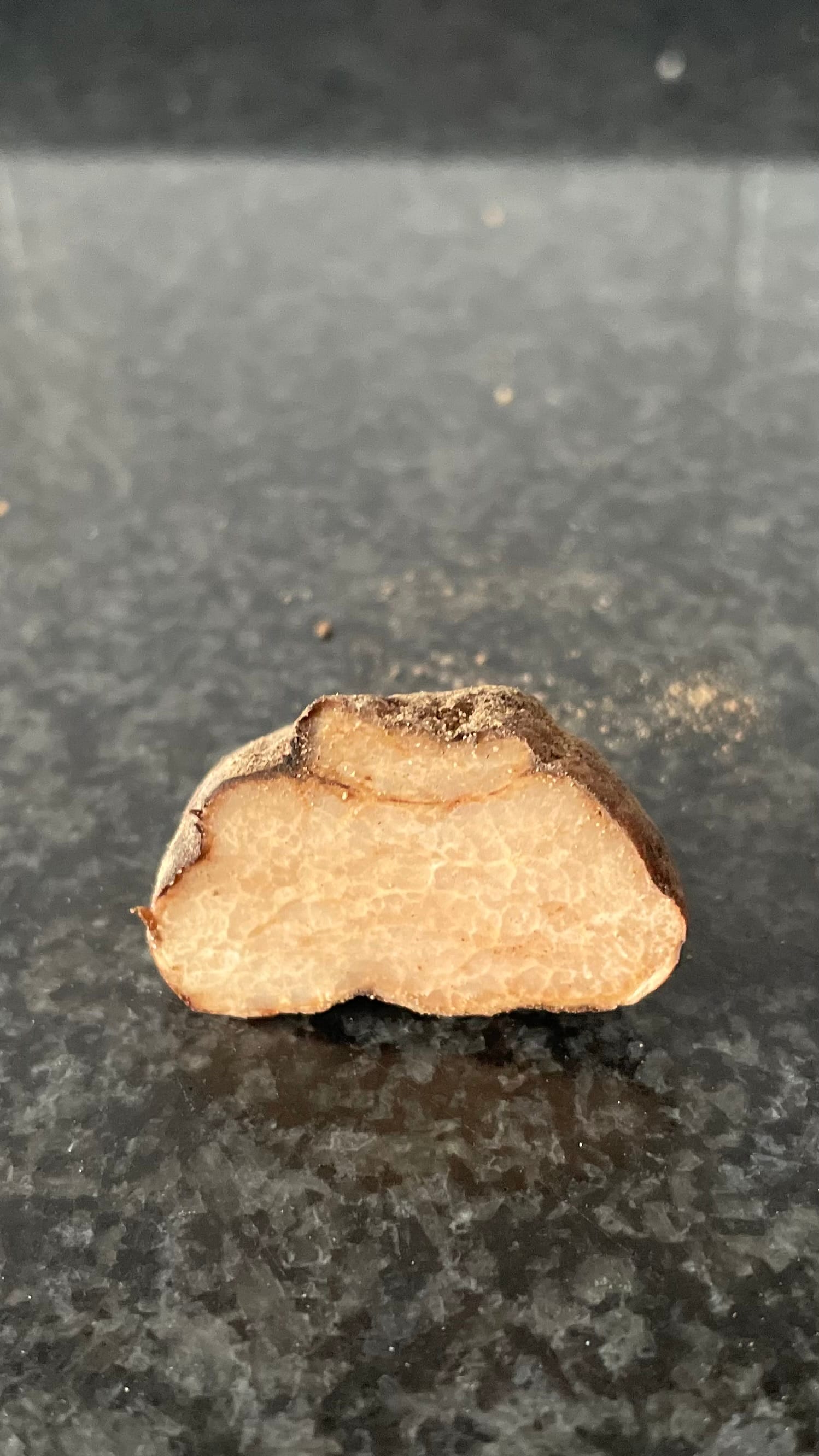
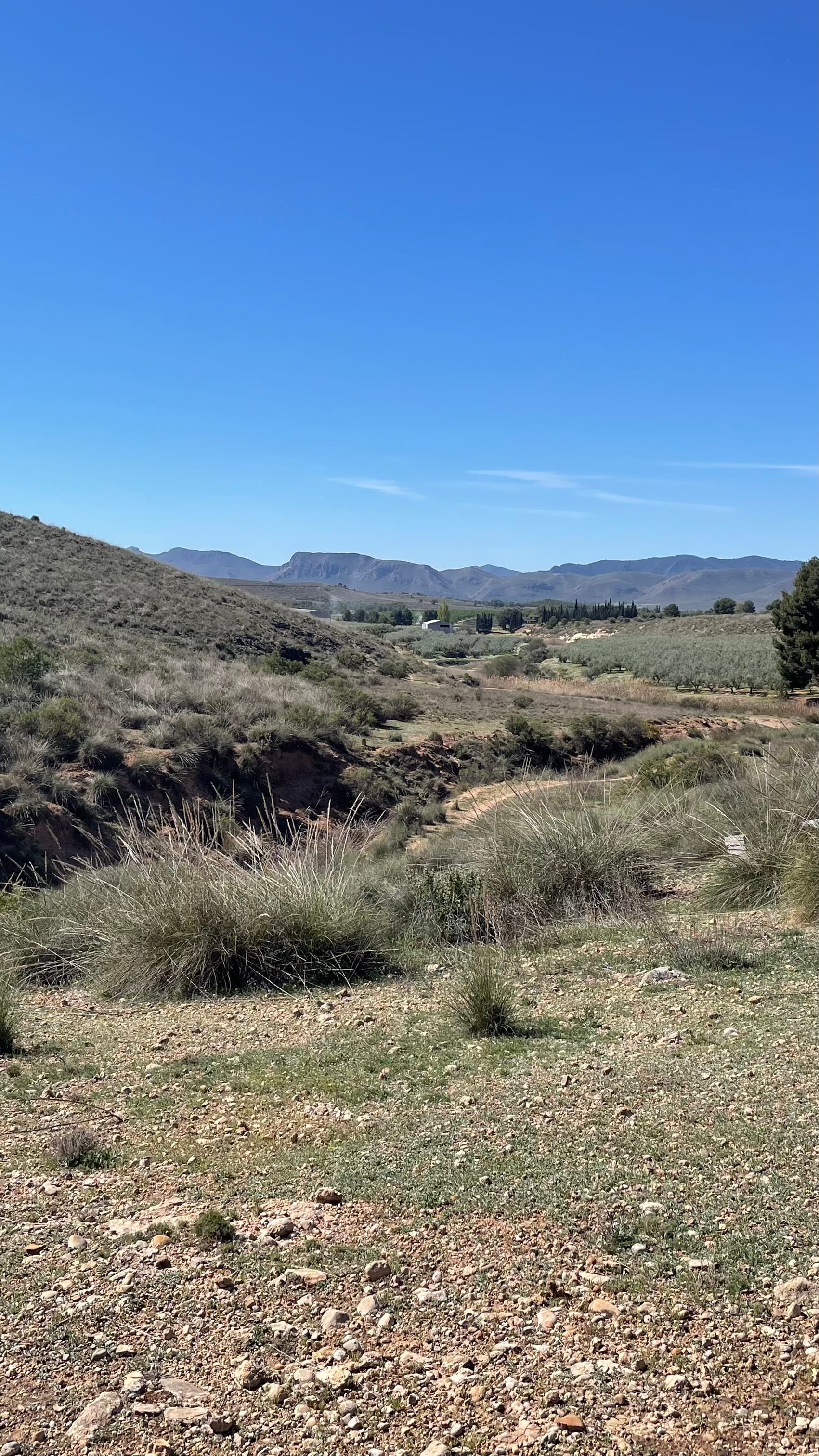
Left: A desert truffle. Right: The landscape where wild desert truffles grow, near Hellín (Albacete), Spain (Ansley Evans)
Crops better suited to semi-arid conditions, like native desert truffles, can help prevent further degradation. “This sort of initiative is very positive,” Castillo said. By keeping demands on the soil within its capacity to regenerate, he added, farmers can build more sustainable livelihoods.
Compared to the rows of vibrant green lettuce nearby, López’s desert truffle plot displays more muted olive tones. Yet it teems with life above and below ground. “Everything underneath is connected by mycorrhizae from one end to the other,” López says, referring to the mutually beneficial network of fungal filaments connected to the plant roots, transferring nutrients and water throughout. “Just stepping here gives you energy.”
It’s not just a feeling. Morte, the botanist, has found richer, more stable soil where desert truffles and rockrose grow, and an increase in existing bacterial and fungal communities that benefit plants. “[Soil fertility] improves on every level,” she said
Underground, the fungal network is busy taking up carbon supplied by its host plants — a relationship essential for desert truffles to fruit. According to a 2023 study, an estimated 13 billion tons of CO2 flow from plants into mycorrhizal fungi annually — roughly 36 percent of current yearly global fossil fuel emissions.
The long game
Morte and her team first inoculated the roots of rockrose plants with Terfezia claveryi — a native desert truffle — in 1999. “We told the farmer to water a little if it hadn’t rained,” she said. Then they waited. Two years later, the farmer, an experienced forager who had shared his knowledge with the UMU scientists, spotted a crack in the soil. It was the world’s first cultivated desert truffle. “You can’t imagine how happy we were,” Morte recalled.
Since then, the scientists have made significant progress, but producing a steady supply remains a challenge.
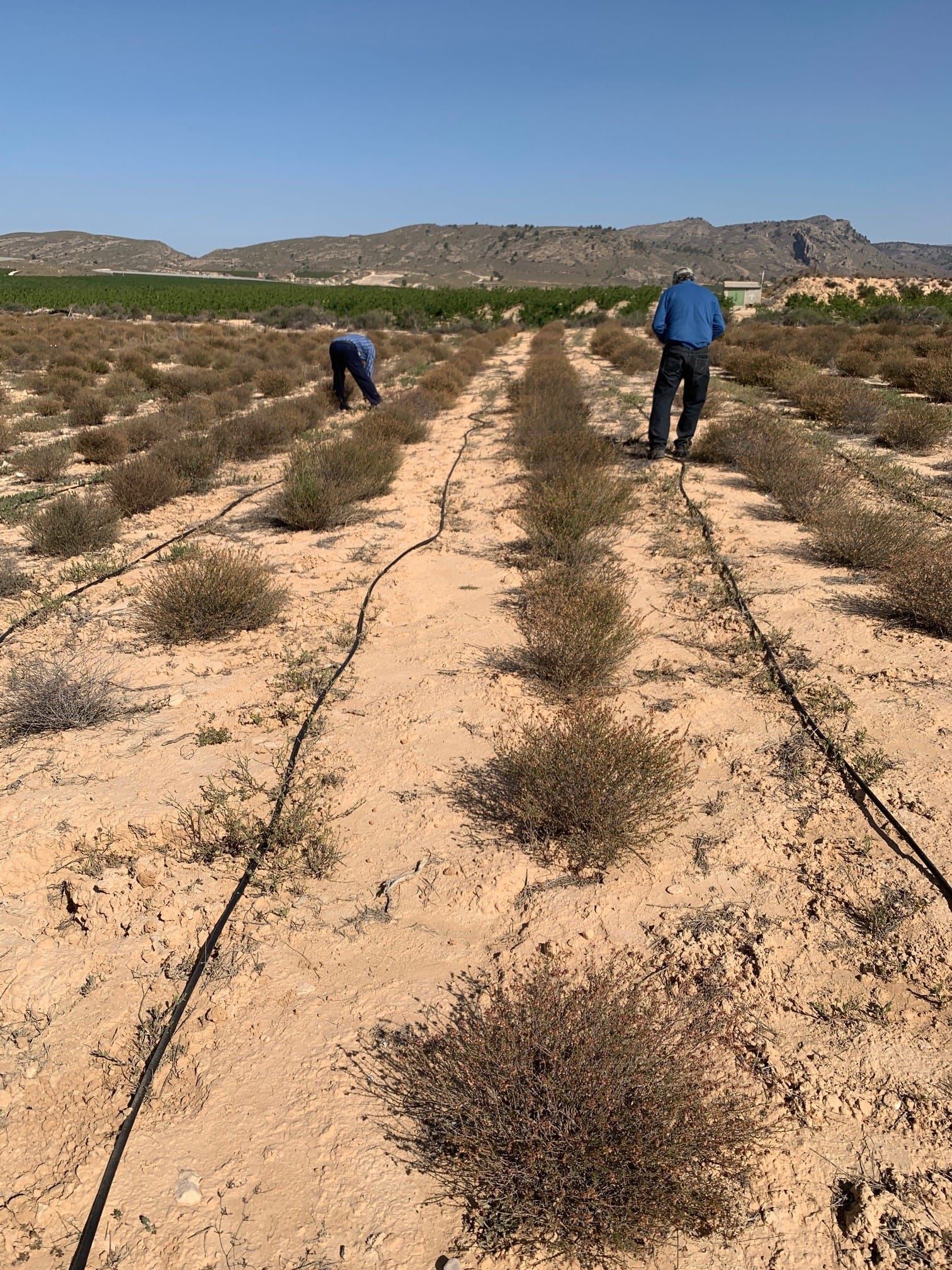
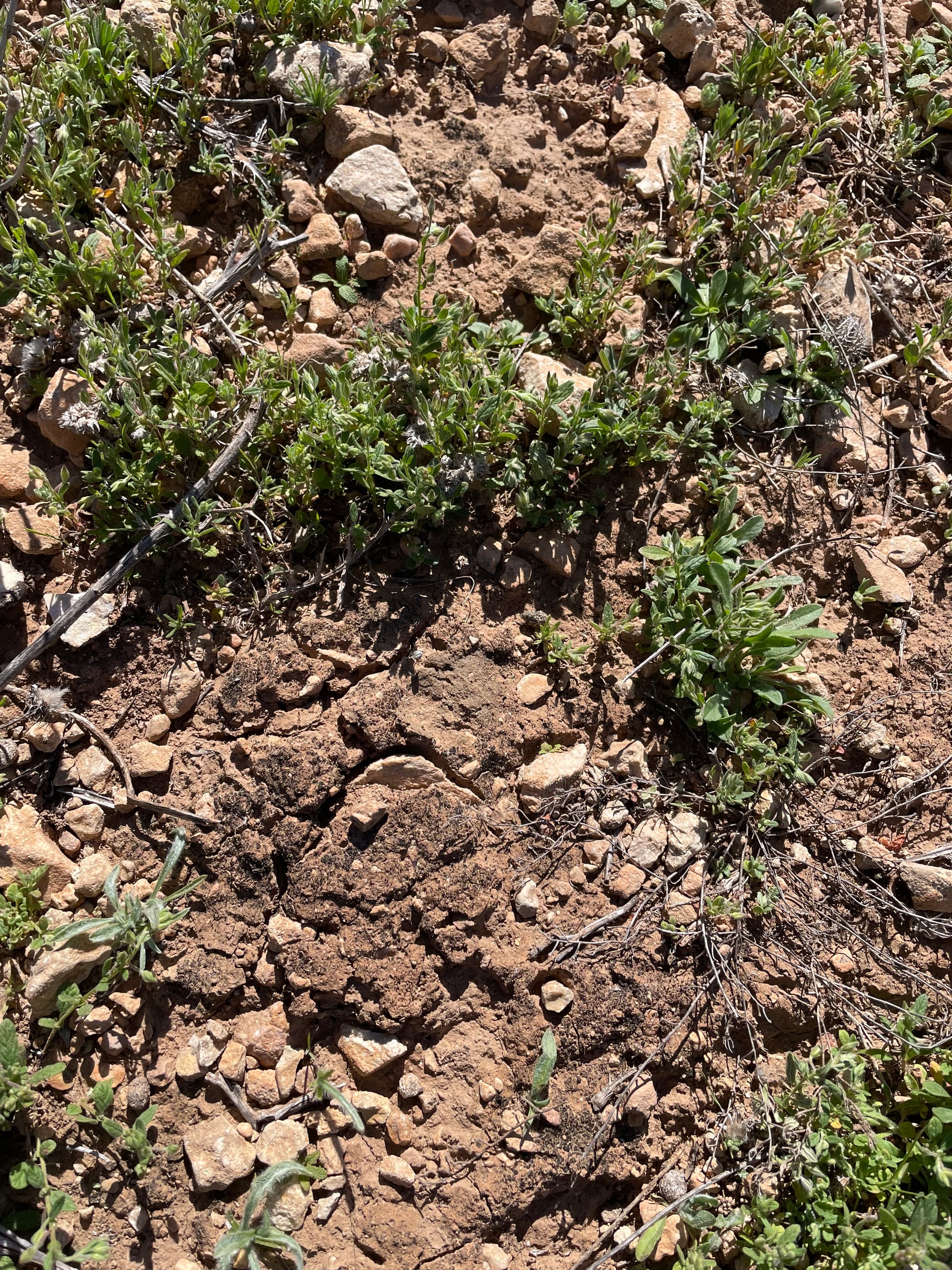
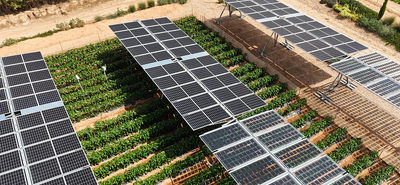
Left: A desert truffle plantation in Murcia, Spain (Courtesy of Asunción Morte). Right: A telltale desert truffle crack, Hellín (Albacete), Spain (Ansley Evans)
For farmers, the learning curve is steep. Many have given up. If the host plants look dry, farmers’ instincts push them to irrigate. But Morte and her team have found greater truffle production beneath slightly water-stressed plants. The plant must need the fungus for water and nutrients, Morte explained.
“To the typical aggressive farmer who wants to diversify but expects a profit in the second year and who is used to intensive farming, I tell them no,” Morte said. “Not everyone has the patience and mindset to grow this crop.”
Although growers may get some truffles in the first few years, it takes up to six years for the underground network to produce truffles regularly. Even then, Morte said, harvests vary with the weather.
Growers must also learn to recognize the cracks in the soil from which the truffles emerge. One farmer told Morte his truffles weren’t growing. The team went to look and found two kilograms of truffles (more than four pounds).
Tomás López, a retired jeweler, has proved an ideal candidate. He’s marked where truffles have appeared in the last three years with colored plastic stakes. He spends hours daily observing, digging and weighing his harvest. He experiments continuously. Recently, a previously unknown desert truffle species, named Picoa cartagenensis, was identified on his land.
“You have no idea how much I enjoy myself,” he says.
Morte keeps up with Lopez’s results. The more data, the better. They need more farmers like him.
A new chapter
Cultivating desert truffles does not have to be wishful thinking, Shavit said.
“As long as we can crack the entire process, we could turn a fragile, rainfall-dependent wild resource into a stable, high-value crop that benefits communities and works in harmony with desert ecosystems,” she said. “Why not grow desert truffles like crazy and help the world while we’re doing it?”
In Spain, Morte said more plantations are needed for the crop to fulfill its promise. The country has around 50,000 hectares of forest truffle plantations, according to Morte, but not even 15 hectares of desert truffles. “I don’t think we’ll get there, at least not in my lifetime,” she lamented. “Ojalá.” If only.
Back in his plot, Tomás López examines another Picoa. He’s harvested over three kilograms worth (more than six pounds) of these truffles so far this year. Despite the chivato “tattletale” moniker, he never knows how many Terfezias — the more prized desert truffles he’s after — will emerge.
“This is for romantics,” he says with a laugh, still scanning for cracks in the soil.
Top image: A desert truffle plantation in Murcia, Spain (Courtesy of Asunción Morte)
This story is part of the series “Shifting Rural Communities,” produced as part of the second edition of the Magma Environmental Reporting Fellowship.