
In this issue of Lapilli, we're featuring two investigations by our Magma fellows: one examining collisions between whales and large vessels in the western Mediterranean, and the other exploring the potential of agrivoltaics and the challenges of making it sustainable. We also look at the extreme rainfall that has hit several parts of the Mediterranean and the disappearance of Slovenia's Triglav Glacier. Turning back to the sea, we examine how Italy and Spain did not support a proposal to extend the ban on deep-sea bottom trawling, and how fish farming is putting the ecosystem of Greece's Ambracian Gulf under severe pressure.
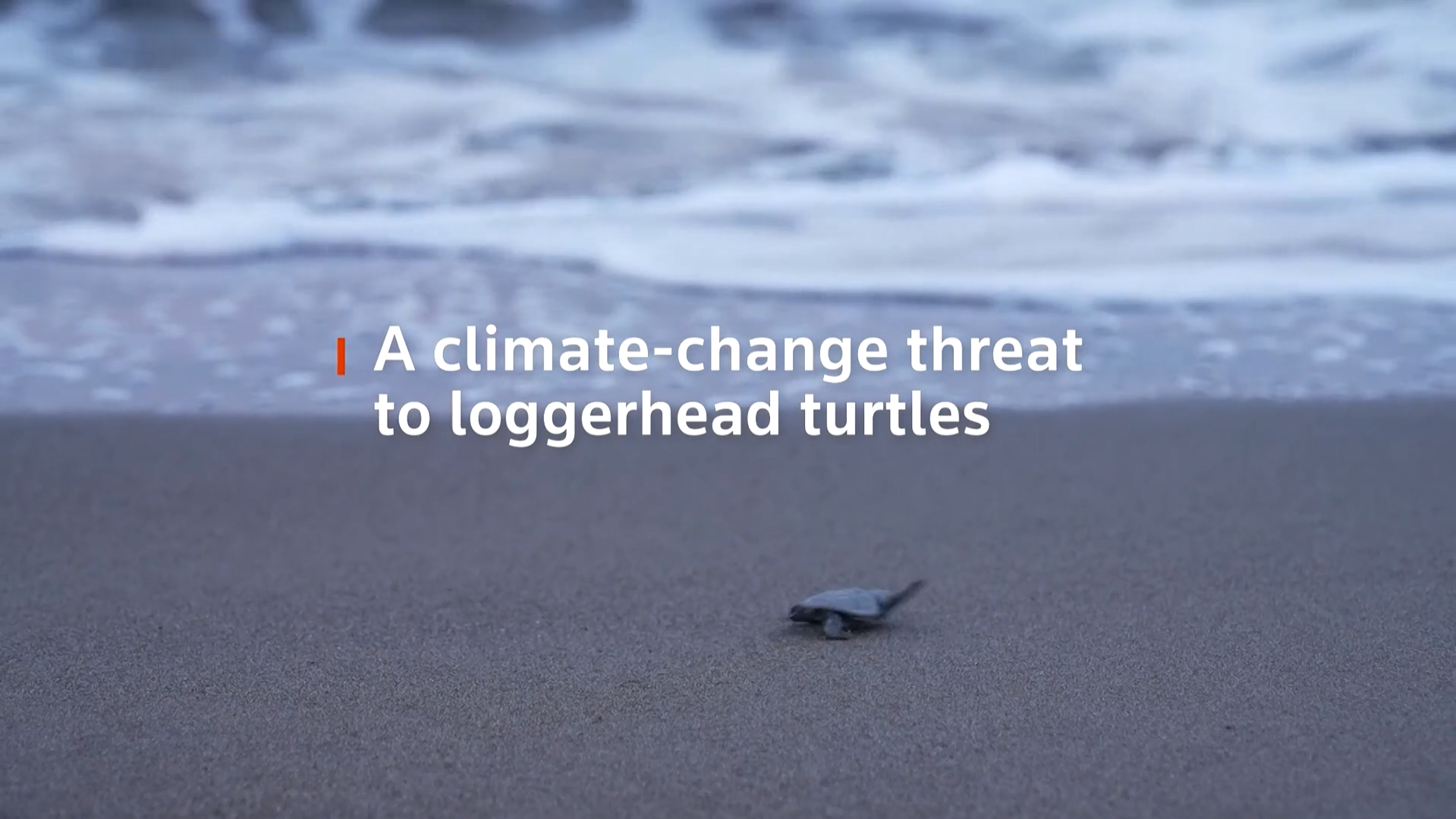
Finally, with the 31st Conference of the Parties to the United Nations Framework Convention on Climate Change (COP31) set to begin in Türkiye in just a few days, we leave you with a video about the loggerhead sea turtle (Caretta caretta), chosen as the conference's mascot. And, as always, much more.
Happy reading!

Extreme rainfall. Following an exceptionally hot summer across the region, heavy rainfall hit several parts of the Mediterranean in October. In Spain, flooding in Madrigueras, in Albacete province, early in the month killed a 102-year-old woman and prompted firefighters to rescue 90 people. Heavy rainfall in Catalonia claimed two more lives.
In the second half of the month, Storm Adam caused extensive damage and killed four people in the Valencia region. In Pego, in Alicante province, 632 millimeters (24.9 inches) of rain fell in 36 hours, including 430 millimeters (16.9 inches) in just six hours, while the Valencian town of Oliva recorded 600 millimeters (23.6 inches) in 24 hours (The Guardian; Reuters/Al Jazeera; Euronews; CNN).
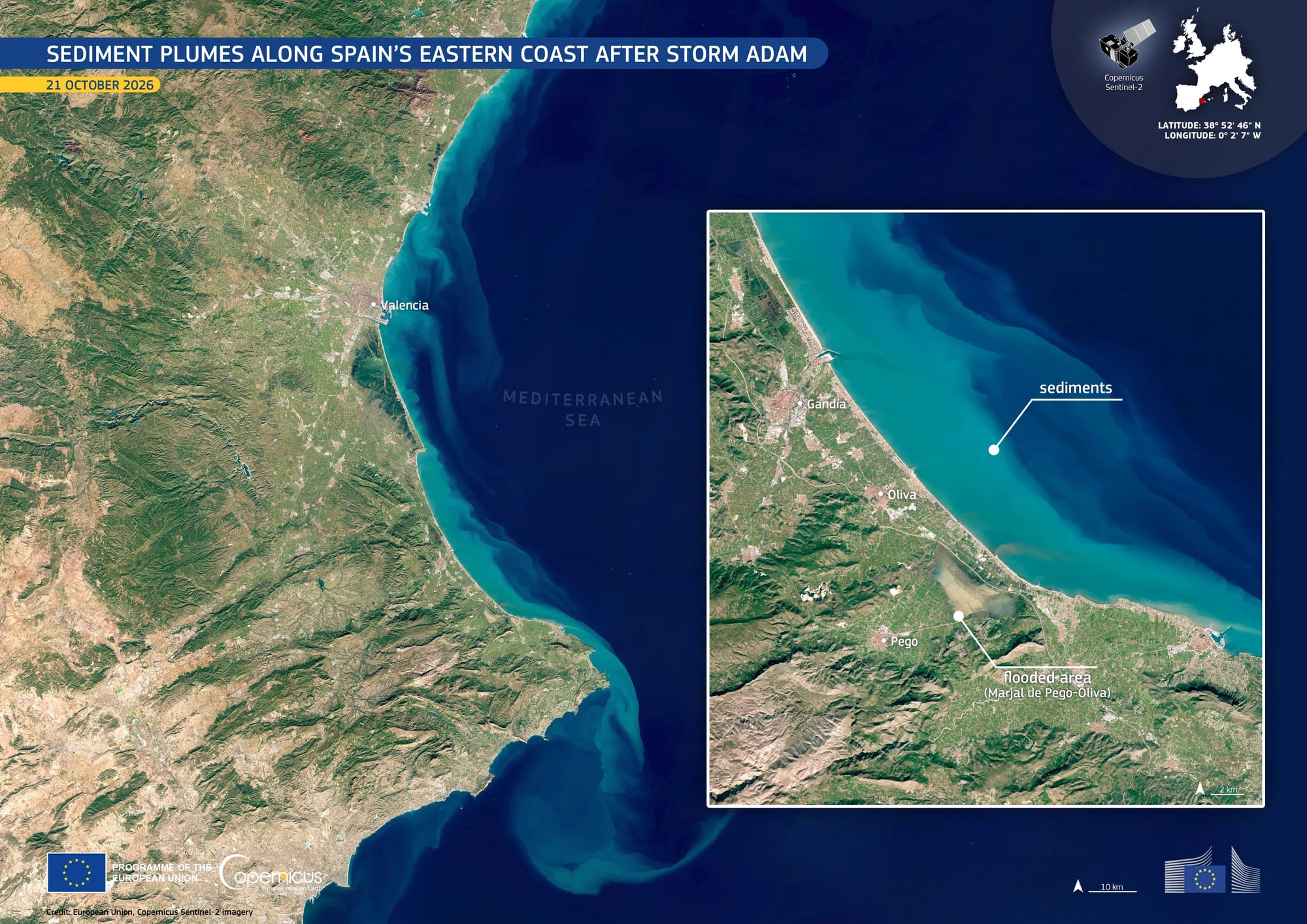
In France, Storm Adam brought heavy rainfall to southern parts of the country and Corsica. It dumped the equivalent of one to two months’ rainfall on the departments of Gard and Hérault, and two to three months’ worth on Bouches-du-Rhône. Eastern Corsica was particularly hard hit, with Solenzara (Haute-Corse) receiving a total of 640.5 millimeters (25.2 inches), including 538.5 millimeters (21.2 inches) in just six hours — an unprecedented amount for mainland France and Corsica. To put this into perspective, Solenzara typically receives just 119.2 millimeters (4.7 inches) of rain over the entire month of October.
In Italy, two rare waterspouts made landfall near Marsala, damaging buildings, cars and farmland (Euronews).
Farther east, on the Greek island of Crete, heavy rainfall early in the month flooded fields, destroyed roads and caused extensive damage across rural areas. The Lasithi Plateau received around 440 millimeters (17.3 inches) of rain in two days, equivalent to 440 liters per square meter, in an area where annual precipitation typically ranges from 700 to 900 millimeters (27.6 to 35.4 inches). Dozens of people were evacuated from hotels and other lodging in eastern coastal resorts, including Ferma, Koutsounari, Agia Fotia and Makry Gialos. Agricultural land was badly damaged and numerous cars were swept away by floodwaters (Euronews).
Heavy rainfall also hit Türkiye. In mid-October, parts of Istanbul experienced their heaviest rainfall since 1985, according to the metropolitan municipality. Governor Davut Gül described it as the highest rainfall recorded in the city since measurements began in 1942. Flooding killed at least eight people — six in Istanbul and two in neighboring Kocaeli province — and left one person missing (Euronews; Hürriyet).
In Syria, severe flooding struck six provinces toward the end of the month, killing at least seven people, including five children. Torrential rains destroyed bridges, damaged roads and disrupted water supplies and telecommunications. At least 375 families were evacuated from camps for displaced people, while more than 100 households were left isolated in Kasrat Surour. Army helicopters were also deployed to assist with rescue operations.
Deep-sea trawling: decision on extending restrictions postponed. At the annual meeting of the General Fisheries Commission for the Mediterranean (GFCM), held in Rome from October 26 to 30, 2026, Italy and Spain did not support a proposal put forward by Türkiye to strengthen protections for deep-sea ecosystems in the Mediterranean and Black Seas. The measure would have extended the existing bottom-trawling ban from waters deeper than 1,000 meters (3,281 feet) to those deeper than 800 meters (2,625 feet), protecting an additional 100,000 square kilometers (38,600 square miles) of seabed. Supported by Egypt, Lebanon, Montenegro and Morocco, the proposal included a two-year transition period to give fishing fleets time to adapt.
According to marine conservation organizations Oceana and MedReAct, Italy and Spain blocked the measure to protect industrial fishing interests, despite preliminary GFCM studies suggesting limited socioeconomic impacts. Fishing industry associations, including Europêche and Federpesca, instead questioned the effectiveness of a blanket ban, calling for more targeted measures. Bottom trawling, also practiced by Italian fleets specializing in deep-water red shrimp, poses environmental risks: Nets dragged across the seabed can damage corals, sponges and vulnerable habitats, threaten biodiversity and slow the recovery of overexploited fish populations. As highlighted in a scientific report published by Oceana and MedReAct in June 2026, these ecosystems play an important role in the Mediterranean's climate resilience, particularly as the region faces the impacts of global warming.
The postponement has also raised questions about the consistency of European environmental policies, as the European Commission had previously supported extending the ban. As Agence Europe reported, the GFCM deferred its decision until its next session, scheduled to take place in Ankara in 2027, leaving unresolved the debate over biodiversity conservation, sustainable fisheries management and the economic interests of Mediterranean industrial fishing fleets.
Despite the failure to reach an agreement on extending the bottom-trawling ban to waters deeper than 800 meters, the commission adopted 11 binding recommendations and two resolutions aimed at improving marine resource management. Key decisions included expanding the fisheries restricted area in the Bari Canyon, in the southern Adriatic, to protect vulnerable marine habitats, and adopting new long-term management plans for deep-water red shrimp fisheries in the Strait of Sicily, the Ionian Sea and the eastern Mediterranean. Management measures were also strengthened for species living near the seabed, including hake, red mullet, sole and Norway lobster, through a new seven-year plan for the Adriatic Sea, while new catch limits were established for sardines and anchovies.

Large vessel speeds threaten whales. Magma fellows Clea Skopeliti, Federica Rossi and Wouter Massink have published the latest installment of their investigation into collisions between large ships and cetaceans in The Guardian.
Drawing on data from Veson Nautical and Global Fishing Watch, the investigation found that in 2025, ferries and cargo ships spent more than 280,000 hours traveling at speeds of at least 15 knots (17.3 mph) within the North-Western Mediterranean Sea Particularly Sensitive Sea Area, which stretches from Valencia to Genoa and includes the Pelagos Sanctuary. At such speeds, collisions with cetaceans are almost always fatal. In 2023, the International Maritime Organization recommended that large vessels slow down to 10 to 13 knots (11.5 to 15 mph), but compliance remains voluntary. Among the operators that frequently exceed these recommendations are Grimaldi Group, Corsica Ferries, Baleària and Moby Lines.
The main obstacle is economic: slowing down means longer journeys, revised schedules and higher costs. A captain interviewed by The Guardian argued that shipping companies are unlikely to change their practices as long as the rules remain voluntary. Experts are therefore calling for mandatory speed restrictions to protect fin whales and sperm whales, both classified as endangered in the Mediterranean, from ship strikes.
Cover photo: Tolomeo, a sperm whale monitored by Oceanomare Delphis, an Italian cetacean conservation organization. The image, edited by Davide Mancini, shows visible scarring on Tolomeo’s back from a propeller injury (Courtesy of the Oceanomare Delphis archive).
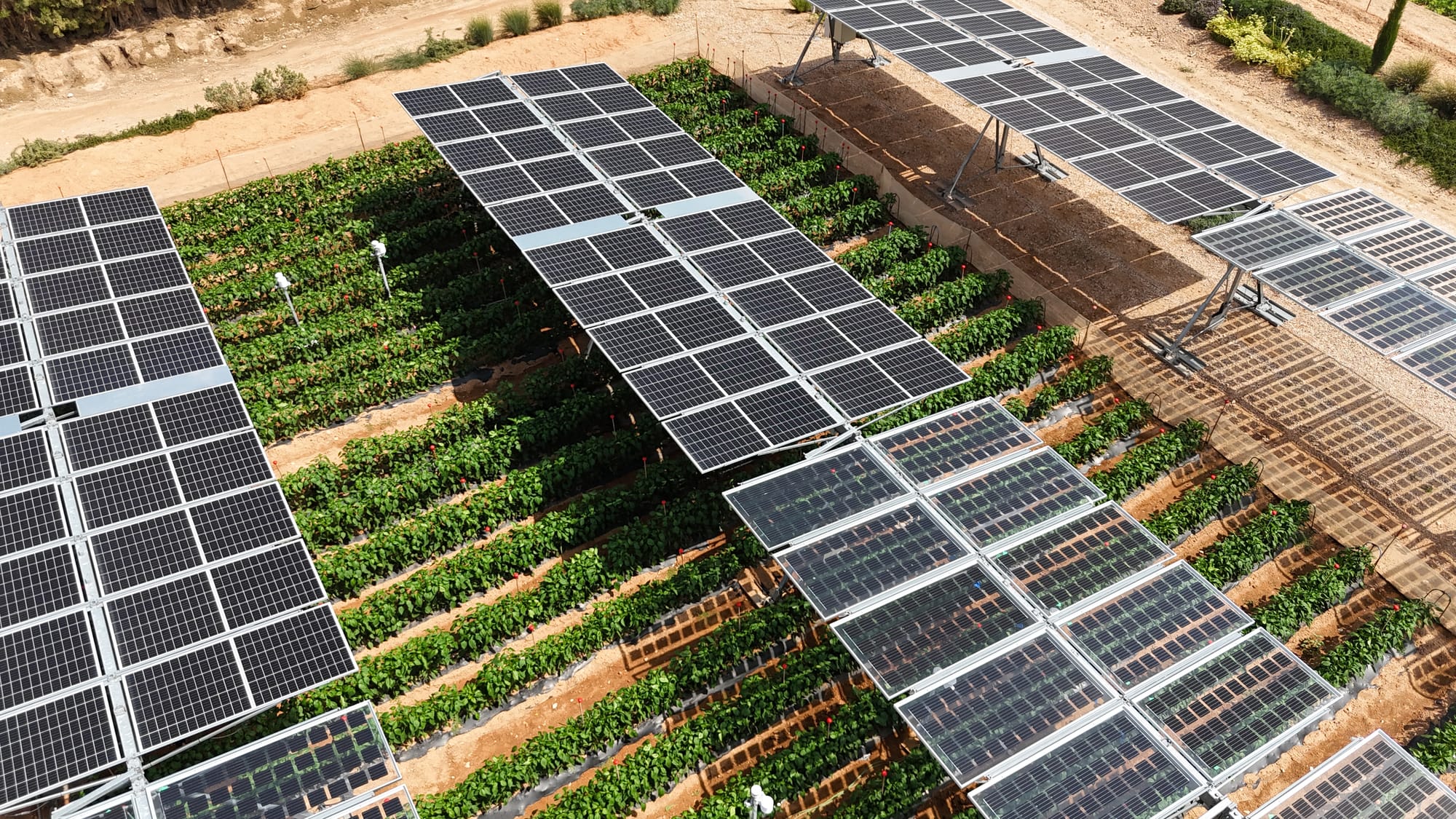
Can agrivoltaics reconcile farming and solar power? Magma fellows Ansley Evans, Lottie Watters and Stefania D’Ignoti recently published an in-depth report in Euronews (also available on our website) as part of the Magma fellowship program. The article explores the potential and limitations of agrivoltaics, a system that combines agricultural production and solar energy generation by installing photovoltaic panels on farmland.
Agrivoltaics could contribute to Europe's decarbonization efforts while helping counter rural abandonment by creating new opportunities for farmers. According to a 2023 study, its potential electricity generation capacity in Europe could be 25 times the continent's current electricity demand.
However, the sector's expansion, supported by European funding and investments from technology companies such as Amazon and Apple, raises questions about how its economic benefits are distributed. Fabrizio Garbarino, president of the Italian Rural Association, warns that agrivoltaics risks taking advantage of the agricultural crisis without addressing its underlying causes, describing it as "a shortcut".
There are also concerns that major investors could gain an advantage over small farmers, turning productive farmland into a resource for meeting the growing energy demands of large technology companies.
Disappearing glaciers. The Triglav Glacier, on Slovenia's highest mountain, has disappeared. Photographs taken in October confirmed that, following the hottest summer on record in Western Europe, no trace of the historic glacier remained. In the mid-19th century, the glacier covered approximately 40 hectares. By 1946, when scientific measurements began, it had shrunk to 14 hectares. Between 1983 and 2003, it lost 93 percent of its surface area, yet survived for another two decades.
Over the past five years, amid record-breaking temperatures, the remaining ice broke up into increasingly small fragments before disappearing altogether. In 2022, researchers were still able to extract a 5-meter-long (16.4-foot) ice core. Just a year later, only bare rock remained at the same location.
The disappearance of the Triglav Glacier also carries deep symbolic significance for Slovenia. The mountain appears on the national flag and holds a central place in the country's identity.
"With the melting of the Triglav Glacier, a part of me also goes away," says glaciologist Miha Pavšek, who keeps a photograph of his parents standing on the glacier in 1957.
Triglav is not an isolated case. In Switzerland, glaciers have lost nearly one-fifth of their total volume over the past five years. For Slovenia, the glacier's disappearance also means the loss of an important natural archive of climate change, one that scientists had systematically monitored since 1946 (The Guardian).

Deadly heat. According to a study by Imperial College London and the London School of Hygiene & Tropical Medicine, reported by The Guardian, an estimated 50,000 excess deaths in European cities were linked to extreme heat during the summer of 2026. This figure far exceeds the approximately 29,000 deaths estimated for 2022 and 28,000 for 2003 using the same methodology. Of these, around 33,000, or 65 percent of the total, were attributable to human-induced climate change, according to the study.
The researchers analyzed temperatures recorded between June and August 2026 across 854 urban areas in 30 countries — home to approximately 40 percent of the combined population of those countries — and compared these findings with historical data. According to the article, the share of heat-related deaths linked to climate change rose from around 40 percent at the beginning of the century to 65 percent today.
Italy was among the hardest-hit countries, alongside France, Spain, Germany and the United Kingdom. Naples recorded the highest estimated mortality rate among the cities analyzed, with 815 deaths per million residents. People over the age of 85 accounted for nearly half of the estimated deaths, but extreme heat also affected younger generations, with an estimated 833 deaths among people between the age of 20 and 44.
In Naples, emergency physician Mario Guarino reported a 15 percent increase in emergency department visits during the hottest weeks. The problem, he explained, is not just the temperature, but also loneliness and energy poverty: Some older people living alone avoid air conditioning for fear of high costs. "The real epidemic of our times is loneliness," Guarino says.
As Europe warms faster than the global average, extreme heat is increasingly becoming an issue of social inequality, access to healthcare and cities' ability to protect their residents.

The environmental toll of fish farming in Greece. The Ambracian Gulf in western Greece is both a national park and a marine protected area, yet it is home to 19 active fish farms and 11 abandoned ones. An investigation by the Outlaw Ocean Project reveals how Greece's aquaculture industry, one of the most profitable in the European Union, is suffocating the semi-enclosed gulf, which is connected to the Ionian Sea by a channel just 600 meters (about 1,970 feet) wide.
Uneaten feed and fish waste contribute to eutrophication and oxygen depletion, severely damaging the marine ecosystem. Over the past 50 years, the number of local fishers has fallen from more than 5,000 to just a few hundred. Local fisher Pavlos Charalambous estimates that 70 to 80 percent of the gulf is now effectively dead. Despite the environmental deterioration, the Greek government plans to more than double local production, to over 8,000 tons and expand the area allocated to fish farms by more than 110 percent.
The current expansion of Greek aquaculture dates back to a decree signed in 2011, during the eurozone crisis, without public debate. Today, local communities and environmental groups are largely challenging the expansion in court. In August 2025, for example, a ruling blocked a fish farm expansion project around the island of Poros.

Rising temperatures on Turkish beaches, where the species nests, are disrupting its reproductive cycle. The temperature of the sand determines the sex of hatchlings, and according to some studies, females now account for as many as 80 to 90 percent of hatchlings in several populations. Warming temperatures are also pushing some turtles to nest farther north, in parts of the Mediterranean where they were previously uncommon.
But climate change is not the only threat. Fishing nets, collisions with vessels and plastic pollution are putting additional pressure on the survival of these animals, which have become a symbol of the fragility of marine ecosystems (Reuters).

GUGLIELMO MATTIOLI
As a multimedia producer, he has contributed to innovative projects using virtual reality, photogrammetry and live video for The New York Times. In a past life, he was an architect and an urban planner, and many of the stories he produces today are about the built environment. He has worked with publications such as The New York Times, The Guardian and National Geographic. Born and raised in Genoa, Italy, he has been living and working in New York City for more than 10 years.That's it for this month. Thank you for reading this far. See you in December.
If this newsletter was forwarded to you, you can subscribe here to continue receiving it. Lapilli is free and always will be, but in case you would like to buy us a coffee or make a small donation, you can do so here. Thank you!

