For centuries, Mediterranean deltas were considered hostile and unfit for human settlement. Today, they are shaped by the symmetrical lines of intensive agriculture and aquaculture. These territories embody many of the environmental challenges of our time: from soil contamination to increasingly industrialized farming and rising sea temperatures.
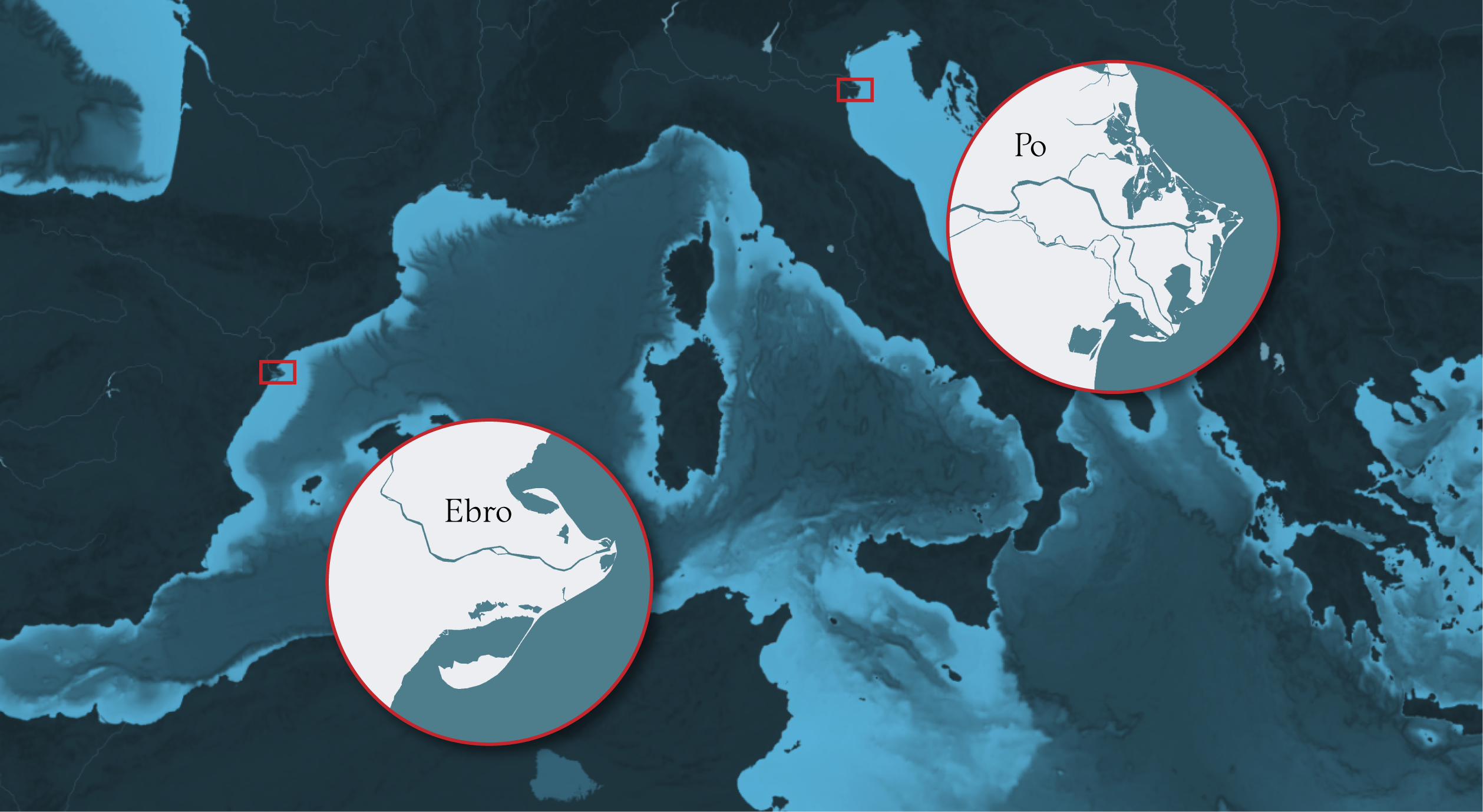
Acting as receptors of both urban and rural pollution, rivers carry contaminants towards the sea, where they are funnelled into coastal ecosystems. In this edition of Lapilli+, we travel through the shifting environments of the Po Delta in Italy and the Ebro Delta in Spain.
We hope you’ll enjoy the read and happy holidays!
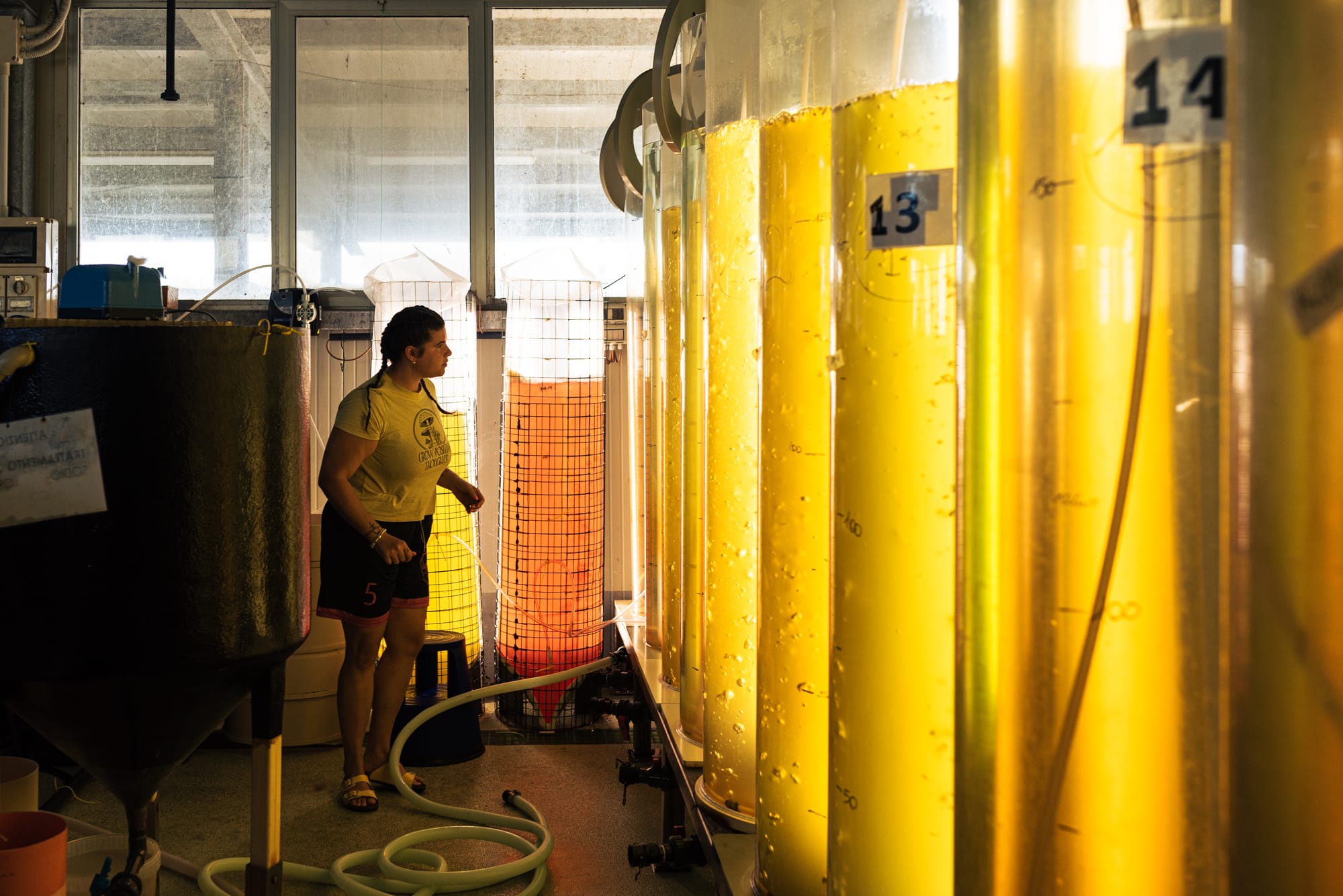
Inside his laboratory at the Delta Institute of Applied Ecology in Ferrara, Italy, biologist Edoardo Turolla has been breeding clams, mussels and other bivalve mollusks for decades. Pointing to containers filled with water in varying shades of green, he explains which microalgae are used to feed the thousands of mollusks that he and his team are hatching for a number of national and international research and development projects.
Well known throughout the Po Delta area, Turolla is the person locals call whenever something unusual is found in the delta’s waters. In 2015, he was lucky enough to come across a rare, golden-colored oyster south of the Po Delta in the Sacca di Goro. That same week, a fisherman discovered a second specimen of the same rare oyster, but of the opposite sex. “From those two specimens, we were able to breed thousands of other oysters, which we named the Golden variety,” Turolla explains.
Goro is the leading center for Manila clam (Ruditapes philippinarum) production across Europe. More than half of Italy’s clam production and around 40 percent of Europe’s is concentrated within the municipality’s roughly 2,000-hectare lagoon. However, Goro’s shellfish farming community has recently begun to diversify. Facing rising temperatures, anoxic events and the spread of blue crabs, local shellfish farmers are now complementing their established clam beds with oyster (Ostrea edulis) farming, in an effort to broaden local production and reduce dependence on a single species. Oysters, in fact, are better able than mussels and clams to adapt to changes in water temperature, particularly in the shallow waters of the Adriatic Sea.
Some 1,200 kilometres (745 miles) to the west, in Fangar Bay in Catalonia, Spain, biologist Eve Galimany and two of her colleagues from the Institute of Marine Science’s Renewable Marine Resources Department are assessing the health of mussels on a humid morning in early July. The researchers are visiting an aquaculture facility to examine the condition of mussels in the Ebro Delta. Their project is coordinated with colleagues in Vigo, Galicia, where more than 90 percent of Spain’s mussel production — and around 40 percent of Europe’s total — is concentrated. The study aims to help prevent and mitigate the damage associated with rising temperatures in Galicia by observing conditions in Mediterranean colonies.
“Here, in the Ebro Delta, we have the same mussel variety as in Galicia,” Galimany explains. “The two environments, however, are very different. In the Mediterranean, temperatures are much higher, but in recent years, Atlantic waters have also been experiencing episodes of unusually elevated temperatures.” Higher sea temperatures increase the risk of mussel mortality. “What we are seeing here is what could happen in Galicia in the near future,” Galimany says.
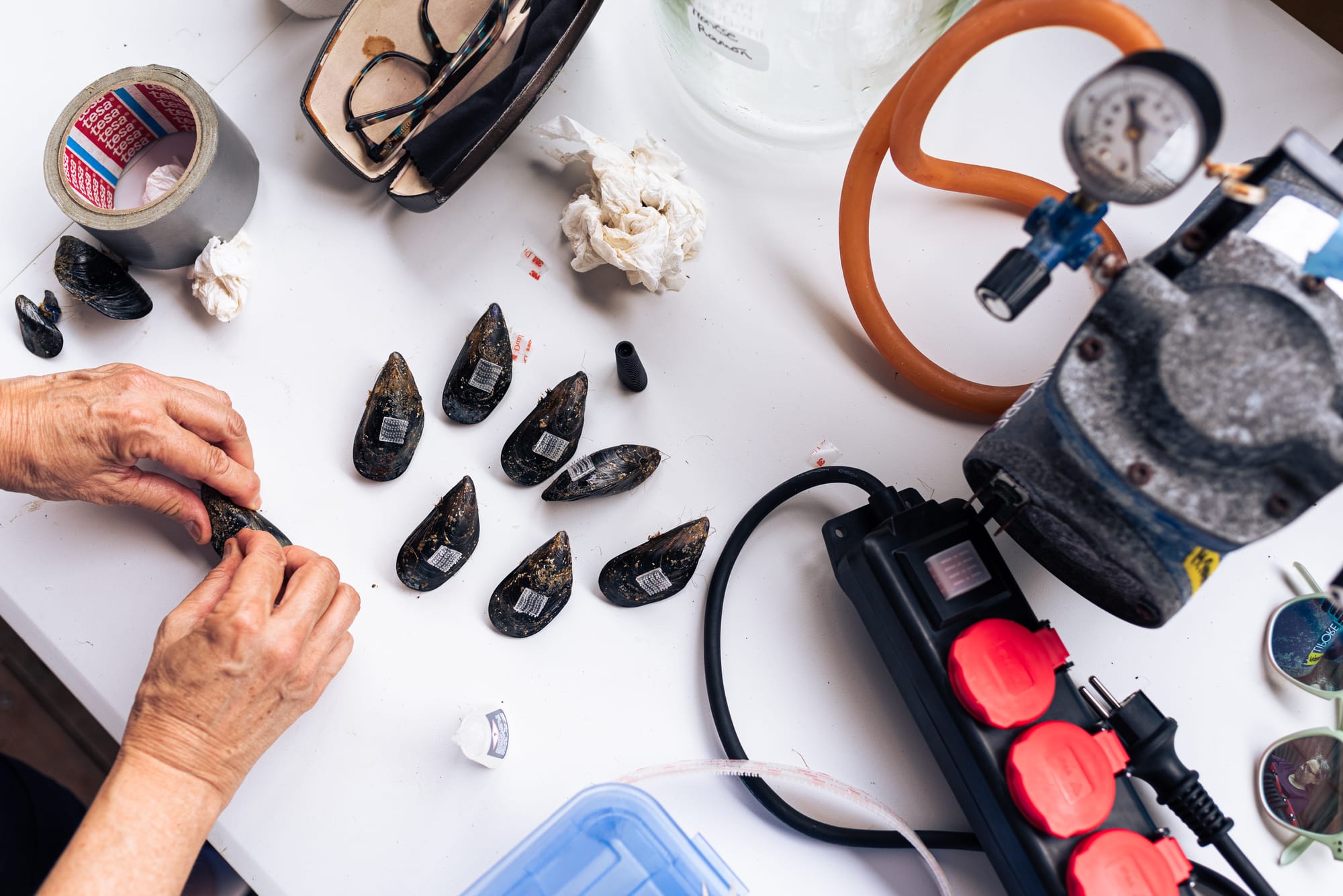
In the Catalan bay, mussel mortality begins when water temperatures reach around 28 degrees Celsius (82 degrees Fahrenheit), while in Galicia, which is a much colder environment, mortality starts at just 17 degrees (62.5 Fahrenheit). In recent years, Galimany explains that these temperature peaks have been occurring earlier than in the past, meaning that mussels now need to be harvested as early as the beginning of summer.
The researchers record how many liters of water some mollusks can filter, and at what rate. Under optimal conditions, a mussel filters around four liters (one gallon) of water per hour. Under high-temperature conditions, however, this figure drops to about half a liter (0.13 gallons) per hour, as mussels stop feeding — and filtering — from heat-induced stress.
Thanks to their findings, the Institute of Marine Science researchers hope to contribute to the development of tools for sea farmers, to better identify when mussels enter thermal stress and to determine the optimal moment for harvesting them before mortality occurs. Yet, the future of mussel farming in the bays of the Ebro Delta — like that of clam farming in the waters of the Po Delta — remains uncertain if average sea temperatures continue to rise.
In both deltas, rising temperatures are not the only concern. In the Sacca di Goro lagoon, the freshwater, which is naturally rich in nutrients, flows from the Po Delta and meets the Adriatic Sea’s salt water, creating an environment that has become ideal not only for mollusk growth, but also for a highly invasive species: the blue crab.
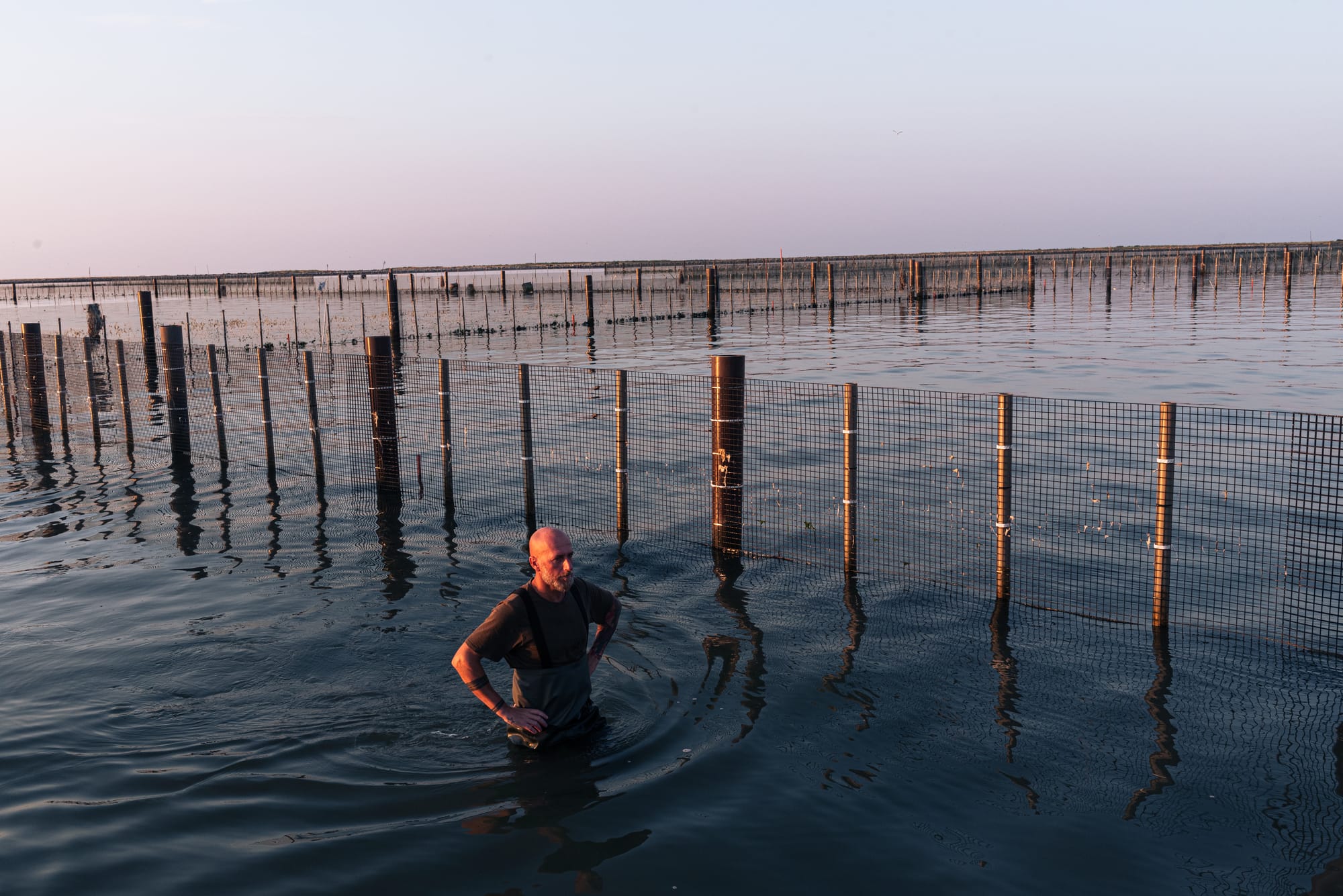
The shallow depth of the Po Delta bays allowed generations of clam harvesters to wade and collect the vast clam yields, making the community’s economy grow. But, in recent years, these shallow bays have also provided a favorable habitat for the proliferation of the blue crab, which is native to the western Atlantic and now widespread across much of the Mediterranean Sea. Along these shores, the blue crab has decimated Manila clam production, on which it feeds voraciously. In 2024, the bluish-shelled crustacean caused losses of around 70 percent of clam production in the Po Delta — equivalent to approximately €120 million (over 140 million U.S. dollars) — a devastating blow to local cooperatives.
It is also for this reason that finding alternative bivalve species that can survive in these harsher climate conditions has become more important than ever. Oysters and mussels are more resistant to the voracity of the blue crab because they do not live on the seabed, but are attached to ropes or cages, higher in the water column, making them harder for the aggressive crab to reach — as the case of the Ebro Delta demonstrates. Indeed, mussel farms in the Spanish delta have not suffered the arrival of the blue crab to the same extent as clam ones in the Po Delta. After an initial surge in blue crab populations in 2017, the rapid commercialization of the invasive crab through intensive fishing brought the species’ population back under control relatively quickly.
Yet, the challenge, in the Ebro Delta as in the Po Delta, is not limited to adapting to changes underway in the Mediterranean, but also extends upstream along the rivers’ paths.
Shellfish farming, which includes mussels, clams and oysters, emerges and develops where microalgae are present, providing the food source on which these bivalves depend. When nutrients such as nitrogen and phosphorus are in excess — thanks to chemical compounds contained in synthetic fertilizers or in livestock effluents washed into waterways — ecological balances are disrupted. The result is uncontrolled and excessive algal growth, a process known as eutrophication.
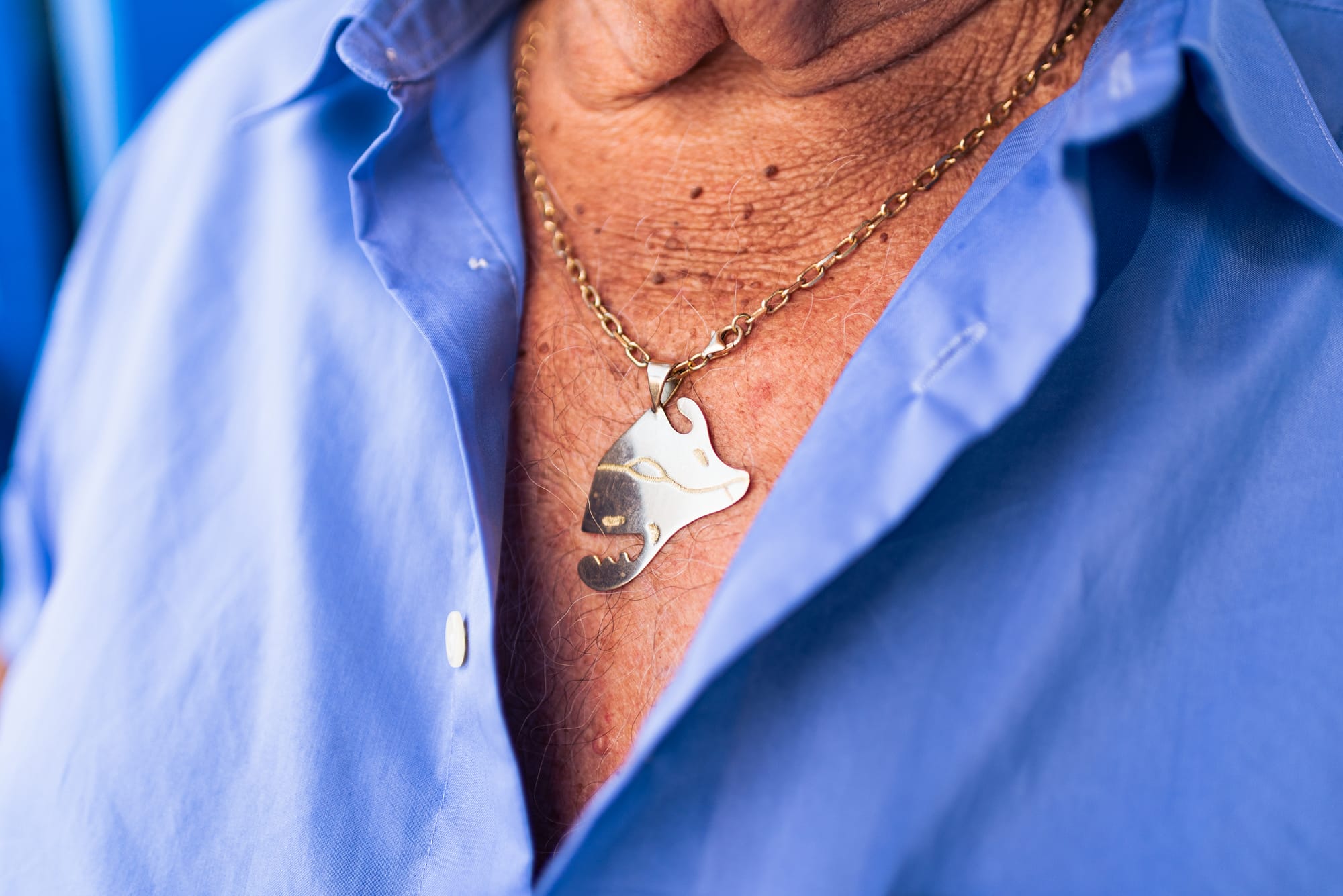
Augusti Bartomeu Ardit, known locally as “Avi Augusti,” is an 85-year-old who has divided his life and work between land and sea: rice farmer in summer, mussel farmer in winter in the Alfacs bay in Spain. “The whole community worked according to the seasons,” he recalls, evoking memories of cycling to the market to sell his produce.
Today, rice production takes place on an industrial scale, divided between two main cooperatives: Arrossaires del Delta de l’Ebre on the north side and Càmara Arrossera del Montsià on the south. Once a family-based activity, the local workforce today is largely made up of foreign workers, both in mussel farming and rice cultivation. Avi Augusti, wearing a delta-shaped pendant around his neck and a farmer’s hat on his head, still owns plots of land and water in the bay. In 2000, he and his family focused their efforts on their mejillonera — a mussel farm built on stilts in the shallow waters at the center of the bay — transforming it into a tasting venue where visitors can sample mussels and oysters, accessible only by boat.
The efficiency with which bivalves absorb microalgae is so remarkable that in the United States oyster-farming projects have been launched in rivers to filter the vast quantities of microalgae generated by nutrients carried from cities and agriculture, Galimany notes. She herself is involved in one such initiative.
The water flowing into Fangar Bay carries with it runoff from rice fields that cover more than 20,000 hectares across the Ebro Delta. Around ten years ago, two “green filters” were constructed in the Catalan delta — systems of reed beds and other aquatic plants designed to absorb nutrients from channels draining the rice fields. Their function is to capture as many nutrients as possible before the water reaches the sea.
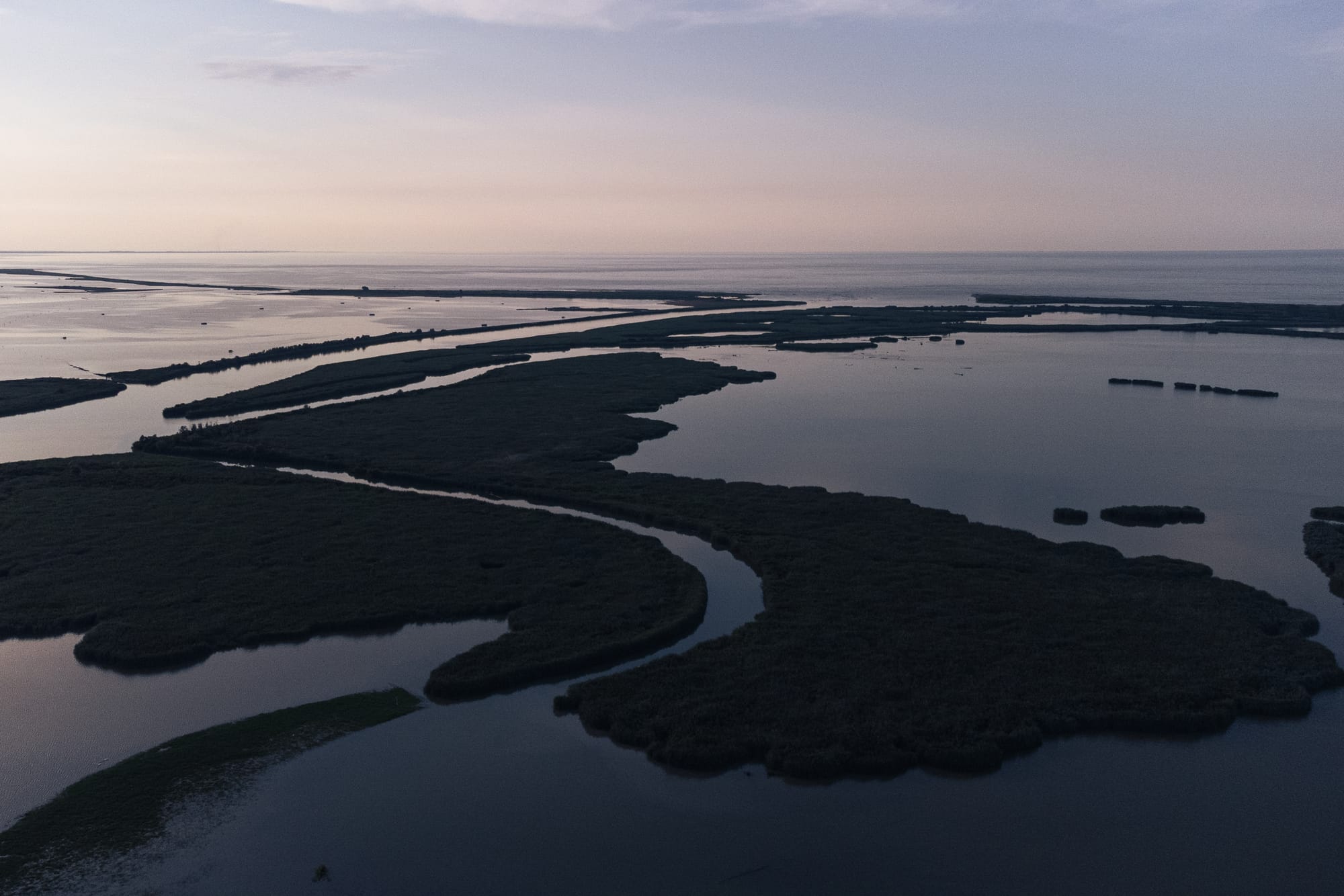
Historically, both the Po and the Ebro deltas have been shaped by human activity. Divided between the regions of Emilia-Romagna and Veneto, the Italian delta in the Middle Ages looked very different from today and was largely submerged. Centuries of rivalry between the Republic of Venice and the Duchy of Ferrara led to major alterations of its original form. Venetian engineers diverted the current from the main branch of the Po, which naturally flowed near Ferrara, and further away from the viable delta. As a result, the small town of Adria — whose ancient commercial importance gave its name to the Adriatic Sea — now lies some 25 kilometers (15.5 miles) inland, far from its original coastal position.
Similarly, the Ebro Delta was symmetrically reshaped in the 14th century with the construction of an azud, an Arabic-era dam located about 25 kilometers (15.5 miles) upstream. The structure divided the Ebro into two secondary channels for agricultural purposes, which to this day supply the rice fields on either side of the main river’s course.
The landscape, too, has changed dramatically in recent decades. Where once dense reed beds covered the Goro Bay filtering its brackish waters, now oysters and clams feed on the nitrates and phosphates carried in excess by the many tributaries flowing across the Po Valley.
In both of these crucial waterways, even small changes can upset delicate balances. Rising temperatures, pollution and invasive species are now putting that balance increasingly under strain.

DAVIDE MANCINI
As a freelance journalist, he writes, photographs and films the changes that are affecting the Mediterranean region, with a focus on the environment. He has published several investigations with international media on issues such as forest fires, illegal fishing and sea pollution. Here is a link to his published work.
DANIELA SALA
Daniela Sala is a photographer and multimedia journalist based in Rome. She has worked in Jordan, Lebanon, Gaza, Syria and Iraq, focusing on issues related to migration, activism, environmental crimes, the climate crisis, human trafficking and labor exploitation. She is co-founder of FADA Collective, an independent reporters’ collective.
ARIANNA POLETTI
Arianna Poletti is a freelance journalist and a PhD candidate in environmental sociology at the IUSS School for Advanced Studies in Pavia. She moved to Tunisia in 2019 after working in Paris for the French weekly Jeune Afrique. Her work focuses on socio-ecological issues between North Africa and Europe. Her reporting and investigations have been published in Italian and international outlets, including Al Jazeera, New Lines Magazine, Mongabay, Le Monde Diplomatique, Socialter, Reporterre and Internazionale. She is a member of FADA Collective.
That's it for this month and this year. Thank you for reading this far. See you in 2026!
If this newsletter was forwarded to you, you can subscribe here to continue receiving it. We put a lot of time and love into making Lapilli+, so we think it's fair to ask less than the cost of a coffee for it. Please switch to the Lapilli Premium plan here; it includes a free two-month trial.

