In this final issue of Lapilli+ (as we know it), we take you to Greece, to the island of Skyros, where a dwindling breed of pony horses faces an uncertain future. Some of their most ardent protectors are considering whether rewilding could offer the Skyrianos’ small population a better chance for themselves and their island, as the climate crisis worsens in the region.
We thank writer and editor Francesca Norrington for this story, along with the growing community of journalists who continue to pitch their work to Magma. We hope this year will bring more resources to produce compelling stories that highlight the efforts underway to build a more resilient Mediterranean.
We’d also like to remind you that this newsletter will cease publication for the foreseeable future. So if you are not already a subscriber, please make sure you have selected Lapilli in the newsletter menu to continue hearing from us. Enjoy the read, and we’ll see you in your inbox on February 6!
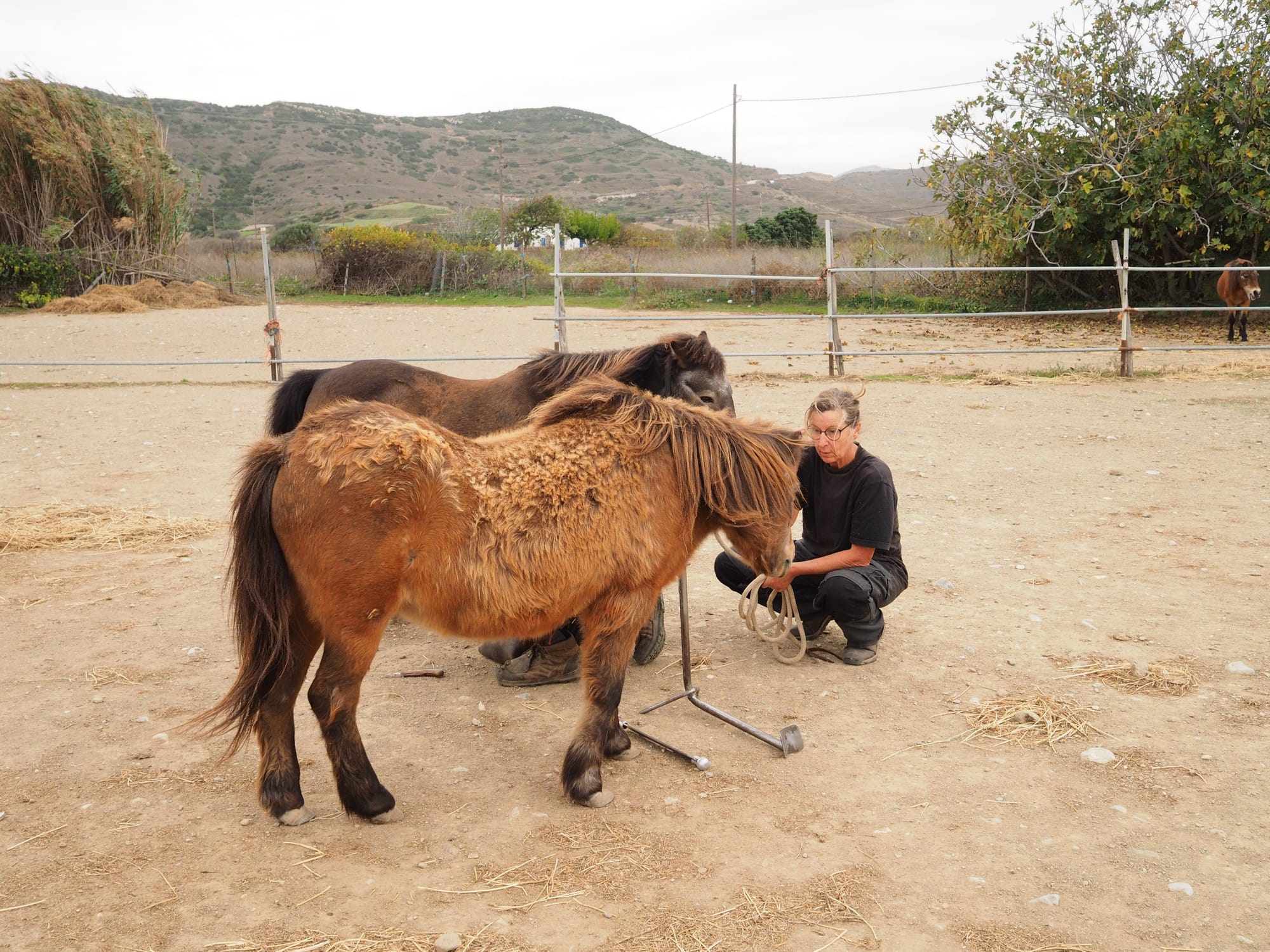
On a sunny, wind-swept afternoon in the Greek island of Skyros, Amanda Simpson holds one of her elder Skyrian horses (Equus caballus skyriano) named Merika, age 32, while the farrier, Tassos Skyllas, trims its hooves. Simpson and I talk, as Skyllas works, about the health of her horses, the daily demands of care and her growing frustration with what lies ahead. Funding is limited and her days are full, leaving the future of the breed feeling increasingly uncertain.
Simpson’s approach to horse care has been shaped by years of close contact with this wild pony species — also known as the Skyriano — which is unique to this island and in danger of extinction: learning their genetic histories, recognizing their markings and monitoring their behavior in detail.
“Re-introducing the Skyriano can bring back a wild, biodiverse habitat,” Simpson says. “All of us who care for or are involved in the care of the Skyriano are motivated to return them to their wild habitat.”
The Skyrian horse — or pony, depending on whom you ask on the island — is believed to have been brought to Skyros by Athenian settlers in the 5th century B.C., though its true origins are uncertain. Its small stature and strength made it well-suited for harvest, threshing grain and drawing water from wells. Over time, the population adapted to the island’s harsh conditions. Their digestive system allows them to survive on rough stubble, which generates warmth during the windswept, colder months. Their size, flexible joints and narrow chests enable them to navigate mountainous terrain.
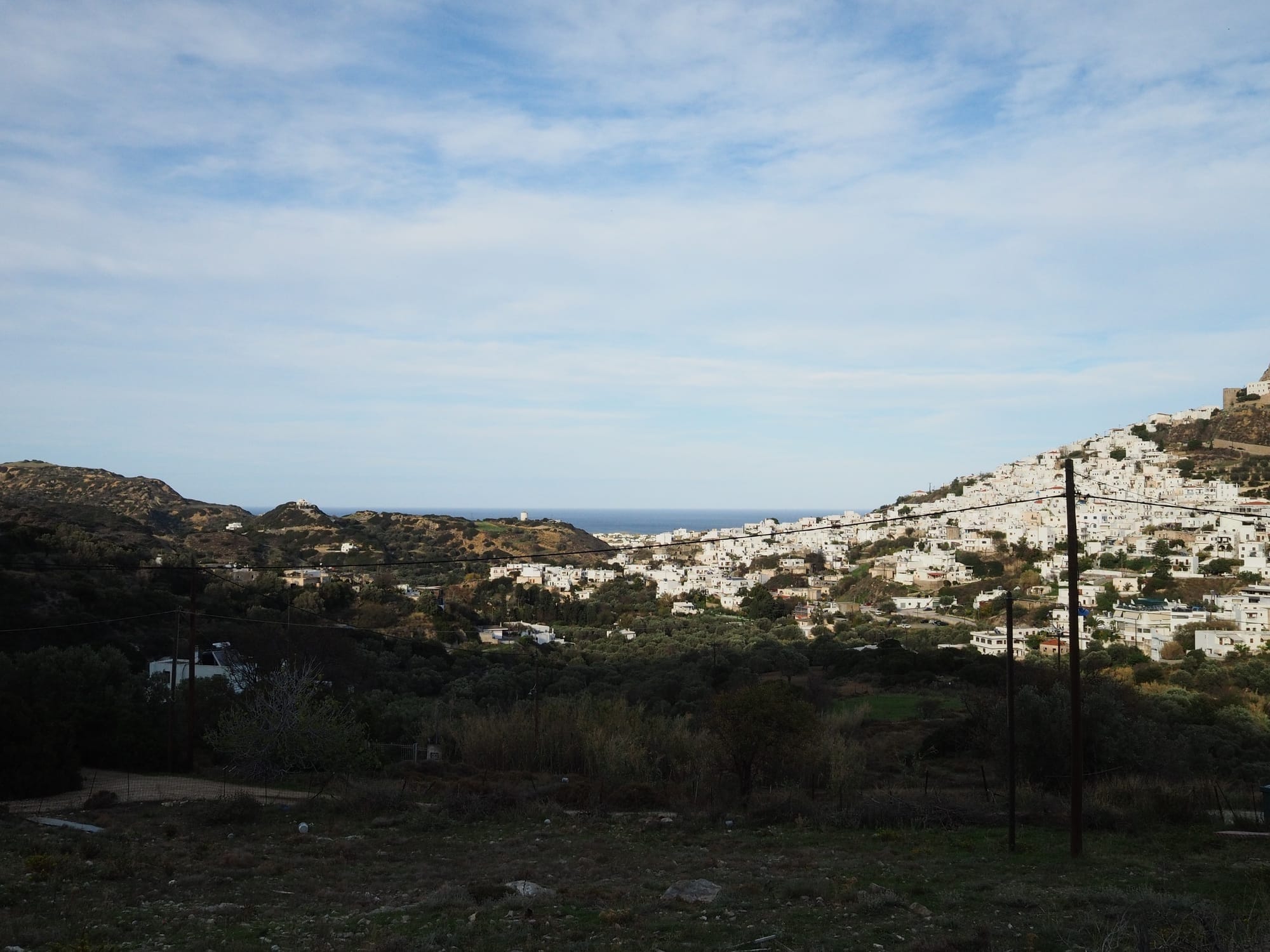
Today, the breed is in decline, with estimates placing the global population at just under 300, though the exact number is uncertain. The largest concentrations are found on Skyros, on Simpson’s farm and Manolis Trachanas’s farm. Several others are scattered across the island and abroad, kept in domestic settings and dependent on supplementary feeding.
The horses survive because they are actively managed; yet, that same management prevents them from becoming self-sustained. Furthermore, the species is constrained by the limited physical space at both Simpson’s and Trachanas’s farms.
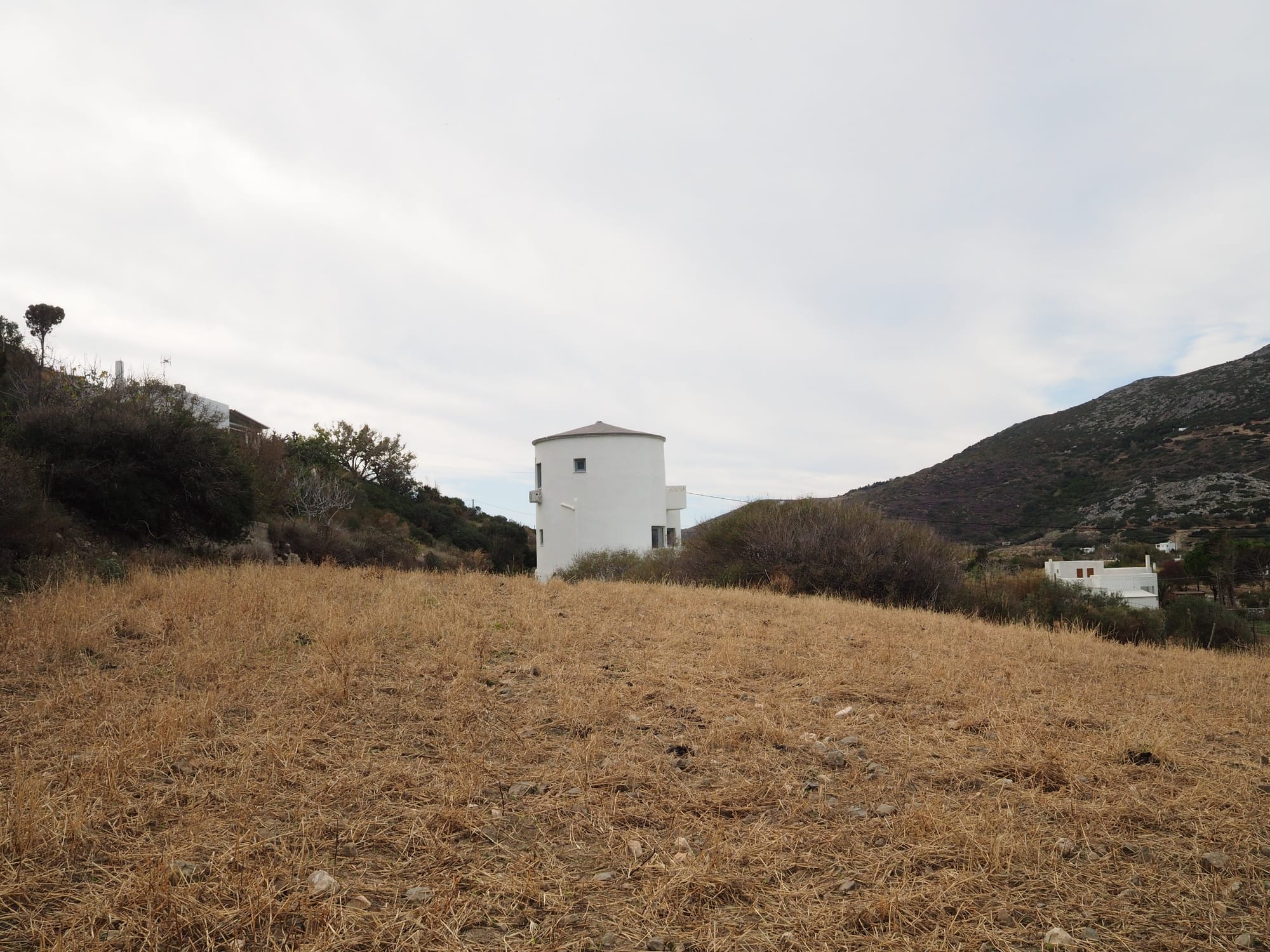
Simpson is keen to reintegrate the Skyriano into its original habitats, Mount Kochilas. “I would like to continue to breed, but I don’t have the physical land, I am limited by what infrastructure I can give to them,” she says. “[The goal] is working with a natural habitat to increase biodiversity by reintroducing a native species to that area, giving the Skyriano a better quality of life and some sense of wilderness, whilst also taking pressure off those people who are breeding in a domestic setting.”
What Simpson has in mind is what some people would call rewilding. “You could electric-fence a small section of the mountain and rest it for a year,” she says, “observe what plants are eaten, what survives, and gradually shape it into a wildlife park.”
Sophie Monsarrat, the rewilding landscapes manager at the environmental nonprofit Rewilding Europe, describes rewilding as looking at what is needed to foster a richer ecosystem, rather than a nostalgic return to the past.
“There is a very intricate balance of nature that you want to preserve in order to create resilience towards future environmental change,” Monsarrat explains. The organization’s mission is not to protect specific horse breeds or individual species, but to restore habitats through rewilding. “Horses, however, are an important component,” she adds. “They are part of a system that makes nature more resilient.”
Since 2011, Rewilding Europe has worked to rebuild populations of wild and semi-wild herbivores across its rewilding landscapes, closely studying what each ecosystem needs to regain resilience, diversity and ecological richness. Rather than following a single blueprint, the process varies by landscape, sometimes creating the conditions for species to return and expand at their own pace, and at other times relying on direct reintroductions or restocking.
Projects include the translocation of water buffalo, Konik horses, red deer and fallow deer to Ermakov Island in the Ukrainian section of the Danube Delta. In Bulgaria’s Rhodope Mountains, efforts have focused on reintroducing European bison, fallow and red deer, Konik horses and Karakachan horses, among others.
Central to this approach is the use of historical baselines as guides. “Looking back into the past allows us to understand the system and find out what’s missing,” Monsarrat explains. “And we are talking in terms of processes, not species.” From this perspective, rewilding allows for substitution where extinction or absence makes direct restoration impossible.
If wild horses no longer exist in a given landscape, the question becomes: What can perform the same ecological role?
Domesticated horses are capable of doing just that. Horses can survive on nutrient-poor grass, and by removing dead grassy material, they stimulate re-growth. Because horses aren’t ruminants (that is, they don’t chew the cud regurgitated from their rumen like cattle and sheep), a lot of seed passes through their digestive tract undigested, meaning they are actively moving seed from place to place.
“They keep habitats open, create habitats for insects, transport seeds in their fur, and so on. They are doing all of these things which, at this time, are missing from many habitats,” Monsarrat explains, referring to the recently released Przewalski’s herd in the Alto Tajo Natural Park, located within the Iberian Highlands rewilding landscape.
“Horses contribute to creating a mosaic of habitats, which supports more species and helps prevent problems like intense wildfires,” says Laurien Holtjer, Rewilding Europe’s engagement and public relations director. As wild horses’ populations dwindle, this function disappears too, which has dire consequences for a landscape’s biodiversity and resilience to the climate crisis and other impending issues.
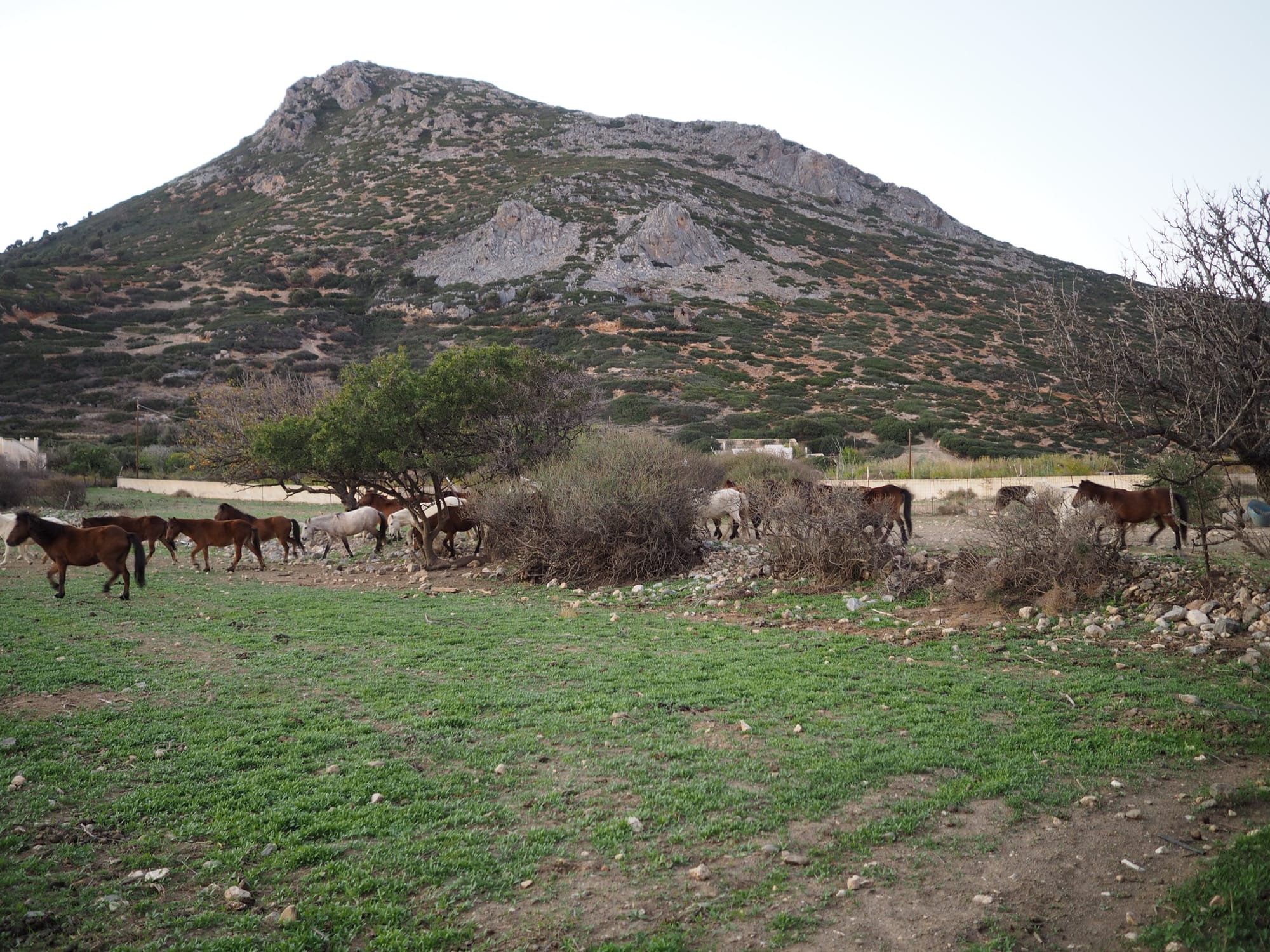
The Skyrian Horse Society, founded on the island in 2006, is the official registration body of the Skyriano. The society manages the stud book (or breed registry), microchips of each horse and takes DNA samples to send to the Agricultural University of Athens for study. This information is stored to build a genealogical record of each horse.
Stallions (adult), colts (young males), fillies (young females) and mares (mature females that are able to produce foals) are microchipped and recorded online, allowing owners to receive an approximate €600 grant per year per horse. The grant is provided by the European Union Reference Center for Endangered Animal Breeds and specifically allocated to programs that preserve endangered breeds and the genetic diversity within those breeds.
For many years now, mares have been prohibited from leaving the island of Skyros in an effort to preserve the species, though many conservationists argue that these restrictions are hindering the species’ breeding program by restricting it to the island and its limited resources.
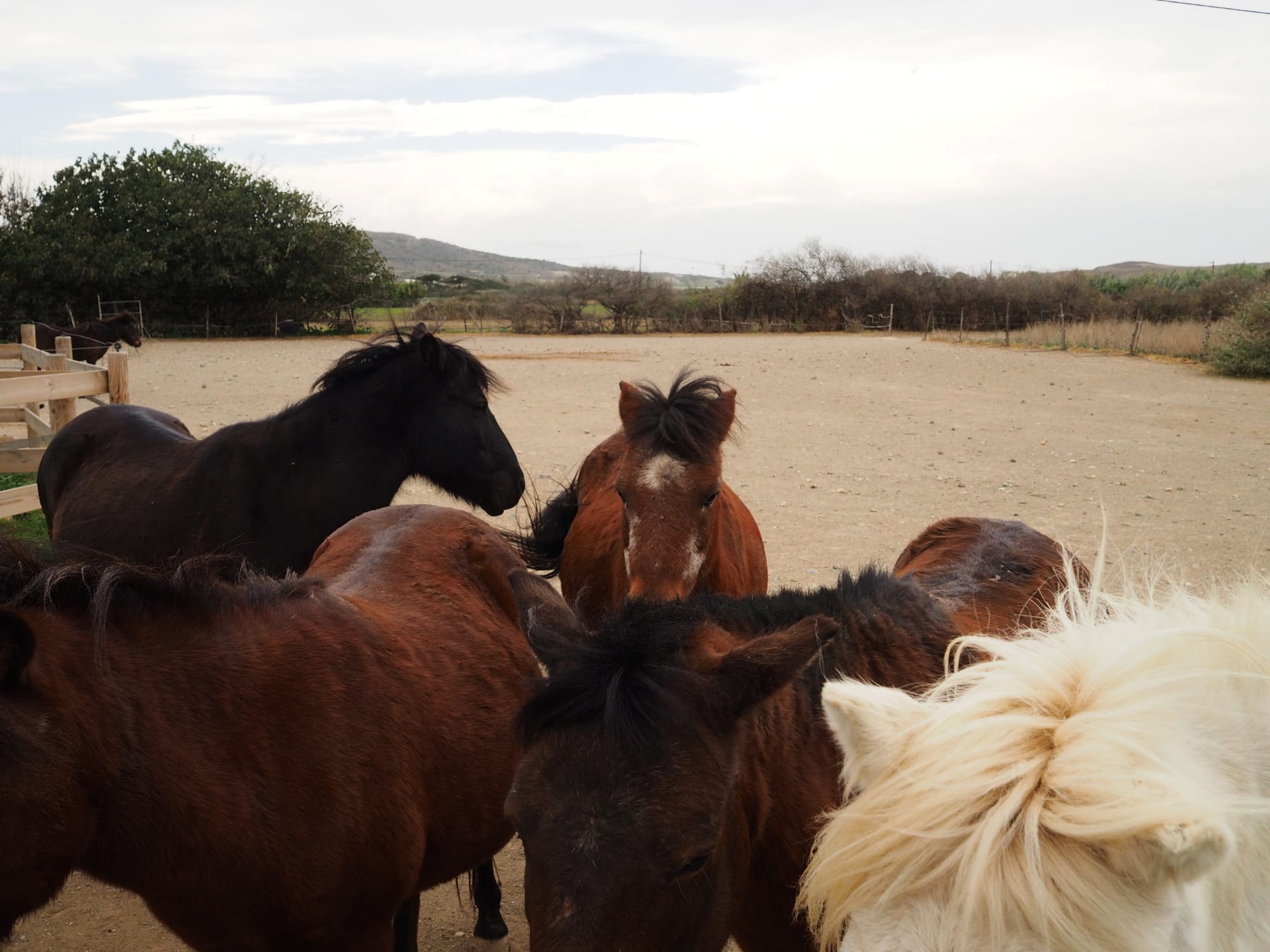
Rewilding the Skyriano means implementing specific stallions and mares that show the correct genetic markers for the breed standard. In similar cases for rewilding of Exmoor and Dartmoor in the UK, horses are checked annually and consistently monitored to maintain this genetic standard.
The goal of the Skyrian Horse Society is to study genetic markers and breed horses, aiming to match as many of these markers as possible so that the foals born in this program are “pure” Skyriano. Within a rewilding context, the breed standard is closely linked to the biological requirements of the habitat. For the Skyriano, their smaller size is crucial for navigating the region's mountainous terrain, flexible joints for steep inclines; strong hooves make them less susceptible to laminitis (a foot disease) and their digestive system is capable of processing denser foods. Their coat also adapts to the local seasons, thick during the cold winter months and very thin in hot summer. Crucially, Simpson says, the environment itself must also fit the horse.
“What interests us,” Monsarrat notes, “is not specifically the genetic and very local breed, but instead it’s the capabilities or the functional role of that species in the ecosystem. How close it is to being able to reproduce the ecological role that the wild horse would have taken.”
She then further explains, “We look at the traits: Is [the breed] able to be outside throughout the winter? Is it able to have foals by itself without human help? Is it resilient to parasites, to drought, to conditions where there is less food? Is it resilient [enough] to breed?”
The case of Skyros is one among many micro-developments in wildlife preservation, made exceptionally complex by its geographical context. What follows, therefore, is the reworking of a suitable habitat that can eventually sustain the horses. In parallel, the rare Skyriano is to be introduced as one component within a broader process of transforming Skyros’s overgrazed landscape into a biodiverse habitat.
The role of rewilding, as a mindset, is to reinstate habitats to a status that is regenerative and can withstand environmental changes caused by climate change. These habitats must also take humans into consideration as part of this landscape.
“Rewilding is not about restoring a ‘painting from the past,’” says Holtjer. “It’s about shaping future landscapes that are resilient, delivering benefits for both nature and people: clean air, clean water, fertile soils, healthy food. Don’t we all need it? Reintroducing it [the horse] is about restoring function, not nostalgia.”
Whether the Skyriano survives as a living breed or endures only as a genetic record may ultimately depend less on the animal itself than on whether Skyros can, once again, make room for a functioning wild landscape.

FRANCESCA NORRINGTON
Francesca Norrington is a writer and editor from England based in Greece. As a freelancer, she writes about the day-to-day realities of the changing environment. Recently, her focus has been on marine policy, Earth law, farming in the Mediterranean and the next step on the Moon. She also works as an illustrator and sketch artist.Thank you for reading this far. Lapilli+ (as we know it) ends here. Make sure you have selected Lapilli in the newsletter menu to continue hearing from us.
We’d also like to remind you that you can continue to support our work by making a donation, ordering a copy of our print magazine or becoming a member of Magma Aps (find out how by writing to a info@magma-mag.net). Thank you for the support you’ve shown so far!

