In this special edition of Lapilli, we’d like to introduce the second cohort of Magma Environmental Reporting fellows and the stories they are currently busy reporting on, spanning everything from bottom trawling in marine protected areas in Spain to how a village in Portugal is protecting itself against wildfires.
In the coming months, we’ll be sharing their work through our platforms. In the meantime, we asked the fellows to tell us a fun fact about their work as journalists: that one thing they just can’t stop thinking about, the stories they’ll be following closely in 2026 and how they stumbled upon that one unexpected story. After all, the best stories are often the ones that truly move you, both as a human and as a journalist — something you momentarily become a little bit obsessed with.

Trees and megafires. In Portugal, large-scale eucalyptus monocultures can make wildfires particularly catastrophic. Yet, these plantations also support rural employment. I wanted to report a solutions-focused story to better understand this growing environmental threat facing Portugal and many other Mediterranean countries. The resilience of a small community, Ferraria de São João, coming together in the wake of a devastating wildfire around their unexpected saviors — 100-year-old cork oak trees — was truly inspiring. I hope the story can help other rural communities in their efforts to adapt and protect themselves in the face of climate change.

Climate crisis and ethnic minorities. I decided to focus my research on the effects of climate change on ethnic minority groups because I believe this will be an important topic to cover in the years to come. We're witnessing an unprecedented threat to entire populations and their cultural traditions, and I wanted to combine my interest in anthropology and social topics with journalism backed by science reporting.

Truffles and desertification. I’m reporting a story on a scientist’s quest to cultivate desert truffles in Murcia, Spain. This story has many threads that inspire me. Desert truffles — mycorrhizal fungi — can improve soil quality in degraded Mediterranean scrublands, sequester carbon and mitigate desertification. They showcase the fascinating role fungi can play in conservation efforts. They also have an awe-inspiring history and some theories say that wild desert truffles were the original manna from heaven. I wondered why they were lesser known in Europe, seemingly overshadowed by the European forest truffle. The truffles became a character to me, with peculiarities and interests of their own.


A sea of plastic. When living in Almería, in southern Spain, I got used to seeing plastic everywhere. The 32,000-hectare “Sea of Plastic” is an area of basic greenhouses so vast it is visible from space, covered in thin plastic sheeting that degrades in the sun, leaving waste across the landscape. What I had not realized was how pervasive it is: on land, at sea, in the air and especially in the soil. Greenhouses generate over 1.3 million metric tons of plant waste, often mixed in composting facilities with plastics from sheeting, ropes, traps and containers. Although this plastic breaks down into smaller pieces, it doesn’t disappear, accumulating over time as micro- and nano- plastics in soils, crops and eventually entering the body through ingestion. I wanted to understand the scale of this problem and what is being done to address it.

Regenerating habitats. For my Magma story, I chose to look at how regenerative sea farming can help mitigate climate change and restore Mediterranean habitats. During my research, I found it has great potential to contribute to the protection of the Mediterranean and its biodiversity, and I'm discovering that there are so many possible solutions to tackle the effects of climate change in our region and beyond. The Mediterranean is our home, and among my priorities as a travel and environmental journalist is helping protect it through my solutions-focused and cross-border reporting.

Benefits and challenges of wild horses. I had heard from a friend who runs hiking trips in Tuscany about a herd of wild horses in the hills surrounding Florence. Nobody knew where the horses came from, so a group of volunteer veterinarians started looking after them, including medical care for seriously injured members or relocation if horses wandered into populated areas. I knew about intentional rewilding projects involving feral horses in Spain and Portugal, but the accidental nature of this herd’s presence was fascinating. As I learned more about the ecological benefits of grazing wild horses, as well as the challenges of containing unchecked herd growth and overgrazing, I knew this was a story worth pursuing.

Bottom trawling and marine protected areas. In 2026, I’ll be watching closely the development of the European Ocean Act, expected by 2027. It will follow the 2025 European Ocean Pact, which many environmental organizations criticized for weakening previous commitments to ban bottom trawling from Marine Protected Areas. As an issue with environmental, social and economic implications, I'm interested in the impacts of bottom trawling in protected zones, and have been reporting on how prohibiting it has become increasingly contentious, particularly amid the wider trend of watering down environmental commitments.

Migratory birds and vanishing lakes. I decided to focus my Magma story on how Türkiye’s vanishing lakes affect migratory birds. About 75 percent of the country’s freshwater bodies have dried up in recent decades, and large swathes of land are set to desertify in the coming years due to severe drought and water mismanagement. Habitat loss is a key driver behind the decline of hundreds of migratory bird species that cross Türkiye. While the disappearance of green and blue spaces has been extensively covered in recent years, its impact on migratory birds remains largely underreported.

The challenges of conservation. When people talk about the climate crisis, they often perceive it as distant and abstract. One reason is misinformation about extreme events, which are frequently described as “bad weather”. But I feel there is something deeper at play that has to do with what author Timothy Morton calls “hyperobject”. Essentially, if we can't touch, see or feel climate change, it's hard to recognize it, and ultimately believe in it. That's why I chose to tell a local story about a marine protected area in Sicily. By narrating local efforts, challenges and solutions through the voices of the people who live there, I hope to bring readers closer to broader issues such as marine protection, biodiversity loss and climate change.

Over the next few months, Magma mentors Jonathan Moens, Marta Vidal and Ottavia Spaggiari will work with the fellows to bring these and other stories to life. We look forward to sharing them with you all over the course of the year.
If you’re an editor interested in exploring opportunities to publish any of the stories, please reach out to info@magma-mag.net.
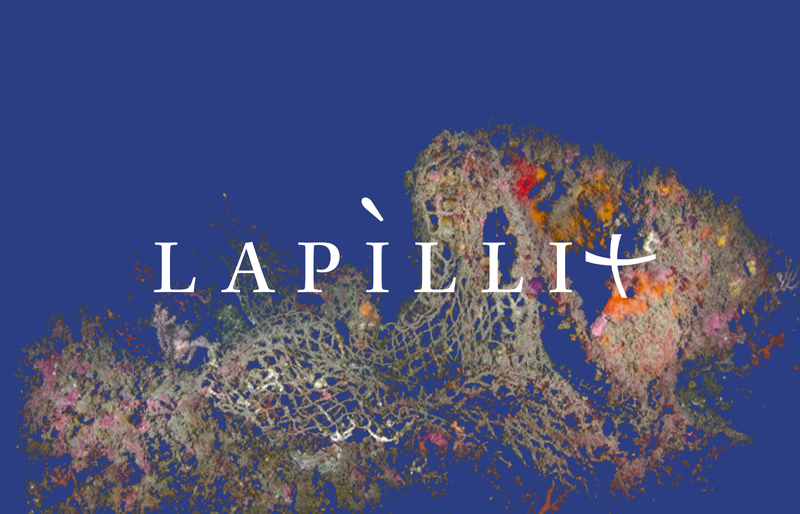
The cover image shows a fishing net on the sea bed (OCEANA/Enrique Talledo).


NATALIE DONBACK
Natalie Donback is a Barcelona-based journalist covering climate change, human rights and politics for various international publications. Her work has appeared in TIME, The Guardian, Grist, Hyphen, Rest of World, the BBC, and many other outlets. She was previously an editor and reporter at Devex, covering global health and the humanitarian sector.That's it for this month. Thank you for reading this far. See you in March with the regular edition of Lapilli.
If this newsletter was forwarded to you, you can subscribe here to continue receiving it. Lapilli is Magma's free newsletter, but if you would like to buy us a coffee or make a small donation, you can do so here. Thank you!

