Spain and Portugal share history, culture, customs, traditions — and rivers. They share mountains and pastures, farming practices and even the Mediterranean diet. Although they do not share a common language, with a bit of effort from both sides, “Portuñol” is, at large, intelligible.
So why is cross-border cooperation for environmental protection so deficient or, as local environmental associations describe it, “practically non-existent?”
In the spring and summer of 2024, journalist Emerson Mendoza Ayala travelled along the three largest rivers the two Iberian countries share — the Douro (or Duero), Tagus and Guadiana — to document the environmental challenges they face and to explore the solutions being studied to better protect them, as outlined in the Albufeira Convention.
Officially called the Convention on Cooperation for the Protection and Sustainable Use of the Waters of the Spanish-Portuguese Hydrographic Basins, the Albufeira Convention was signed in 1998. Twenty-seven years later, environmental groups on both sides of the border say that shared protection mechanisms are failing to deliver. What was signed, they argue, often remains on paper due to inaction or political obstacles.
Yet, scientists and these same groups continue to point toward possible solutions and renewed opportunities for cooperation.
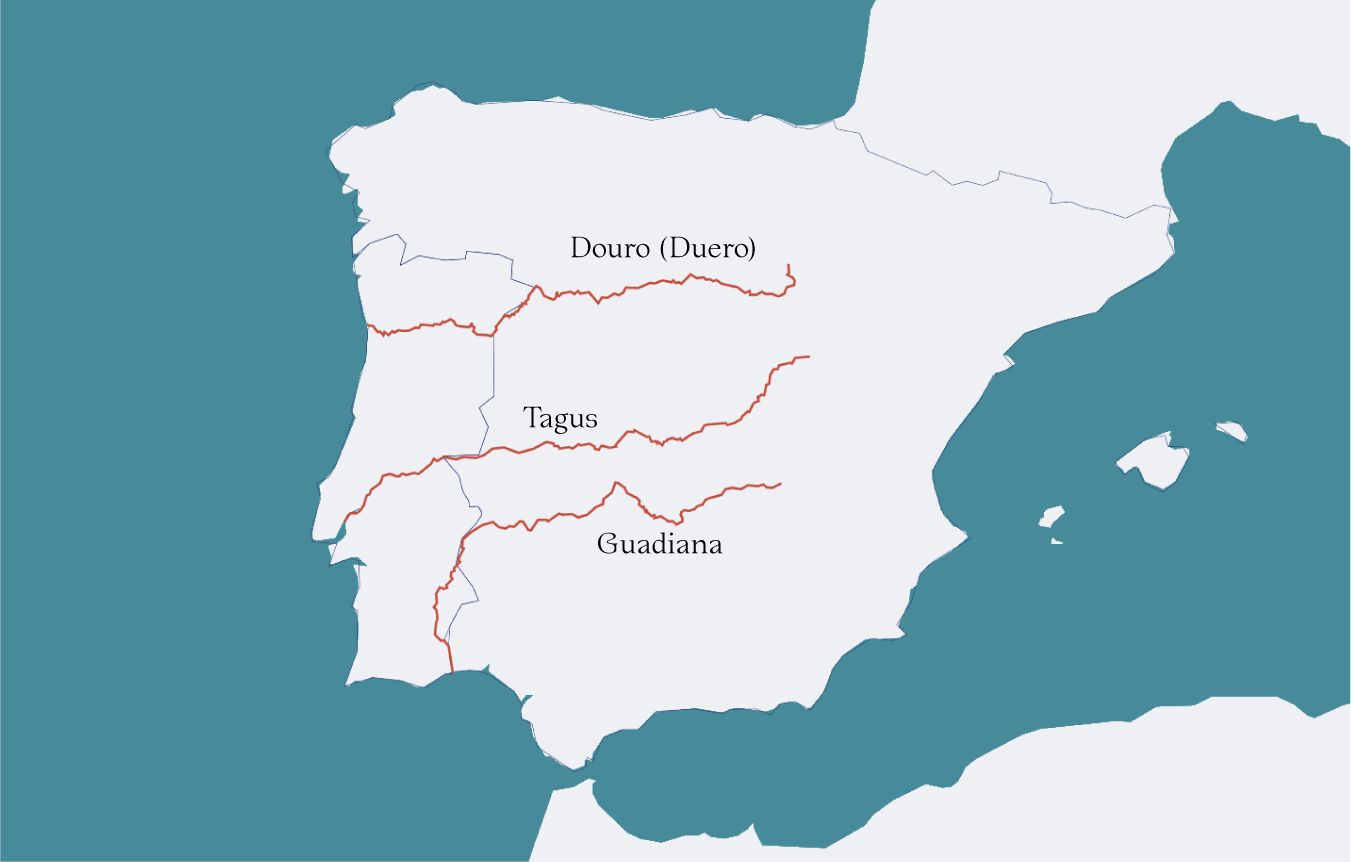

The longest river in the Iberian Peninsula gives shape and life to the Monfragüe Biosphere Reserve and the International Biosphere Reserve that bears its name. It is also a bridge, connecting the World Heritage cities of Toledo and Lisbon and creating a natural and cultural corridor between Madrid and the Atlantic.
“The banks of the Tagus have been my playground,” recalls Alejandro Cano Saavedra, president of the Toledo Platform in Defense of the Tagus. As a child, he bathed in the river in Aranjuez with his father and fished in it in Toledo with his brothers. Back then, “the fish obtained from the rivers and the Tagus were absolutely edible,” he says, mentioning a vast variety of species, including crabs and molluscs. “All the species have disappeared,” he adds with regret.
Cano remembers the Tagus as “a dynamic river,” with floods in spring and winter, low waters in summer, and even beaches along its banks — as can be seen in the snapshots that Cano treasures like relics.
Pollution, he says, began in the 1960s with Madrid’s rapid expansion. Untreated water from the Jarama and Guadarrama rivers inevitably flowed into the Tagus.
“There were no treatment plants — or very few,” he says.
The controversial Tagus-Segura water transfer — an infrastructure connecting the Tagus and Segura river basins — which began in 1979, further aggravated the situation; it reduced the amount of natural water coming from the headwaters of the Tagus and concentrated pollution.
Cano also denounces the lack of an adequate number of treatment plants and purification systems across the Tagus basin. “There are still many villages that discharge their wastewater directly into natural waterways,” he says.
Despite the environmental damage, Cano remains hopeful. He believes it is still possible to reverse the situation and that people could once again enjoy bathing in the Tagus within four or five years — although it all “depends on the political will to do so.”
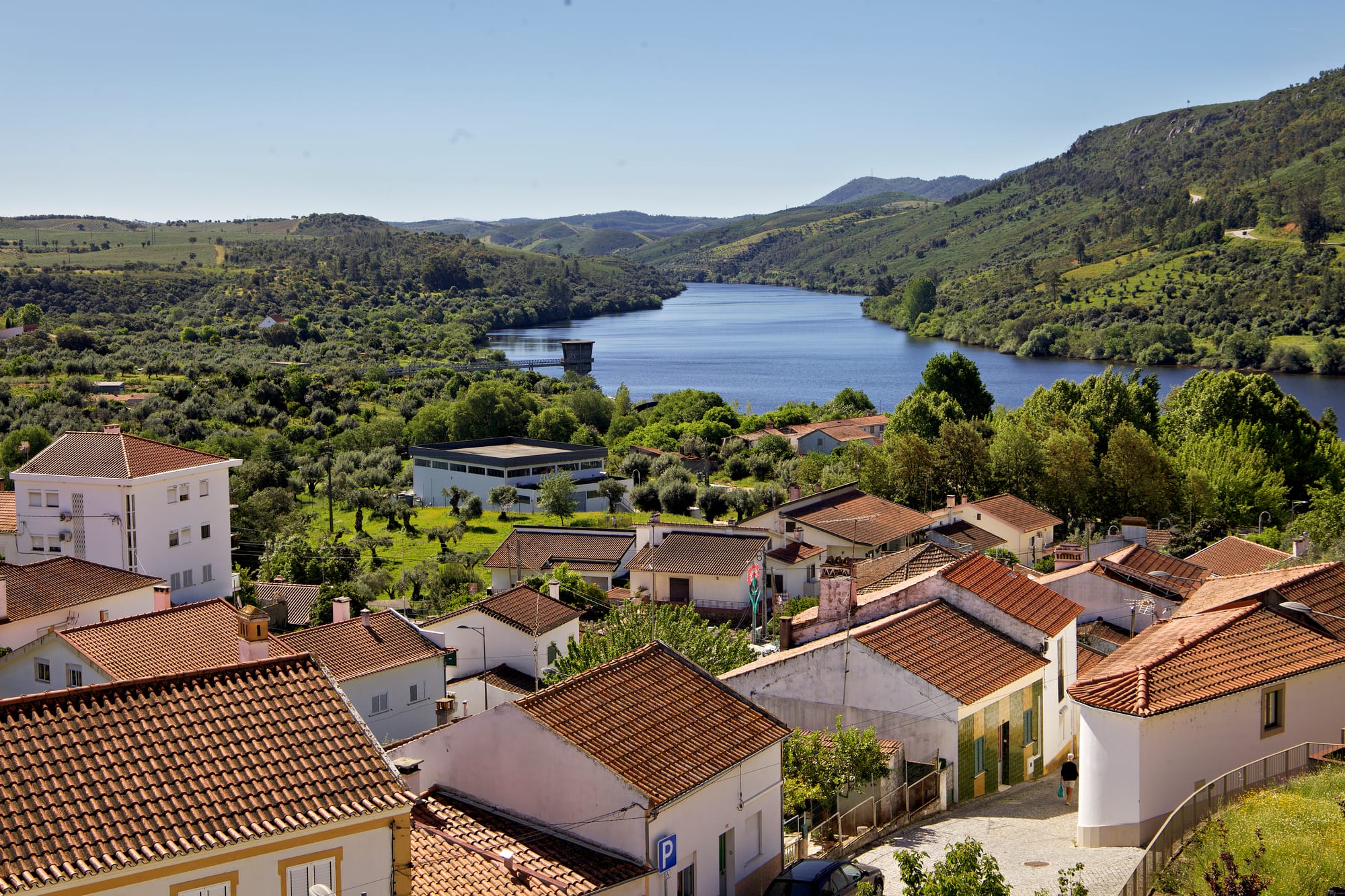

Two hundred miles northwest of Toledo, close to the Spanish-Portuguese border, José Manuel Pilo, mayor of the picturesque town of Fermoselle (known for its “thousand underground cellars”), is far less optimistic. In 2001, Article 13 of the Natural Resources Management Plan for the Arribes del Duero Natural Area called for proper treatment of urban, industrial, agricultural or livestock discharges to be achieved as soon as possible.
More than 20 years later, Pilo wonders if that goal will ever be met. His municipality of 1,149 inhabitants still lacks a wastewater treatment plant, and its untreated wastewater flows into the international waters of the Duero River, which are part of the Iberian Plateau Transboundary Biosphere Reserve.
“On the Spanish side, none of the towns located within the natural park have wastewater treatment systems,” Pilo says. “That’s a deficiency that must be corrected as soon as possible.”
Projects like the “New Fermoselle Waste Water Treatment Plant” have been delayed and vastly over budget, leaving the charming village of Fermoselle a “focal point of insalubrity for the whole area and for the Portuguese villages that use the water for their consumption,” Pilo says.
Diffuse pollution worsens the problem. Nutrients and pesticides from agriculture, along with industrial pollutants, run off into reservoirs and rivers, causing algae blooms and contamination.
Cyanobacteria like Dolichospermum flos-aquae and Microcystis aeruginosa have been found in reservoirs, like the Embalse de Almendra, the third-largest in Spain, posing risks to humans, fish, amphibians and birds.
In 2023, 161 villages in the Salamanca and Zamora provinces were left without any water supply due to pesticide contamination.
According to the Spanish grassroots confederation Ecologistas en Acción (Ecologists in Action), the root of the problem lies in the “productivist attitude” of agricultural authorities. Education, says Antonio Guillén Oterino, scientific director of the International Biological Station Duero/Douro, is key: “If I pollute my grandchild’s water, what am I going to give him to drink?”
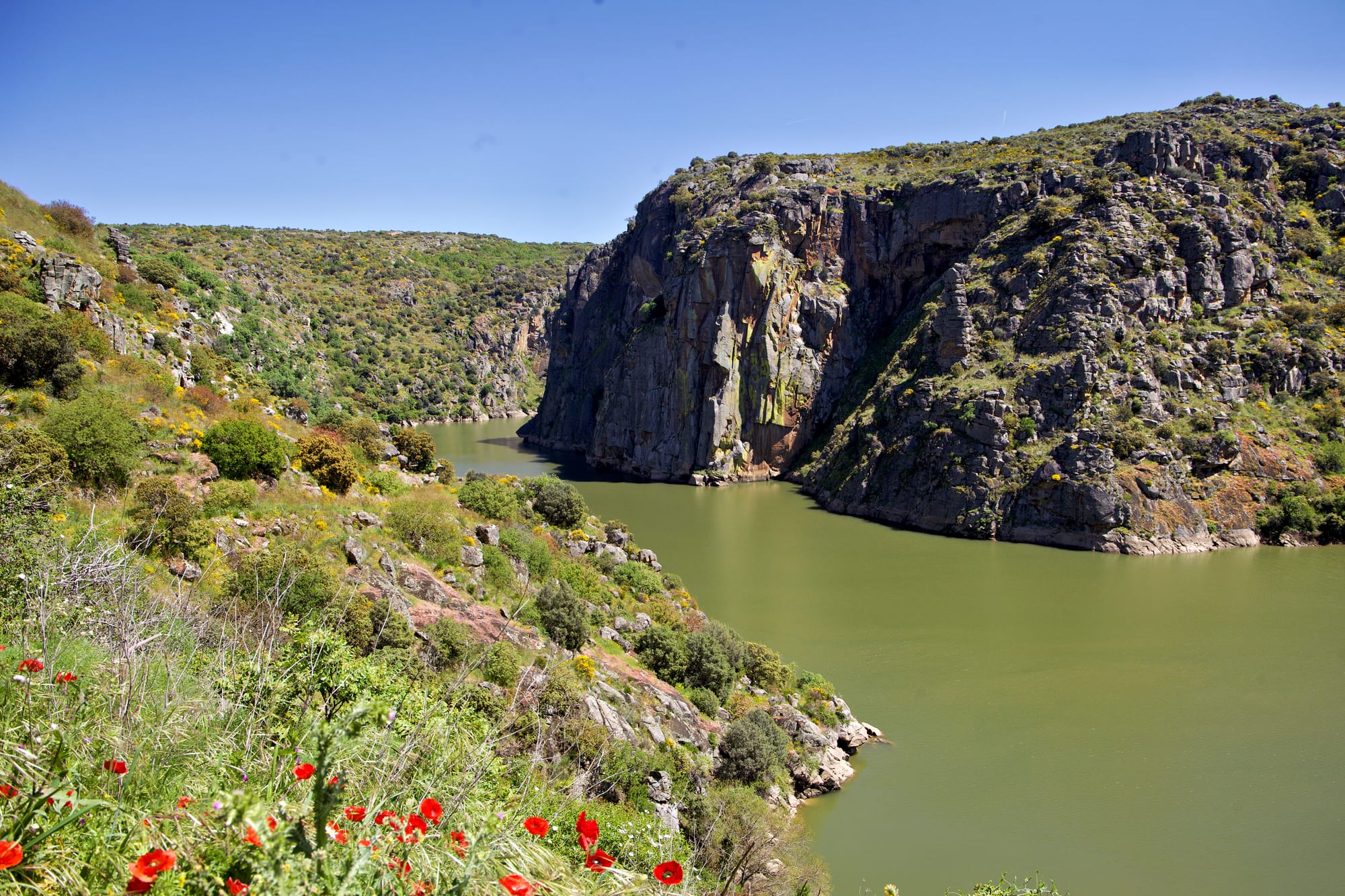

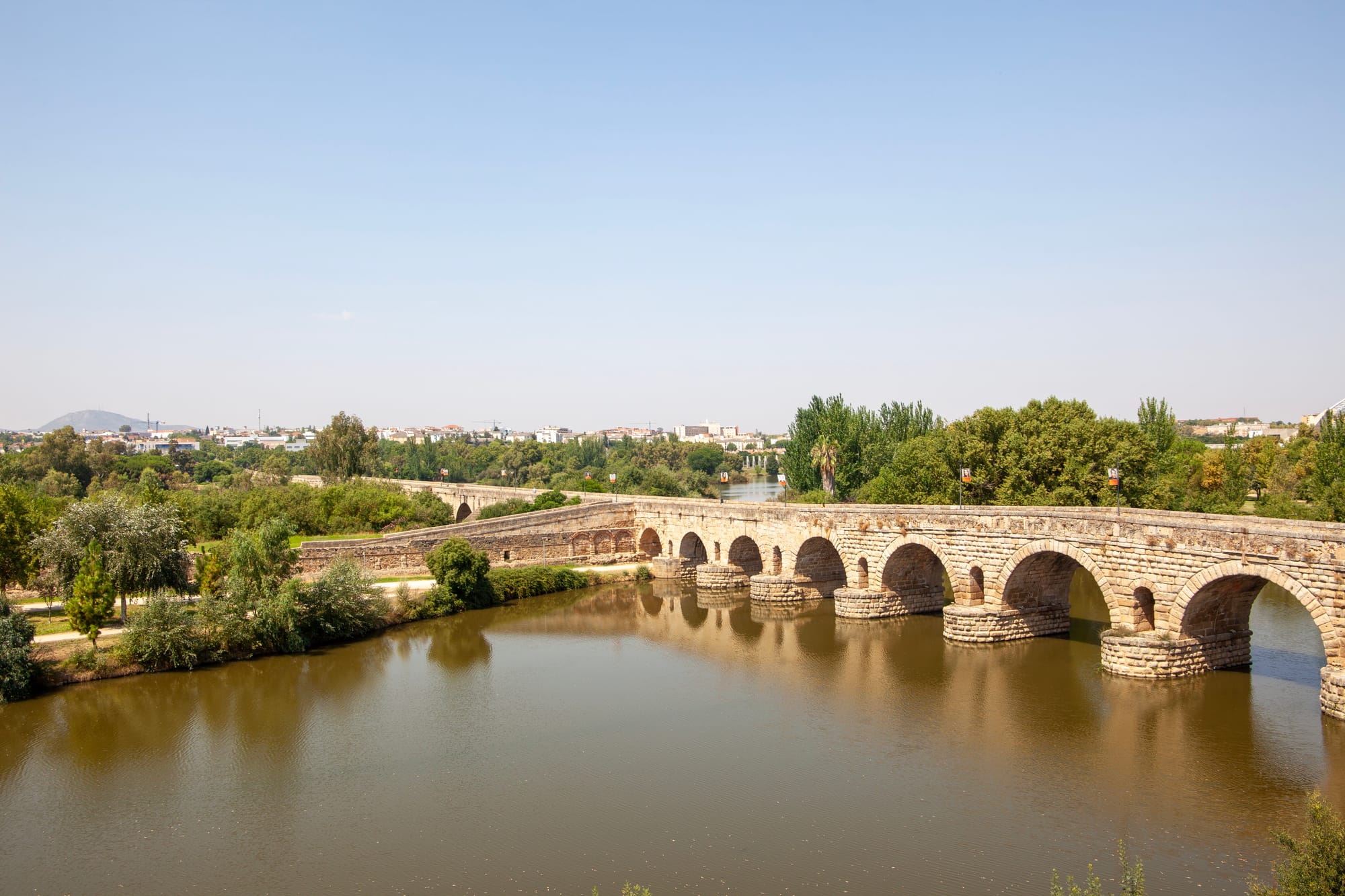
The Guadiana River has always shaped the Portugal-Spain border, even dating back to when Augusta Emérita (today’s Mérida) was the capital of Lusitania between the 1st century BCE and the 5th century CE, when the Iberian Peninsula was ruled by the Romans.
Along its course, in modern days, invasive aquatic plants have been a persistent problem. The water hyacinth (Eichhornia crassipes), first detected in 2006, has at times blanketed stretches of the river, suffocating fish by depleting oxygen and triggering a rotting process that harms both the ecosystem and nearby communities.
The nonprofit Save the Guadiana (Salvemos el Guadiana), founded in 2016, launched a media campaign and collaborated with authorities to implement a “Shock Plan” in 2018. By 2020, the water hyacinth was largely under control, with monitoring and early-warning systems in place.
But new threats keep emerging. California and showy water primroses (Ludwigia peploides and Ludwigia grandiflora) and the Mexican water lily (Nymphaea mexicana) are now spreading, particularly around Badajoz. The six-year window granted for selective dredging, Salvemos el Guadiana president Juan Fernando Delgado Cortijo says, will only allow the plant to proliferate further.
Environmental non-governmental organizations in Extremadura, along with Ecologistas en Acción, argue that without a comprehensive restoration plan for the river, such measures are more performative than useful.
Uncontrolled dumping of solid waste — rubble, plastics, tires, fibre cement and all kinds of waste — according to Delgado Cortijo, further endangers the river and surrounding communities.
From a peaceful village nestled in the Tagus International Transboundary Biosphere Reserve in Spain, researcher Amparo Sereno Rosado crossed the border in 1998, following the course of the Tagus River to its mouth in Lisbon. There, she earned a master's degree in European Law and, later, a doctoral degree in Environmental Law on Portuguese-Spanish water relations.
Between 1998 and 2000, as Spain and Portugal were reshaping their water laws and negotiating the specifics of the Albufeira Convention and the EU Water Framework Directive, Sereno was following the process up close from Lisbon. Her doctoral work, comparing Iberian river governance with models in North America and Northern Europe, led her to conclude that the current system lacks an independent body capable of enforcing what both countries ended up signing on paper.
Instead, Sereno proposes a cross-border authority — an impartial “voice of the river” — with the power to assess environmental damage, demand remediation using the EU Environmental Liability Directive and reduce the political inertia that keeps many of the Convention’s provisions from being implemented.
Sereno isn’t the only one who feels this way. After more than two decades, Pedro Cunha Serra, who chaired the Portuguese Water Institute and was responsible for the water legislation and river basin plans during the Albufeira Convention and the Water Framework Directive negotiations, argues that the Albufeira Convention needs an update.
The day will come when cooperation on the Iberian Peninsula will cease to be a mere declaration of intent and materialize into action to protect shared rivers and their tributaries. Until then, progress will likely depend on the work of local communities, environmental groups and cross-border initiatives to restore aquatic ecosystems on both sides of the border.
Only when the Tagus, Douro and Guadiana are no longer fragmented and polluted will they regain their role as living corridors beyond geopolitical boundaries.

EMERSON MENDOZA AYALA
Emerson Mendoza Ayala is a travel and environmental investigative journalist and audiovisual communicator from Spain, based between Seville and Lisbon. He specializes in solutions-focused environmental and climate change reporting in the Mediterranean region, and travel, culture and sustainability reporting across Europe and the world. His work has been published in Spanish, English, French and Portuguese in Público, Wanderlust Magazine, Lonely Planet, Rough Guides and CTXT, among other publications.
That's it for this month. Thank you for reading this far. See you in December.
If this newsletter was forwarded to you, you can subscribe here to continue receiving it. We put a lot of time and love into making Lapilli+, so we think it's fair to ask less than the cost of a coffee for it. Please switch to the Lapilli Premium plan here; it includes a free two-month trial.

Lapilli+ is a monthly newsletter with original (or selected) content about the Mediterranean and its environment curated by Magma. Here you can read Magma's manifesto.
