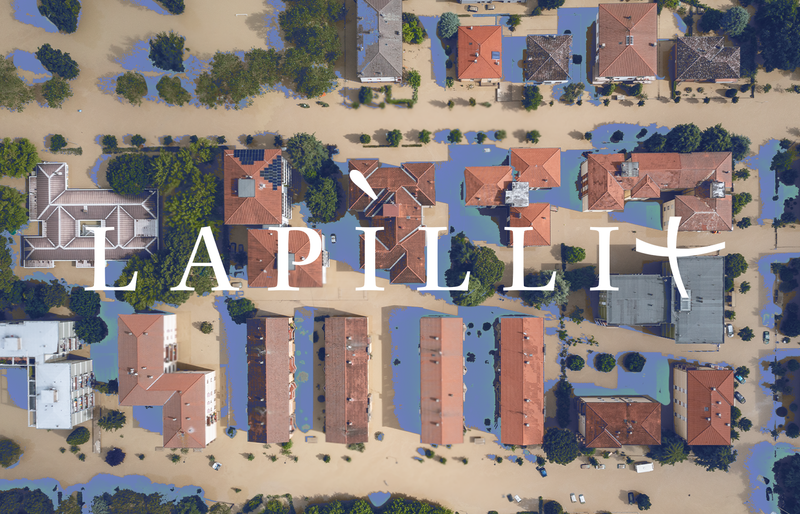
In May 2023, the Italian region of Emilia-Romagna was hit by heavy rainfall events following two years of drought. Such a combination resulted in catastrophic floods, which caused the deaths of 17 people. It’s still not clear what role climate change played in the events (Lapilli+). What’s clear is that the human and social costs of this tragedy are far from being overcome. In the past 12 months, photojournalist Michele Lapini has visited the hardest-hit areas to document the floods’ aftermath. For this Lapilli+, we asked him to share his take on the situation. His words and images convey how difficult it is for those affected to move on after what happened. This reflection is particularly important as the current climate crisis is expected to bring extreme weather events that are more frequent and severe.
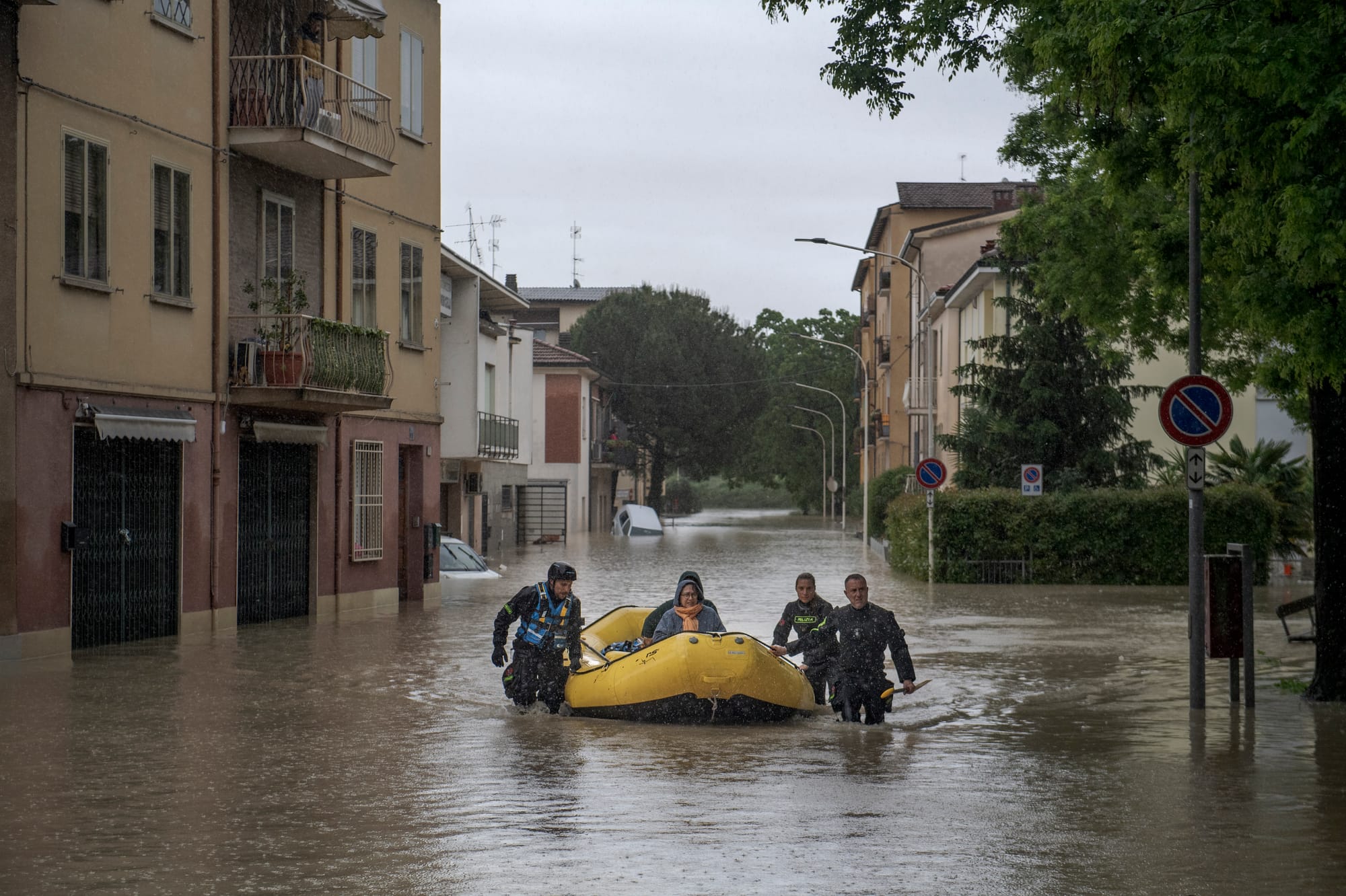
Going back to places is always good practice. Especially when those places are still going through a catastrophe that started exactly a year ago this month. In Emilia-Romagna, May 2023 will long be remembered for the two floods that occurred on May 3 and 16.
I still remember arriving in Faenza for the first time. The river was overflowing into the city, taking over the streets and flooding homes. Everything was chaotic, unexpected and unthinkable. It didn't take long to get used to it. The adrenaline kicked in and I immediately focused on doing my job. But, as the waters receded, so did my adrenaline rush. It's during this lull that a different type of work begins — building relationships, talking to people and understanding the situation a little more deeply. Numbers were impressive: almost 40,000 people were displaced from their homes; some (and still too many) remain displaced; 17 people died. Twenty-three rivers flooded, thousands of landslides occurred and at least 37 municipalities had been affected.
One year later, in Faenza and many other places, it appears as though the floods never happened. But, in some respects, it’s as if the flood never went away. It has remained in people’s lives; it has been inhabiting their empty homes and open windows. It still brings tears to the eyes of those who remember the water flooding their homes and carrying away their everyday lives.
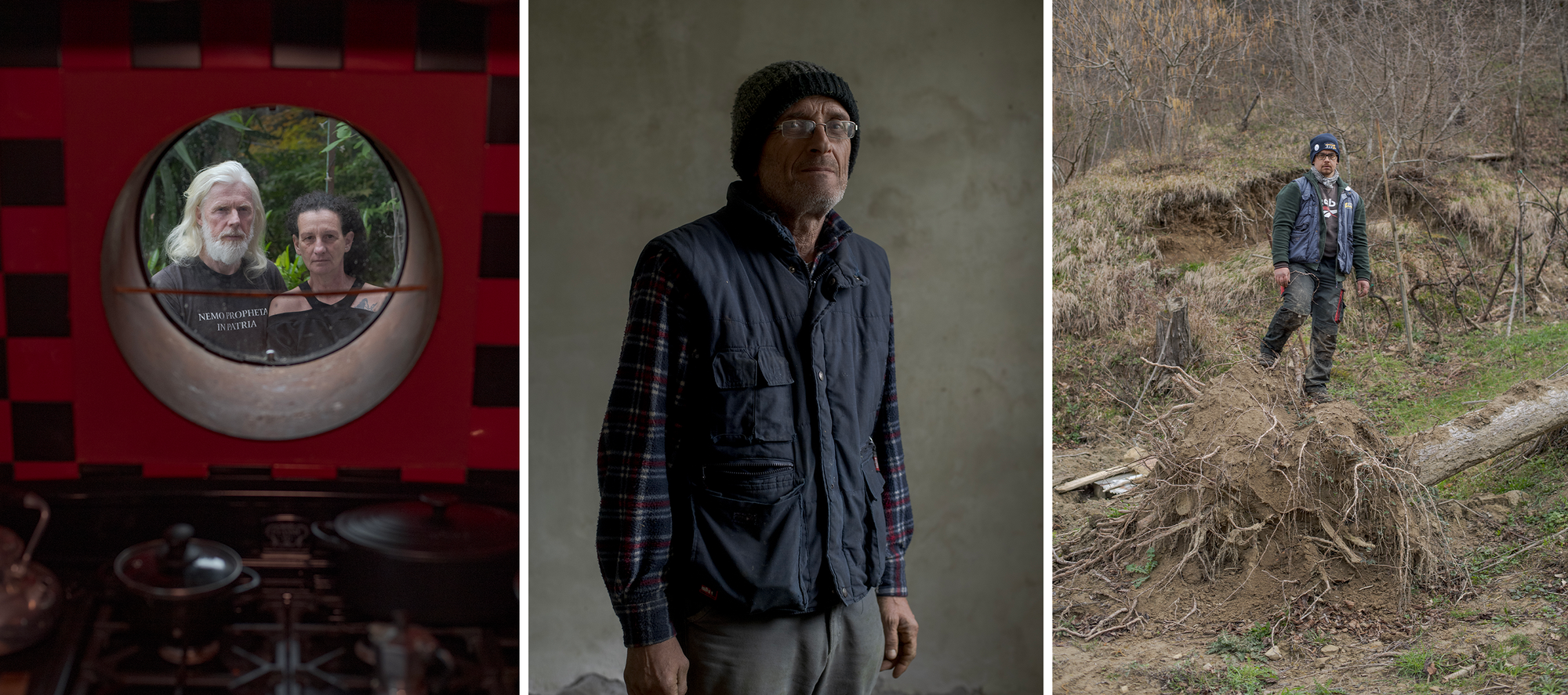
The flood still haunts Gianni, who is among the promoters of the group “Appello per l’Appennino romagnolo,” focused on building communities against hopelessness. It also pushes Paolo, whose two homes in Forlì got flooded, to save his father's historical archive. For the social cooperative L'Orto, the flood serves as a driving force to find a safer and more climate-resistant location. In fact, the walls of their current place in Budrio, outside Bologna, which was already flooded in 2019, are still covered in up to roughly five feet of dry mud. The flood erased identities, including those of David, a photographer, and Gogo, an artist. They are based in Lugo, not far from Ravenna, and in the floods they lost negatives, prints and manuscripts — decades’ worth of artistic work.
And, in the long wait for the promised compensation from the government, the flood’s presence is felt still.
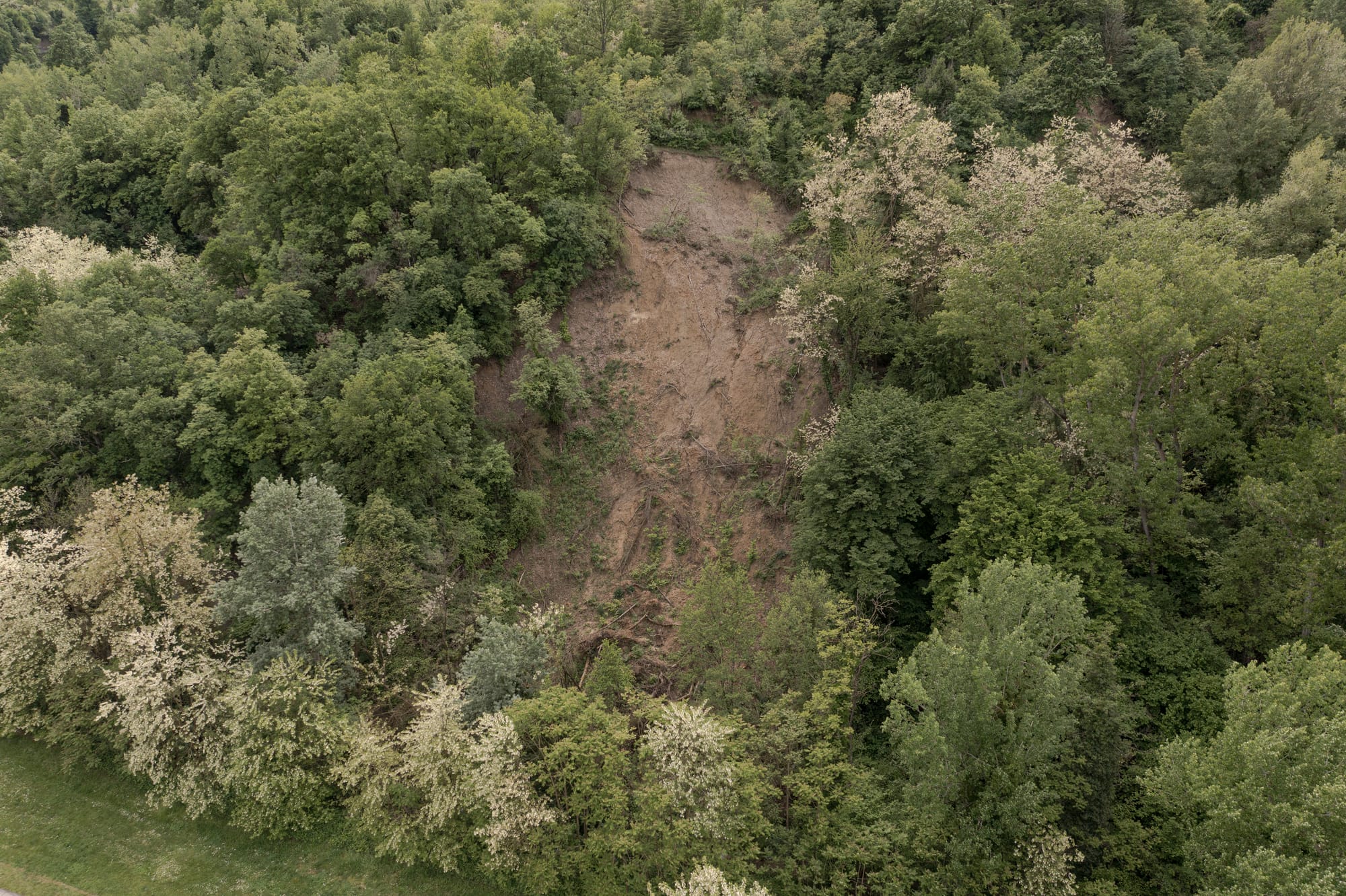
In the highlands, though, scars from the floods are even more visible. Some landslides are still active. They resemble waves made of soil that look like gashes in the woods and hills. Roads are reduced to one lane. And the landscapes look different. There’s been less talk of the situation in the Apennines and hills. But these areas are full of reminders of the flood events of May 2023.
Going back to such places is often weird for someone like me who had never been there before. Getting to know a place when it’s covered in water and seeing it again without it is surreal; the inverse might be true. But losing a landscape is a collective wound that will be felt for decades. Places are made of memory, affection, routines and relationships. Their sudden transformation inevitably affects those who live there.
In May 2023, there was little talk of climate change in relation to the floods. The public debate about their causes focused on the local nutria population — something in between a muskrat and a beaver — for damaging the embankments, ditch and river maintenance, clogged manholes and even occasionally cloud seeding. One year later, the coverage dedicated to better understanding what happened has shrunk in newspapers, on television and in public statements. Media coverage on the climate crisis follows an irregular pattern, varying according to current events. The climate crisis is typically only mentioned in the aftermath of catastrophes or extreme weather events, and the underlying causes are rarely acknowledged. Yet the crisis is always there, even when extreme weather events or their impacts are not so visible or photographable.
Displaced people — those who have lost everything and those who no longer feel safe returning home — remain in limbo. Urban development keeps occurring in places where it shouldn’t, despite the lessons the flood revealed about soil consumption (Lapilli+).
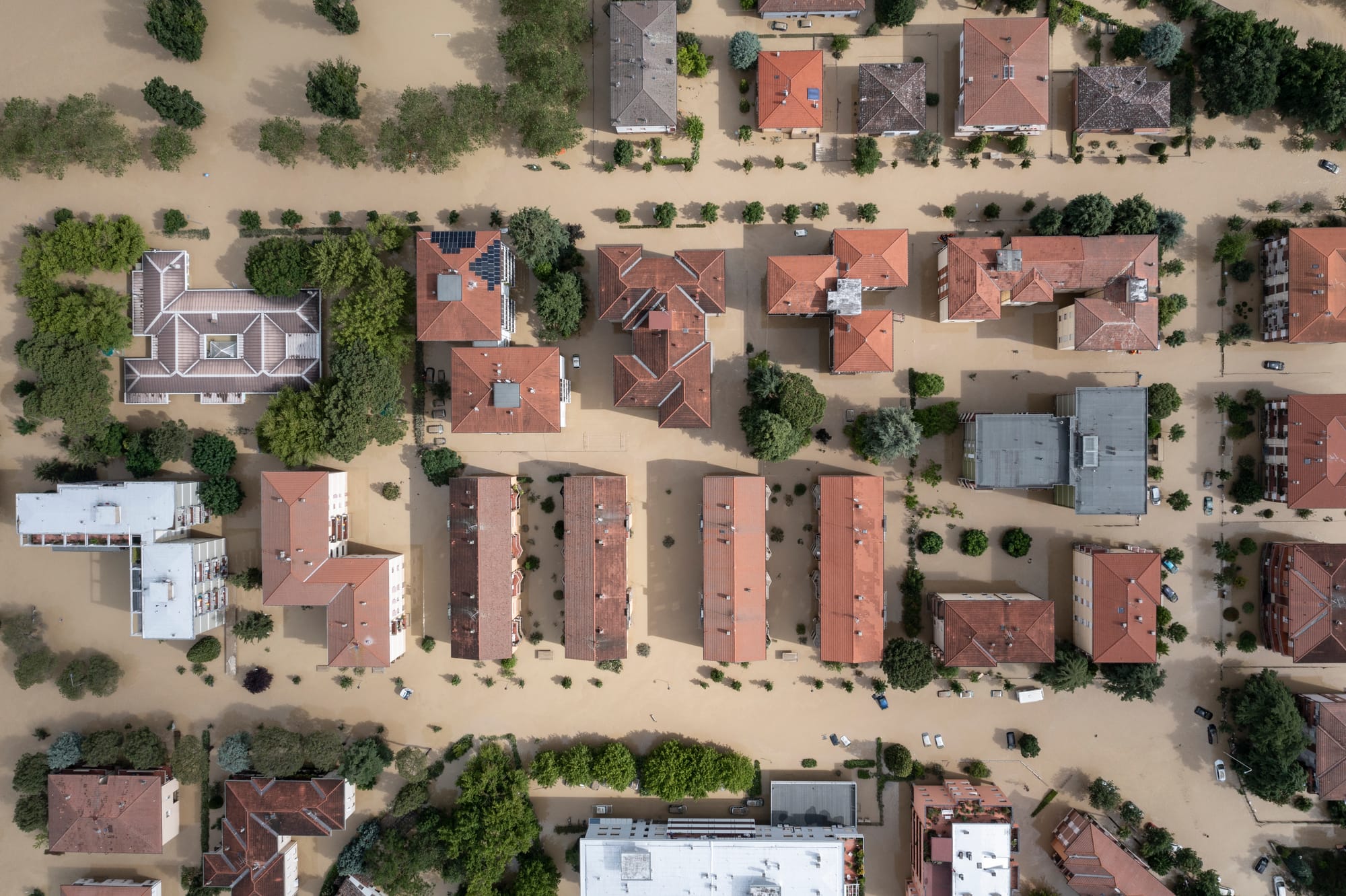
Back then, two years of drought preceded the May floods. Prolonged dry conditions made the soil along the hillside nearly impermeable. When torrential rainfall soaked it to the brim, the soil collapsed upon itself, triggering flooding downstream. This served as a reminder that our territories are interconnected and that there is not just the city or the countryside, the mountains or the plains. Water ricocheted off concrete, flowed into rivers that breached their banks and, ultimately, circled back to affect us all.
Going back to those places helps us understand the impact of the climate crisis on both people and territories in the medium and long term. Because the flood doesn’t let you go back to normal life. Its damages are much more than mere numbers. Numbers only serve to understand the scope of the floods and that only very little aid has been provided by the state to those affected — some of the affected, including the social cooperative in Budrio, are still waiting for compensation for the 2019 flood. And if 23 rivers flooded, there were even more structures that crumbled. Not all of the impacts are visible, but they are felt, especially those disrupting the regularity of our lives, carrying them away in a few hours.
The climate crisis is a social crisis because it disrupts the bonds that hold all the people, relationships, habits, memories and thoughts together. In certain areas, houses stand empty, without people. In others, there are not even houses anymore. People are elsewhere, suspended, waiting to see if they can return home.
Going back to places is important so that people do not feel that the climate crisis, besides taking everything away, also leaves them alone and isolated.
The water may recede, but the flood stays.
The wind moves sheets in a field still covered with dried mud on the outskirts of Faenza in May 2024 (Michele Lapini).

MICHELE LAPINI
He is a freelance photojournalist based in Bologna with a deep interest in environmental, social and political issues. His work has appeared in national and international media such as Stern, Internazionale, El Pais, L'Espresso, The Guardian, Die Zeit, Nature and others. He was awarded the Environmental Photographer of the Year 2021 in the Future Landscapes category and the Italian Sustainability Photo Award 2021 for the best single photograph.That's it for this month. Thank you for reading this far. See you in June.
If this newsletter was forwarded to you, you can subscribe here to continue receiving it. We put a lot of time and love into making Lapilli+, so we think it's fair to ask less than the cost of a coffee for it. Please switch to the Lapilli Premium plan here; it includes a free two-month trial.

Lapilli+ is a monthly newsletter with original content about the Mediterranean and its environment curated by Magma. Here you can read Magma's manifesto.
