
On November 2, floods hit the plain between Florence, Prato and Pistoia, and since I live about 30 kilometers (18.6 miles) from Campi Bisenzio, in central Italy, I went last week to see the situation firsthand. I reached out to Michele Borzoni, a photographer from the TerraProject collective, who had spent the Sunday immediately after the floods helping out some friends with relatives in Campi. The following Thursday we met up at 9:30 a.m. at a gas station near the Florence airport and went to the nearby hard-hit town. My idea was to do some reporting for a couple of hours, interview residents about their experiences and return to my desk to gather my notes and write. But, at 3 p.m., we were still in Campi. That day was a rollercoaster of emotions: excitement at seeing so many young people helping clearing basements and removing muddy waters, amazement at the locals’ determination to reclaim their lives back, anger at the lack of coordination in the first days of the emergency and grief over everything that was lost. It was only after a new weather alert saying that more rain was about to fall that we decided it was time to return home. As you read this, the situation in Campi Bisenzio has much improved. Yet witnessing what happened in that area has given me many new insights on the changing climate and its impact on territories, starting with how we deal with these emergencies.
On the evening that the storm hit, Stefano Cecconi was on the phone with his son, who has lived with his family in Campi Bisenzio for four years. "Dad," he recalls his son telling him, "the road has already flooded a bit here." As Cecconi’s son returned home after moving the cars to what he thought was a safer place and changing out of his wet clothes, the latter’s wife looked out the window and saw her car passing by, carried away by the current. Soon, a meter and a half (59 inches) of water flooded the ground floor of their house, where the family stores seasonal clothes, some gym tools and children’s toys. Others in Campi — who use such spaces as bedrooms, kitchens and taverns — weren’t so lucky.
That night, eight people died in Tuscany: One was swept away as he tried to move his car to a higher elevation in Campi.
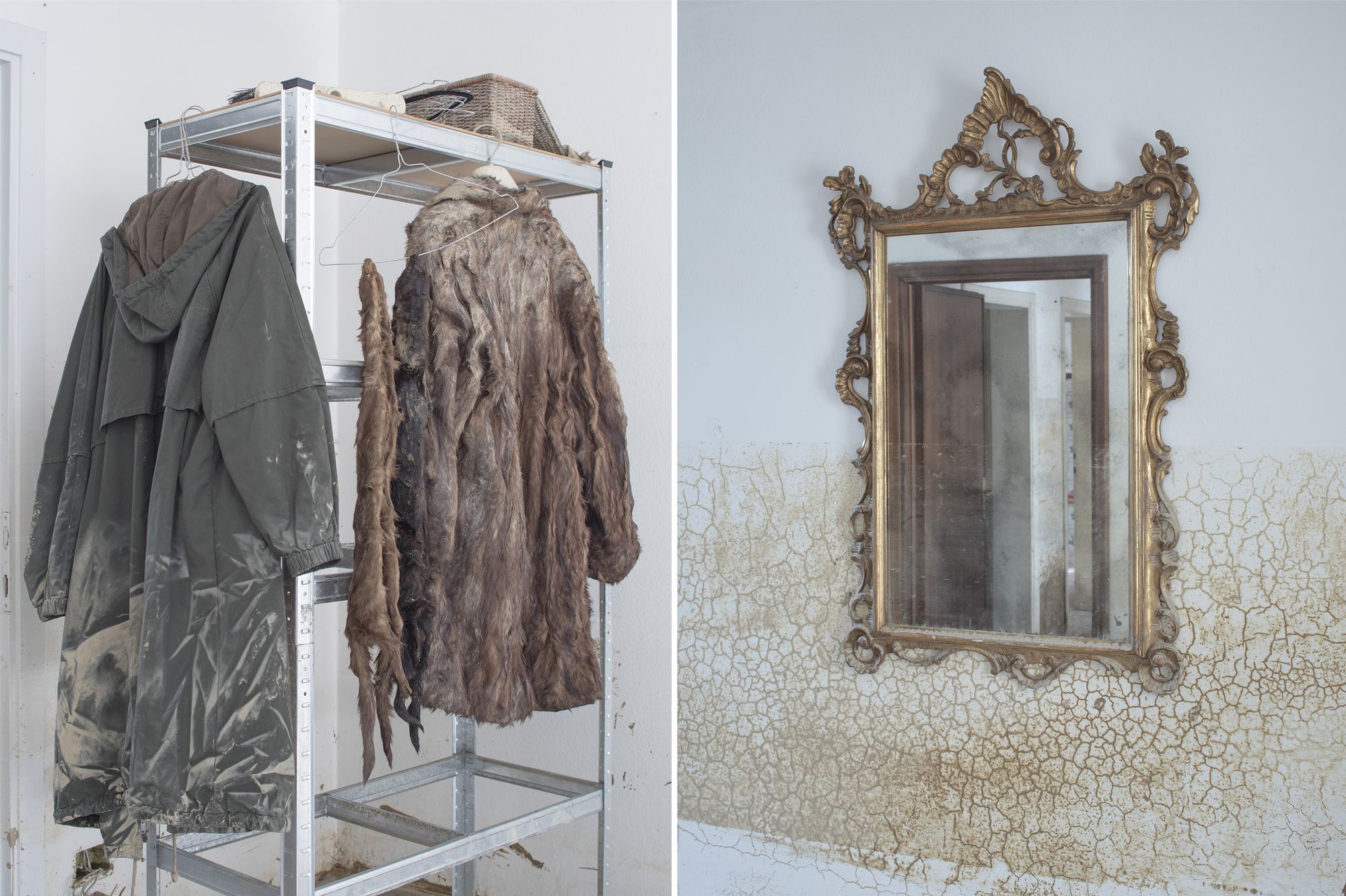
When Cecconi heard of the car carried away by the current, his memories immediately went back to another flood that hit Italy in 1966. At that time, he was nine years old and lived in Borgo Ognissanti, Florence, a few steps away from the Arno River. Unlike the recent flooding, the 1966 flood was caused by less intense but more persistent rains lasting for days.
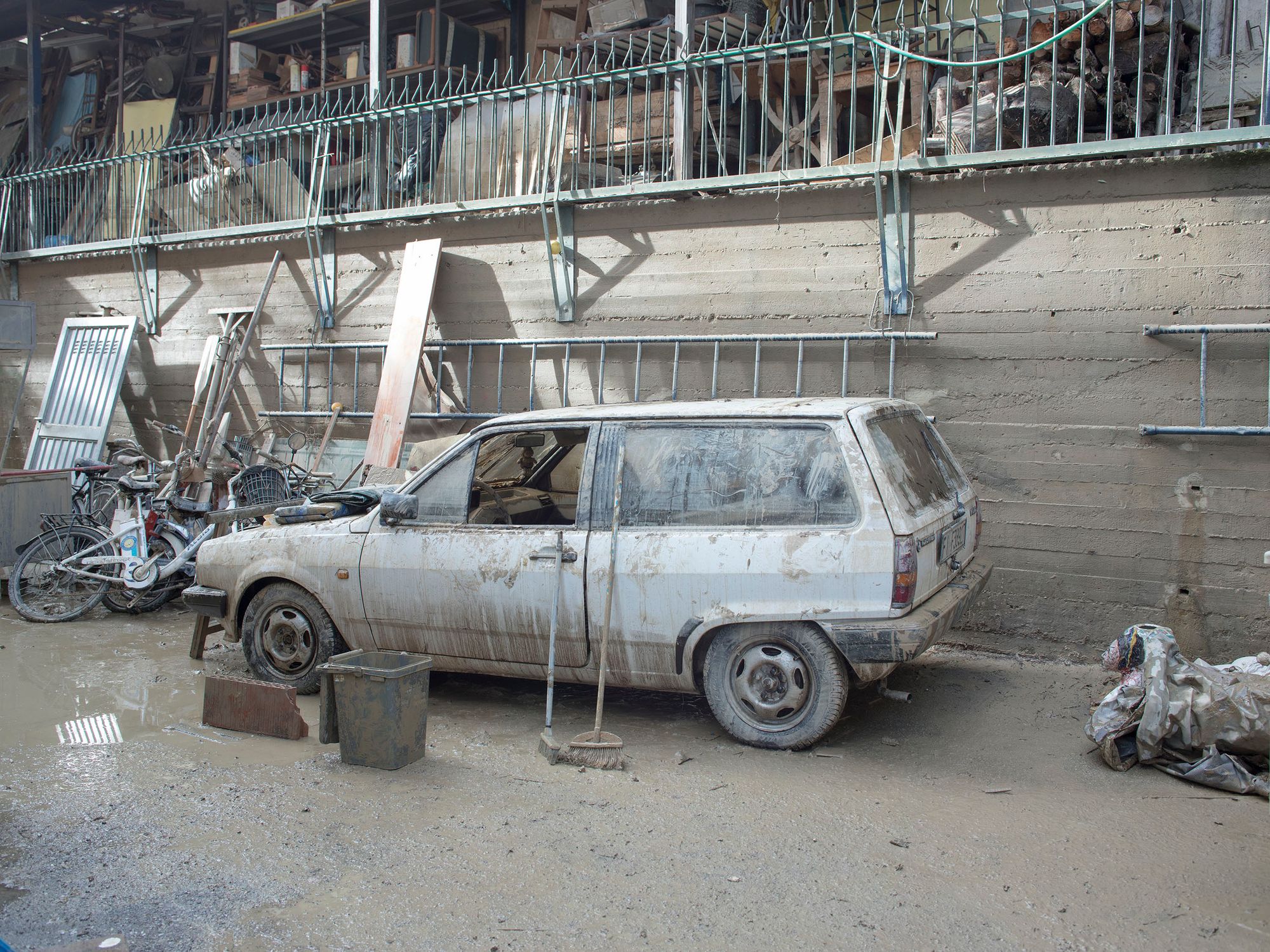
Floods in the plain between Florence, Prato and Pistoia are nothing new. "They have always occurred, even before anthropization," says Tommaso Torrigiani, a climatologist and forecaster at the Tuscan Consortium Laboratory for Environmental Monitoring and Modeling (LaMMA). "On average, there are about four every 100 years."
But with global warming, and especially warming seas, the fear is that these floods might become more frequent.
In this specific case, for instance, higher than usual temperatures in the Mediterranean and Atlantic Ocean contributed to making the storm more intense and devastating for these parts of Tuscany but also across Europe.
Torrigiani explains that on the evening of November 2, a stationary squall line lingered for four or five hours over a long and narrow stretch of Tuscany, extending from the coast near Livorno to mountainous areas in Mugello. In some places, rain gauges recorded amounts with very high return times, meaning that they may occur once in many tens of years according to historical data. When the storm hit, the soil was already waterlogged and the heavy rains overflowed small rivers and streams — similar to what happened to another area of central Italy, Marche, roughly a year ago.
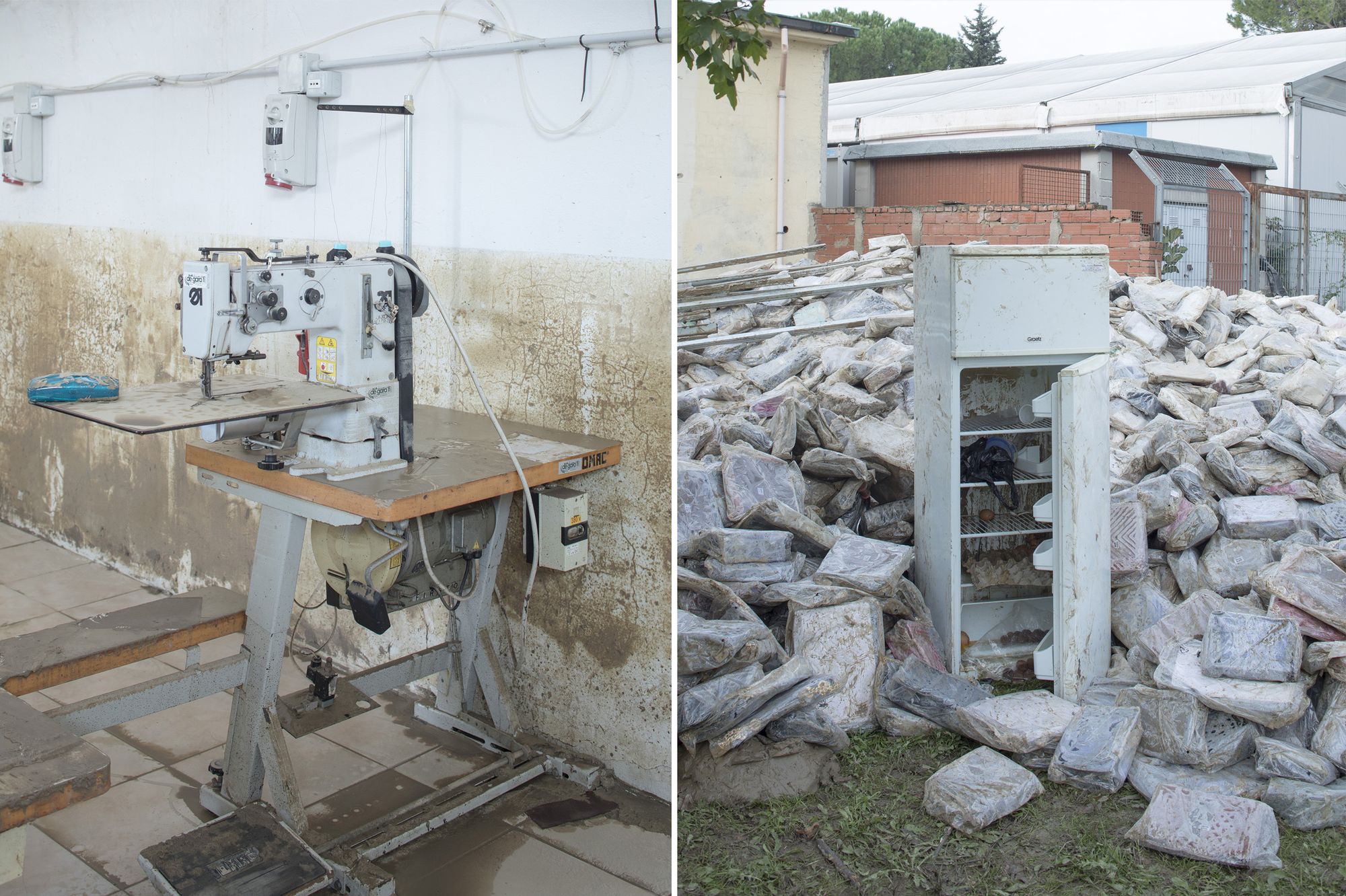
On November 2, flooding occurred mainly in the north- and south-western part of Prato, another city about seven kilometers (four miles) north of Campi. This was surprising considering that northern areas, such as Santa Lucia or Figline di Prato, do not significantly appear on hydraulic risk maps, points out Valerio Barberis, urban planning counselor for the City of Prato, but this time they flooded.
"In Santa Lucia, the river was regulated several centuries ago and has basically never had any kind of hydraulic problem or overflow since then," says Barberis, referring to the Cavalciotto intake on the Bisenzio river.
More recently in Prato and surrounding municipalities, several expansion tanks have been built to avert flood risk. One was even completed not far from the hospital and yet the emergency room still flooded on November 2.
"We faced an event that has no equivalent, at least in the history of Prato," says Barberis. "Even if we were in a perfect, ideal territory, the flooding would still have been more or less as it happened."
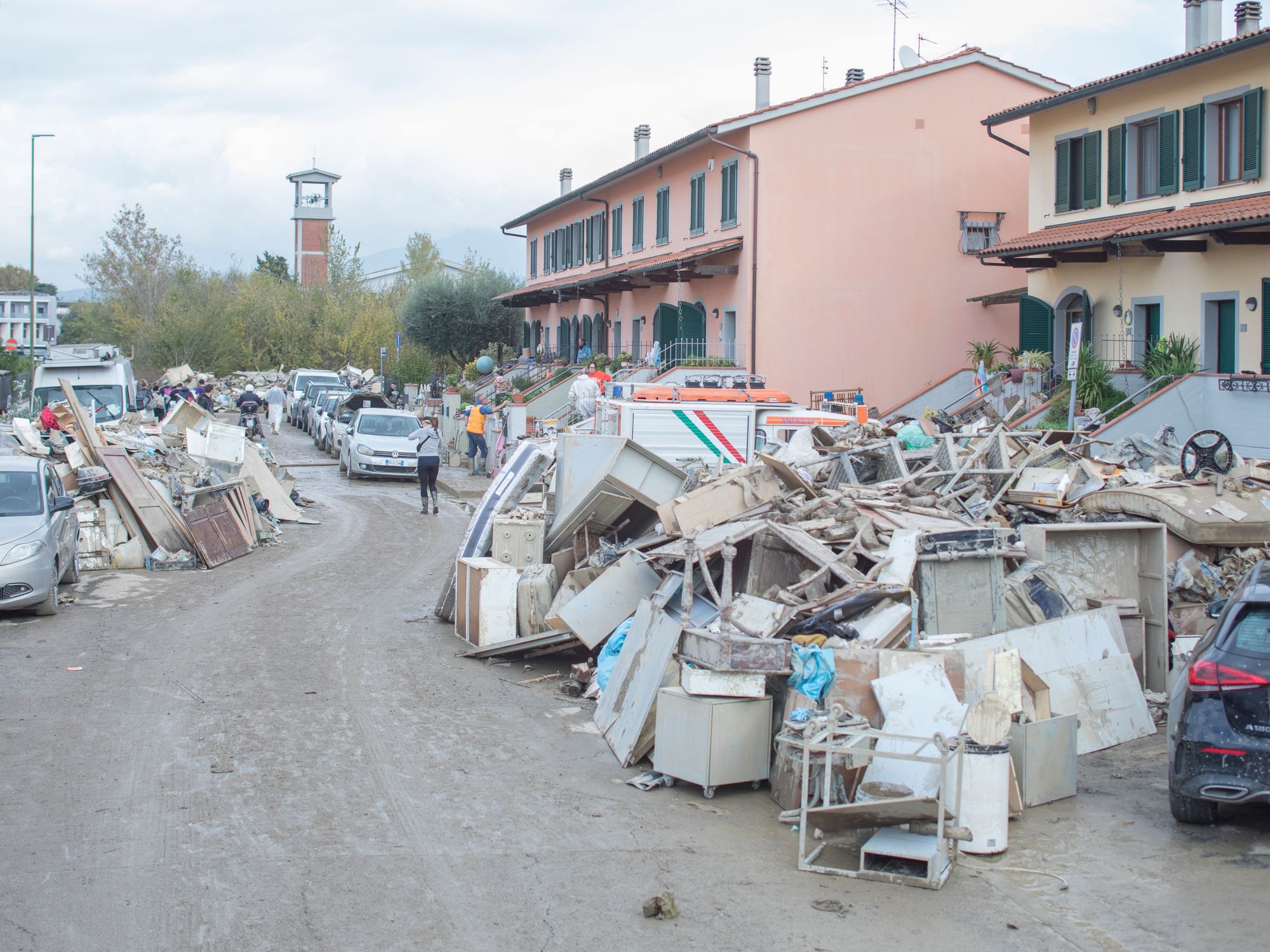
In Campi, the amount of rain that usually falls in the entire month of November — which is the wettest month — came down in just three hours. The Bisenzio river overflowed around 9 p.m. Then, one of its tributaries, the Marina, overwhelmed and broke the levee near Villa Montalvo, a historical villa surrounded by a park, next to the road connecting Campi with Prato. The water gushed toward the town center, reaching in quite a short time the street where Cecconi's son lives with his wife and their two-and-a-half-year-old child.
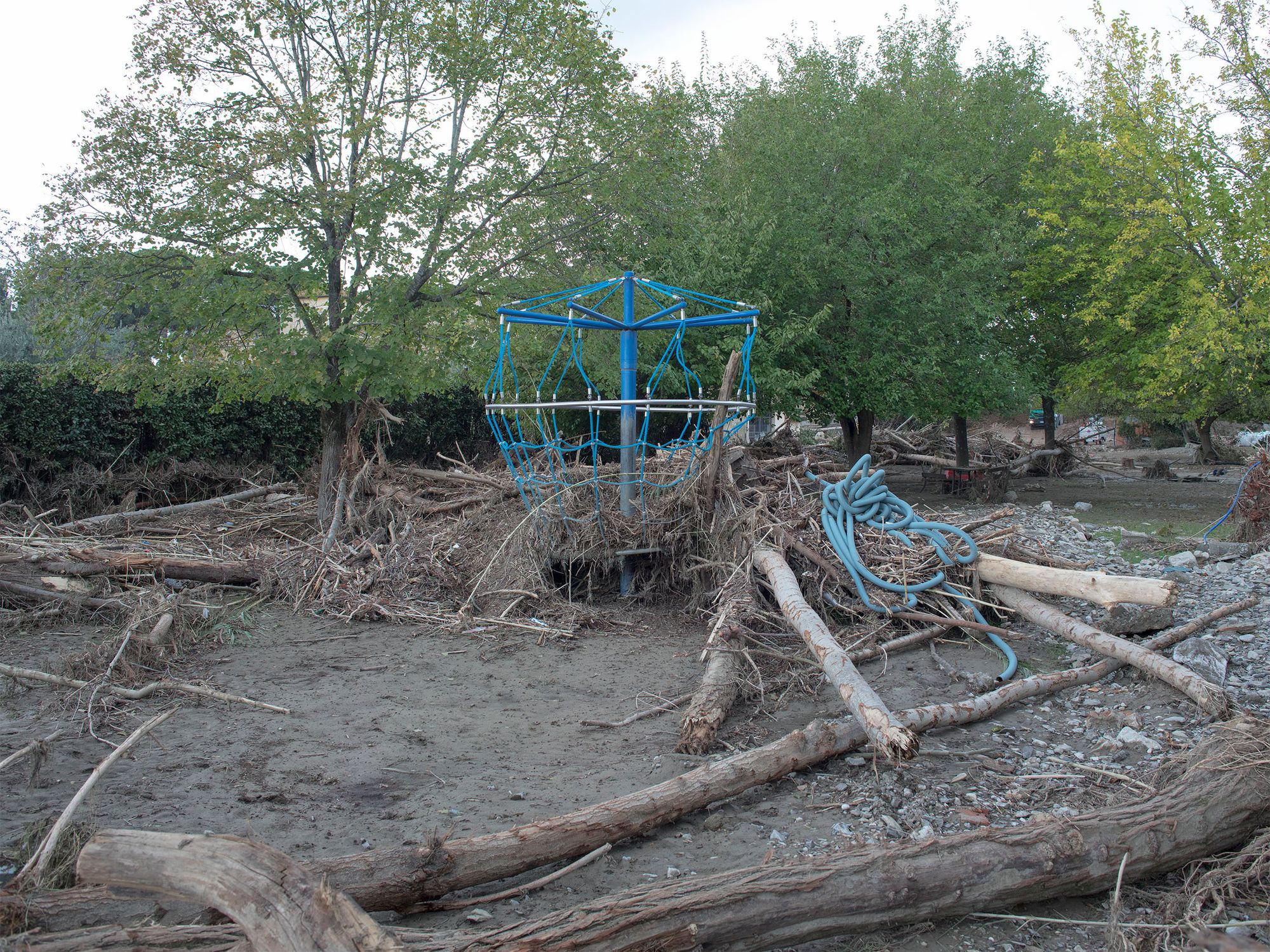
A week later, their home is slowly returning to normal though it’s still far from being habitable.
But in San Piero a Ponti, near the border with the municipality of Signa and a 30-minute walk from Cecconi's home, some basements still haven’t been emptied. "In Via degli Oleandri, there are still homes with water inside!" shouts Antonio Bagni as he wanders around the town. Along with Tobia Balli, Bagni is one of the people trying to direct the many volunteers who have rushed to support Campi’s population where they are most needed.
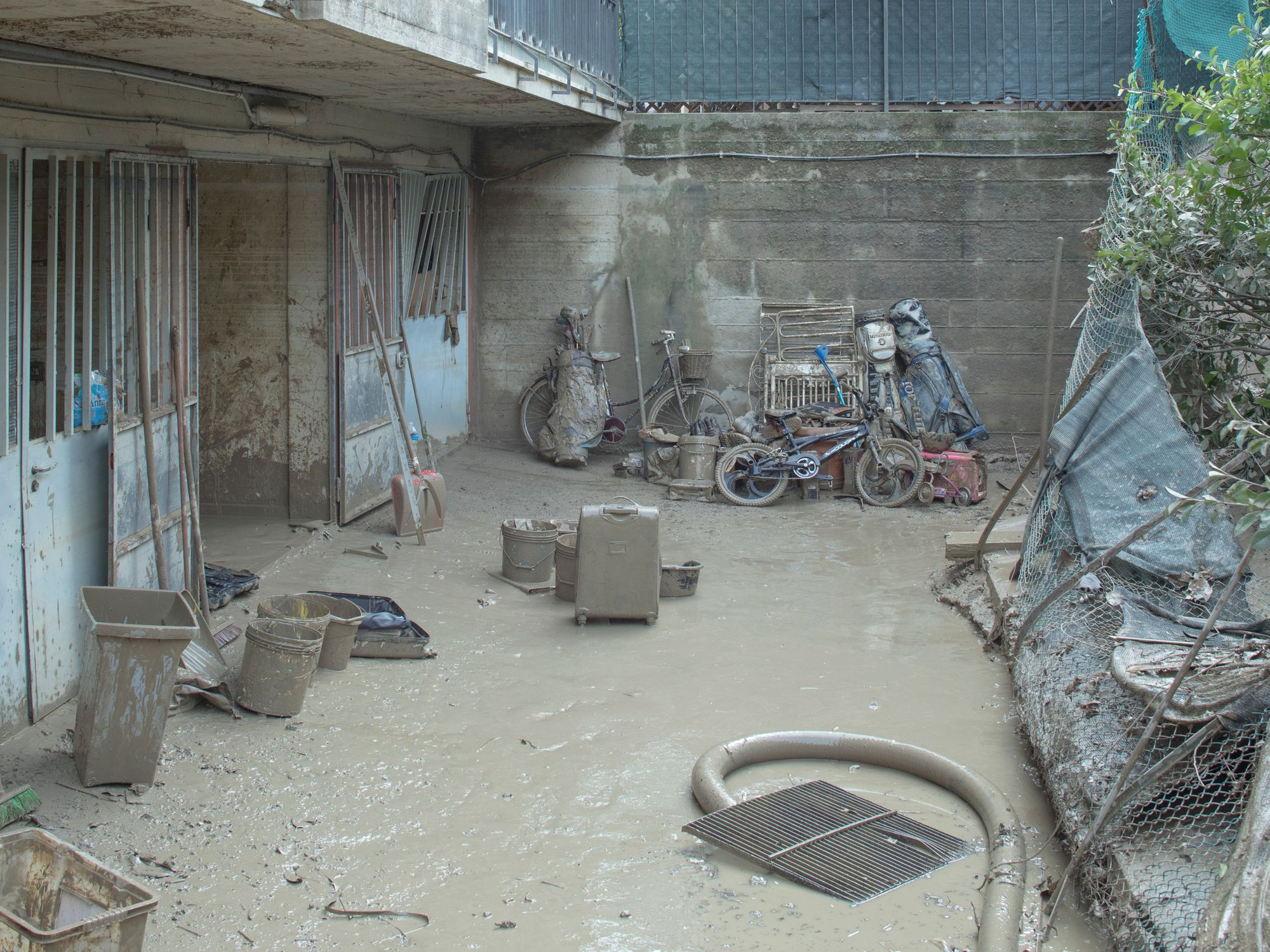
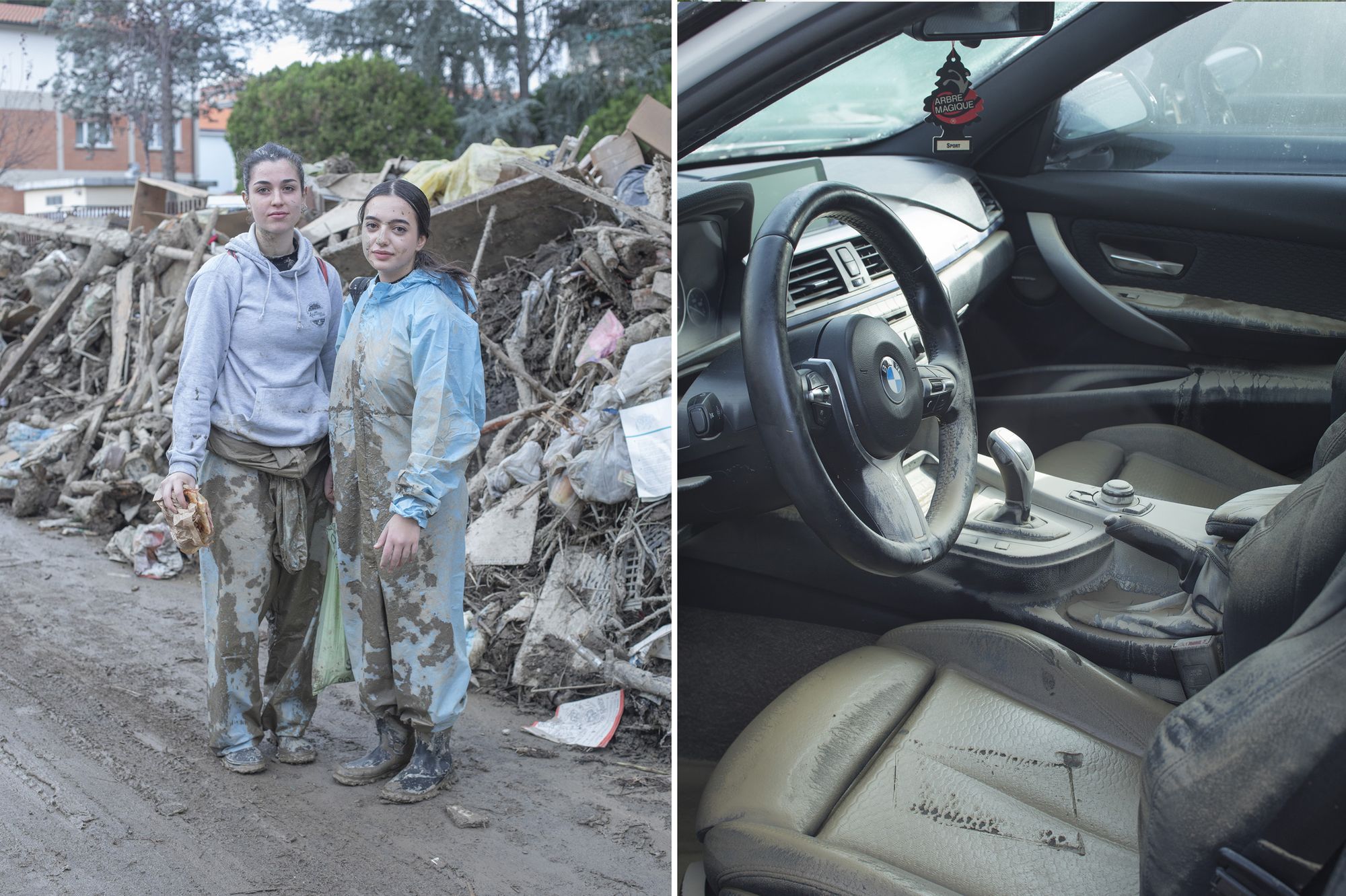
Near one of the main ditches and "in a hole" as they say around here, Via degli Oleandri is one of the hardest hit areas. Cars with mud-splattered seats occupy the sides of the road, making it even narrower and hindering tow trucks from removing them. Some volunteers are still pumping mud out of basements, passing buckets by hand.
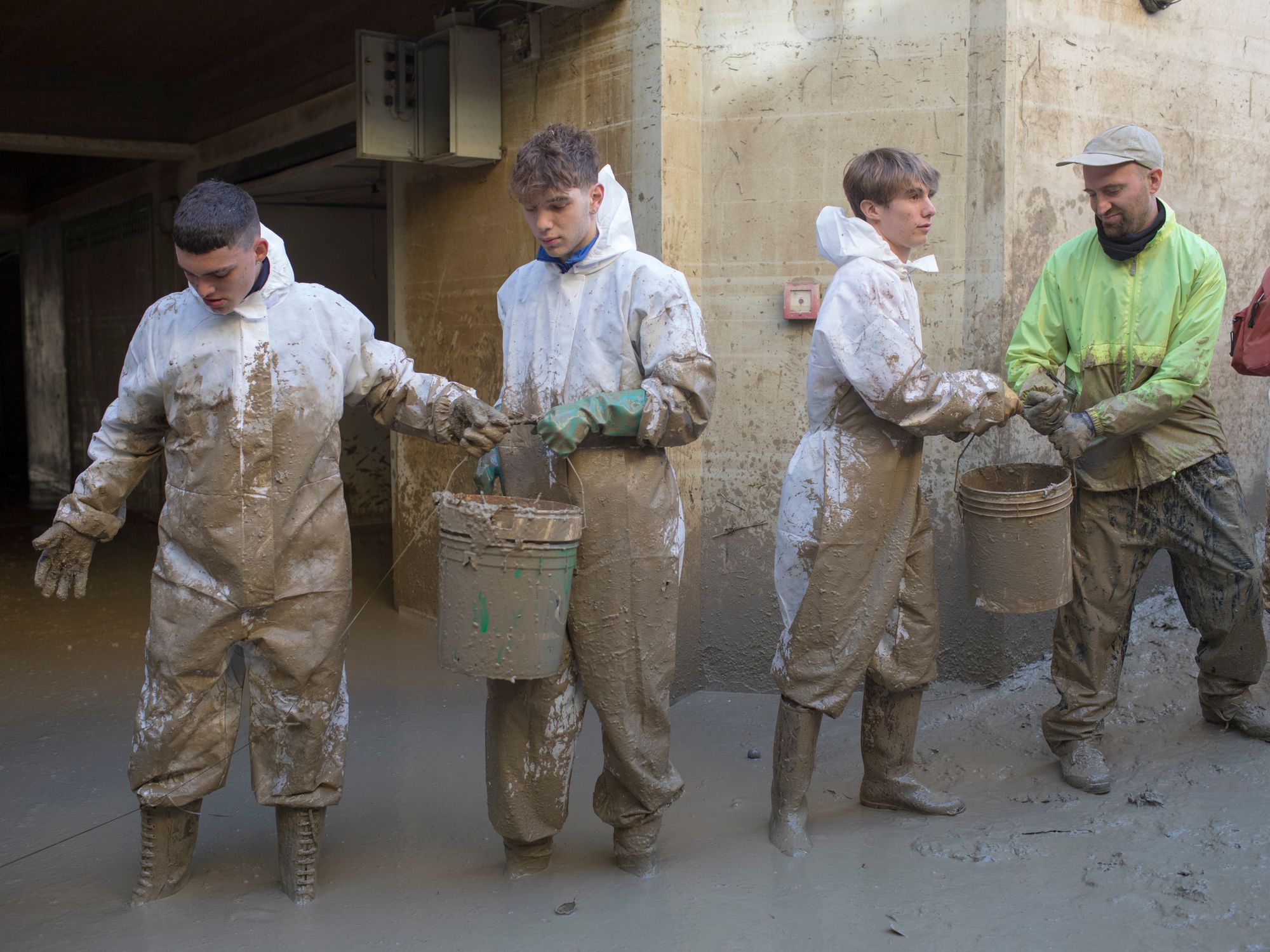
People willing to help are plentiful, but so it's the anger among locals. According to residents, on the night of the storm, water reached Via degli Oleandri between midnight and 1 a.m. from multiple directions: the Fosso Reale, the Marina and the Bisenzio. "The problem is that nobody warned us," says Luca Francalacci, a man from Campi whose parents live on the flooded street. "At 9 p.m., the Bisenzio overflowed. Do you know how much stuff could have been saved from 9 p.m. to 1 a.m.?" That night, Francalacci requested a Civil Protection truck to come in support of an elderly couple who had been trapped in the flooded tavern of their home. Neighbors eventually bent the window bars with a street sign to rescue them in time.
Locals also remember another flood quite well. It occurred in 1991. "Same thing," Francalacci says. "The Bisenzio broke [the levee], no one warned us. We had even called [to get a better sense of the situation], nobody told us anything. Then the water comes."
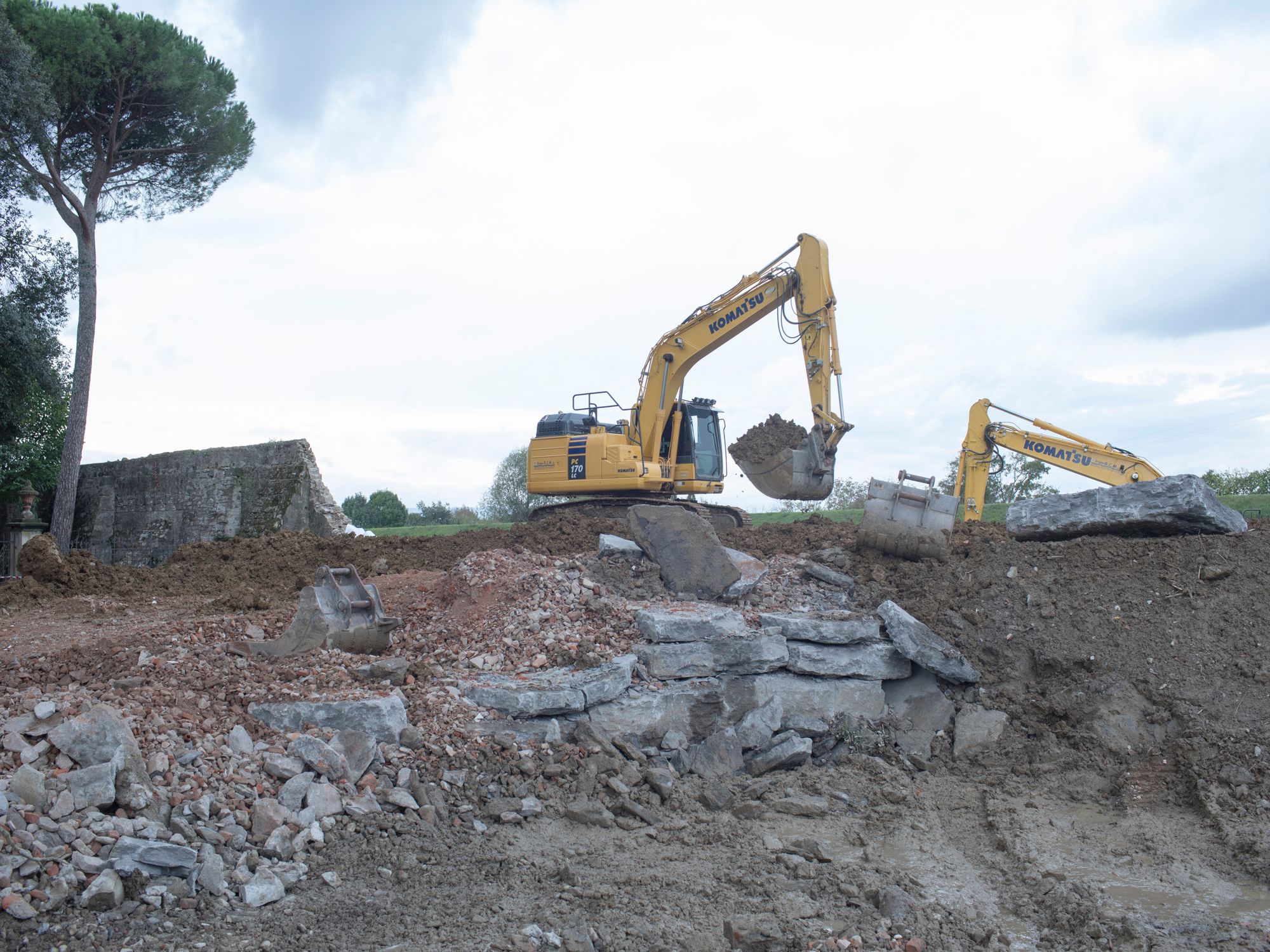
Campi residents also recall that in 1991 the levee broke not far from Villa Montalvo, near the point where the Marina flows into the Bisenzio, but the water reached about 70 centimeters (27 inches); only in some areas it was a meter (39 inches) high.
Even if scientists can predict the risk of flooding of large rivers to give residents advance warning, Torrigiani from Lamma explains, they cannot do that with flash floods or the localized thunderstorm flooding of smaller streams. Such phenomena depend on a sum of factors, ranging from the weather event itself, the situation across a territory, its orography, hydrogeological instability and previous rainfall.
"Territorial hydraulic monitoring and defense structures are made on the basis of the 200-year events," says Barberis, referring to flood events that have the probability of occurring once every 200 years. But according to him, what happened on November 2 was an event of exceptional magnitude for Prato, something that has never been recorded in living memory. "Something I feel like is said for so many events now," he adds — and not only in this part of the world.
But if experts expect more frequent overflows of small watersheds as localized thunderstorms might become more common and intense, perhaps we should at least find ways to handle these kinds of situations and organize the thousands of volunteers who rush to help.
"The first day you don't know how to act," says Giulia Pagliacci, an architect from Perugia who has lived in Florence for some time and has been assisting in Campi for nearly a week. "As you do something, there is always going to be a missing piece."
Without guidance, volunteers face many dilemmas, ranging from which advice they should give to people who have been flooded to where to throw mud or how to find and open street drains. "It would be good if there was a manual," Pagliacci says. "If everything is always up to the individual, it's like taking a chance."
Inefficiencies in the rescue plans and the lack of coordination are common criticisms waged in the aftermath of a flood.
On November 4, firefighters reported on X (formerly known as Twitter) that they carried out more than 3,000 interventions in 48 hours between Florence, Prato, Pistoia, Livorno and Pisa. Two days later, the Civil Protection department announced that there were about 3,000 operators on ground, but in Campi residents largely felt little to no presence from these and other institutions during and after the emergency.
Much more valuable, according to them, was instead the collaborative effort made by neighbors, volunteers and ordinary people.
"Thank goodness for the volunteers," says Cecconi, referring to high school students and everyone who has stepped up to help. "Thank goodness for solidarity."

MICHELE BORZONI
He is a founding member of the documentary photography collective TerraProject Photographers of which he has been a member since 2006. His works have been exhibited in group and solo shows at the Maxxi Museum in Rome, Institute du Monde Arabe in Paris, Complesso del Vittoriano in Rome and at the FotoIndustria biennial organized by the MAST Foundation in Bologna. Since 2006, he has worked with Italian and international magazines including Time, The New York Times, Newsweek, M Magazine, Internazionale, and many others.
GUIA BAGGI
As an independent journalist, she writes about the environment, as well as the relationship between humans and their surroundings. In recent years, she has been focusing on the impacts of climate change and other environmental crises on the Mediterranean region. Building on this experience, she co-founded Magma.That's it for this month. Thank you for reading this far. See you in December.
If this newsletter was forwarded to you, you can subscribe here to continue receiving it. We put a lot of time and love into making Lapilli+, so we think it's fair to ask less than the cost of a coffee for it. Please switch to the Lapilli Premium plan here; it includes a free two-month trial.

Lapilli+ is a monthly newsletter with original content about the Mediterranean and its environment curated by Magma. Here you can read Magma's manifesto.
