In this issue of Lapilli, we look at the impact of the summer that has just ended on agriculture and the food supply chain. We also highlight some recently published stories by our fellows, from the threat that maritime traffic poses to whales in the Mediterranean — and what can be done to prevent it — to transhumance, not only as a traditional agro-pastoral practice, but also as a tool for wildfire prevention. We then head to Sicily, to Piana degli Albanesi, where a growing number of Arbëreshë are leaving as drought and wildfires make it increasingly difficult to continue the traditional agricultural activities that have sustained this linguistic and cultural minority since its arrival in southern Italy five centuries ago.
Finally, as we get ready for this weekend’s independent magazine event, we’d love to see you at Mag to Mag if you’re in Milan over the next couple of days. You’ll also be able to get your hands on the remaining copies of the first issue of Magma Magazine.

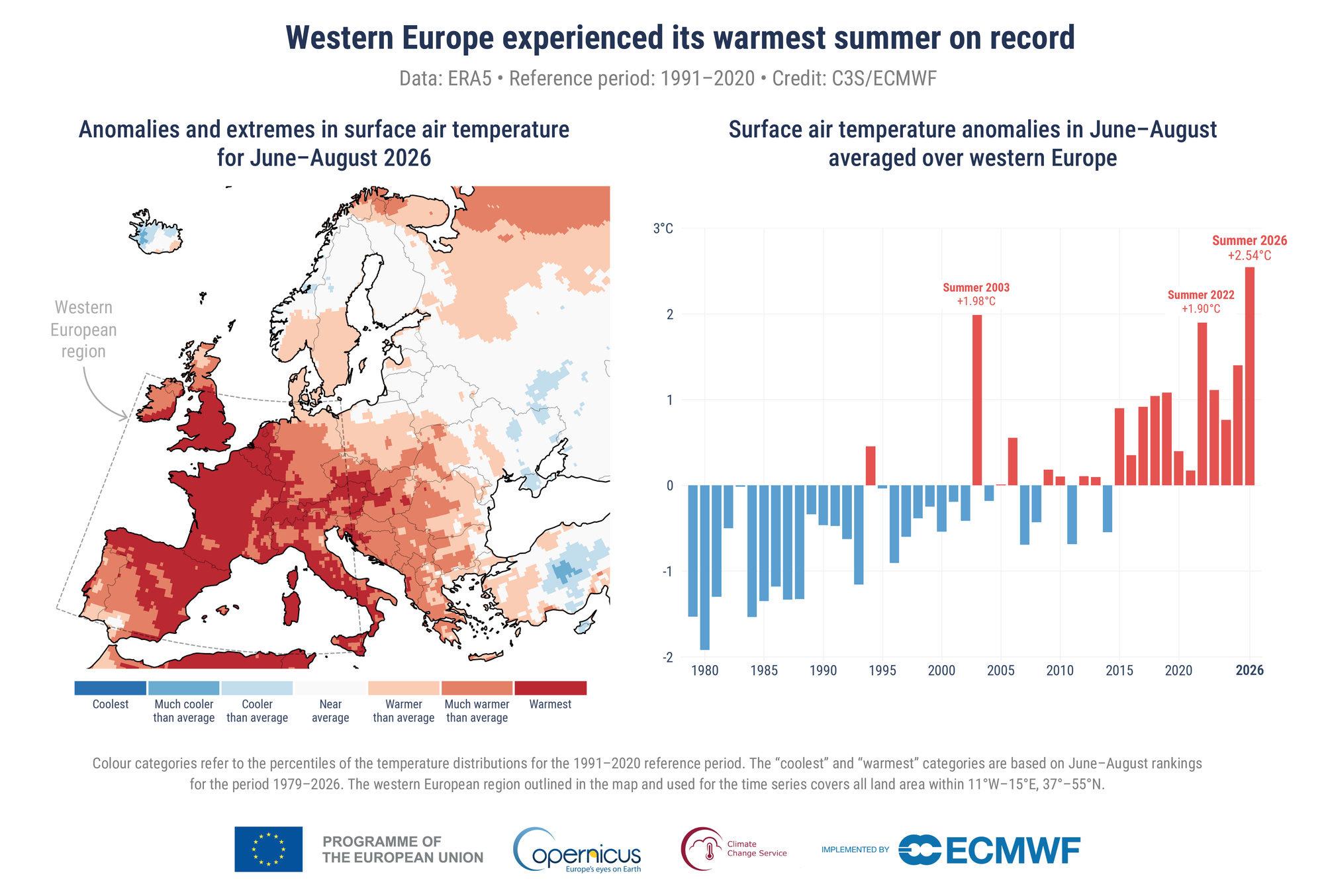
Agriculture under strain. Western Europe has just experienced its hottest summer on record, surpassing even the infamous summer of 2003. In early September, Copernicus, the Earth observation component of the European Union’s space program, announced the record and reported that August 2026 was the hottest month globally since records began. According to Italy’s National Research Council, summer 2026 was the hottest since 1950. Spain, which endured 61 days of heatwaves, also recorded its hottest summer since 1961, the earliest year for which data are available. France recorded its hottest summer since records began in 1900, while Switzerland set a new record in a data series going back to 1864.
Agriculture has been among the sectors hardest hit across Western Europe. Supermarkets across Italy have posted notices warning of limited supplies of products such as lettuce, eggplant, tomatoes, peppers and carrots because of heat-related crop losses. Cereal production has also suffered, including maize, which is used to feed livestock. According to an analysis by Carbon Brief, French cereal production is expected to fall by almost eight million metric tons compared with 2025.
The heat and drought have also affected forage production in the Alps. High temperatures and a lack of rainfall have reduced grass availability and, in some areas, left livestock with insufficient water. Herds typically remain on Alpine pastures until September and, in some places, even longer. This year, however, drought forced several farmers to bring their animals back to the barns at least 10 to 15 days earlier than usual. In some Alpine areas, grass has dried out and water supplies have become insufficient. Drought has also reduced local hay production, forcing some farms to source feed from elsewhere. In Switzerland, for example, some farmers have had to bring in hay from Spain.
In Italy and France, the heat has also taken a toll on the wine industry. In France, the agriculture ministry estimated that wine production would fall 17 percent below the 2021-25 average, one of the lowest levels in 30 years. In both countries, high temperatures and water shortages prompted many grape growers to bring forward the harvest, in some cases as early as July, in an effort to protect yields. But some are questioning whether an earlier harvest is enough to help vineyards adapt to the changing climate, or whether the way vines are planted and managed needs to be rethought.
Microalgae clog Israeli desalination plants. High Mediterranean temperatures contributed to a massive microalgal bloom along the coast stretching from the Nile Delta to Hadera, near Haifa. The bloom clogged filters at five of Israel’s six desalination plants, forcing them to shut down for several days. The plants have since partially resumed operations, but the unprecedented situation has raised concerns in a country that relies heavily on desalination to supply water to households and urban areas.
The destruction of wastewater treatment plants in Gaza by Israeli attacks, and the resulting discharge of large quantities of untreated wastewater directly into the sea, may also have contributed to the bloom. Microalgae can grow unchecked when excessive amounts of nutrients, such as nitrogen or phosphorus, enter bodies of water. According to Omar Shatat, deputy executive director of the Coastal Municipalities Water Utility in Gaza, all five wastewater treatment plants in the territory are out of service, meaning about 45,000 cubic meters of untreated wastewater flow into the Mediterranean each day. “This is a catastrophic situation environmentally and from a public-health perspective,” Shatat told The Guardian. “The sea is heavily polluted, and the first people affected are Gaza’s residents and displaced people because they are in direct contact with the highest concentrations of sewage.”
Extend the ban on deep-sea bottom trawling. Ahead of the annual meeting of the General Fisheries Commission for the Mediterranean (GFCM), scheduled for late October, NGOs Oceana and MedReAct are renewing their call for the FAO body that manages fisheries in the Mediterranean and Black seas to extend the current ban on deep-sea bottom trawling — now in place below 1,000 meters (3,280 feet) — to depths below 800 meters (2,625 feet).
“This measure would have minimal socio-economic impact on fishers,” Oceana wrote in a statement, “but would bring high ecological and climate gains.”
Oceana and MedReAct recently published a report by Emanuela Fanelli and Zaira Da Ros, researchers at Marche Polytechnic University, on the impact of bottom trawling on vulnerable deep-sea ecosystems. The report highlights how the practice causes permanent damage to some habitats and pushes already threatened species, such as the bamboo coral (Isidella elongata), to the brink of collapse.
The GFCM meeting is scheduled for Oct. 26-30, and the impacts of bottom trawling on the environment are among the issues on the agenda. This year, the GFCM’s Scientific Advisory Committee endorsed for the second time in a row the advice to revise the deep-sea fisheries limit, from the current 1,000 meters to a depth of 800 meters, but so far it has not been adopted. Meanwhile, France, Egypt, Montenegro and Italy (but only in the Tyrrhenian sea) implemented trawl bans below a depth of 800 meters.

The danger ships pose to whales in the Mediterranean. Three Magma fellows, Clea Skopeliti, Federica Rossi and Wouter Massink, recently published an article in Mongabay looking at how collisions between large ships and whales in the Mediterranean are often fatal for the animals. The Mediterranean accounts for less than 1 percent of the world’s ocean surface, yet hosts 15 percent of global shipping activity — all concentrated in a relatively small sea that is also home to large cetaceans such as fin whales and sperm whales. Both Mediterranean populations are considered endangered and ship strikes are among their leading causes of human-induced mortality.
The three fellows analyzed vessel traffic alongside whale telemetry data in some of the Mediterranean’s key whale habitats, showing just how much shipping traffic overlaps with areas frequented by these animals. Vessel speed plays a major role in determining whether a collision will be fatal: Above 15 knots (28 km/h), experts say, ship strikes are almost always lethal. Researchers, marine biologists and nonprofits are pushing for measures ranging from lower vessel speeds to rerouting ships and technologies that can alert crews to the presence of whales, in an effort to reduce collisions (Mongabay).
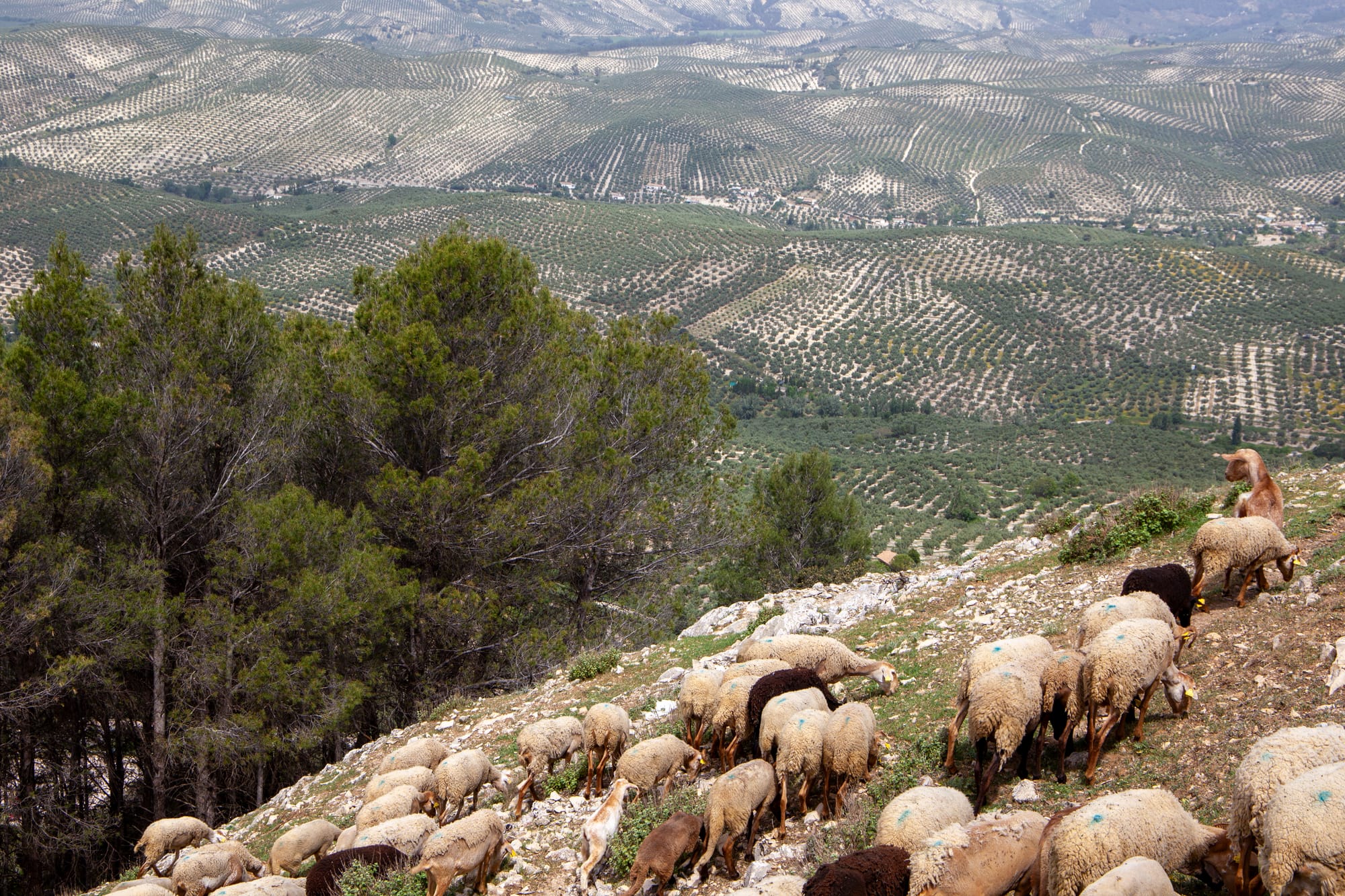
Transhumance as a tool against wildfires. Three other Magma fellows, Tristan Bove, Emerson Mendoza Ayala and Neal Haddaway, take us to Italy and Spain to explore transhumance, an age-old pastoral practice that can benefit ecosystems and help reduce the risk and spread of wildfires. As human-caused climate change makes heatwaves more intense and prolonged droughts more common, wildfires are becoming harder to contain in many parts of Europe. Rising temperatures and drought are part of the problem, but so is the abandonment of rural areas and the decline of pastoral activities, which allow trees, shrubs and tall grasses to take over previously grazed land, increasing the amount of vegetation that can fuel fires.
Transhumance — the seasonal movement of livestock between winter and summer pastures — is a form of extensive grazing that can provide important environmental benefits. Grazing animals help clear dry vegetation and reduce wildfire fuel loads. Yet transhumance is in decline across Europe, including in Italy and Spain. Without better policies, subsidies and targeted support for the shepherds who keep the practice alive, this centuries-old cultural tradition risks disappearing, along with the ecosystem services it provides (Bulletin of the Atomic Scientists).
The Arbëreshë’s uncertain future in Piana degli Albanesi. In her article published in Grist, journalist and Magma fellow Stefania D’Ignoti explores how climate change is threatening the future of Piana degli Albanesi, a community founded about 500 years ago by Albanian refugees in Sicily. Located on a plateau near Palermo, Piana is at the heart of an Arbëreshë community, Italy’s Albanian ethnic minority, which has relied on farming and livestock for generations. But prolonged droughts, extreme heatwaves and increasingly frequent wildfires are making it harder and harder to live and work in the area today. Since 2015, Piana has lost nearly 17 percent of its population, a decline about three times higher than the Sicilian average. Many young people are leaving, while those who remain are wondering how much longer it will be possible to make a living from farming in a changing climate. The crisis is not just about the local economy. As the population declines, the Arbëreshë language, traditions and identity are also at risk of disappearing. Some residents are trying to adapt to the changing climate, while the local government is turning to tourism and to ties with Arbëreshë communities that have emigrated abroad, particularly in California. But questions remain: Can a community survive when climate change profoundly transforms its land, its way of life and culture, and when more and more people choose or are forced to leave? (Grist; Balkan Insight)

A warmer and saltier Mediterranean. A recent study published in Geophysical Research Letters highlights the accelerating pace of two changes that affect water circulation in the Mediterranean and could offer clues about possible future scenarios for the world’s other oceans. Researchers Elena Terzić and Ivica Vilibić analyzed temperature and salinity data collected across the Mediterranean between 1950 and 2025, finding not only that both are increasing, but that the Mediterranean is becoming warmer and saltier at an ever-faster pace.
Temperature and salinity have opposite effects on seawater density. Saltier water is heavier and tends to sink, while warmer water is lighter and tends to remain closer to the surface. These differences drive deep-water circulation and, in turn, affect the temperature and oxygenation of deeper layers. In some parts of the basin, the two trends offset each other; in others, the researchers are asking which one will ultimately prevail, potentially altering dense-water formation and, as a result, the temperature, circulation and oxygenation of the Mediterranean’s deepest waters (Phys.org).

Saudi oil’s influence on the IPCC. A recent investigation published by The Guardian and other media outlets, including Italy’s Lucy sui mondi, has found that at least a dozen authors of the United Nations’ Intergovernmental Panel on Climate Change (IPCC) have ties to Saudi institutions and oil and gas industry interest groups, including Saudi Aramco, one of the world’s largest oil companies.
Founded in 1988 by the World Meteorological Organization and the U.N. Environment Programme, the IPCC brings together scientists from around the world on a voluntary basis to assess the latest climate research and produce reports that put individual studies into context and assess the weight of their findings. Since 1990, the panel has published six assessment reports and has recently begun work on its seventh. Three working groups contribute to the reports: One focuses on the physical science of climate change, another on its impacts and adaptation, and a third on climate change mitigation.
The investigation, supported by Journalismfund Europe, focused on the third working group, where journalists identified potential conflicts of interest. Among those they examined was the group’s vice chair, Malak Al-Nory, who also serves as a senior adviser to Saudi Arabia’s Ministry of Energy. Among other things, the vice chairs of the working groups are responsible for reviewing authors’ conflict-of-interest disclosures and can refer potential cases to the IPCC’s Conflict of Interest Committee.
Saudi Arabia has long opposed efforts to reduce fossil fuel use in international negotiations. The growing presence of IPCC authors with ties to the country could influence the promotion of technological solutions at the expense of efforts to reduce emissions and, consequently, dependence on fossil fuels.
While this is not strictly a Mediterranean story, conflicts of interest of this kind could have significant implications for international efforts to address the climate crisis, with consequences that extend to our region as well.


MAGMA
At Magma, we are committed to reporting on the ways climate change is transforming the Mediterranean region. Find out who we are and read our manifesto.That's it for this month. Thank you for reading this far. See you in November.
If this newsletter was forwarded to you, you can subscribe here to continue receiving it. Lapilli is free and always will be, but in case you would like to buy us a coffee or make a small donation, you can do so here. Thank you!

